

SALE
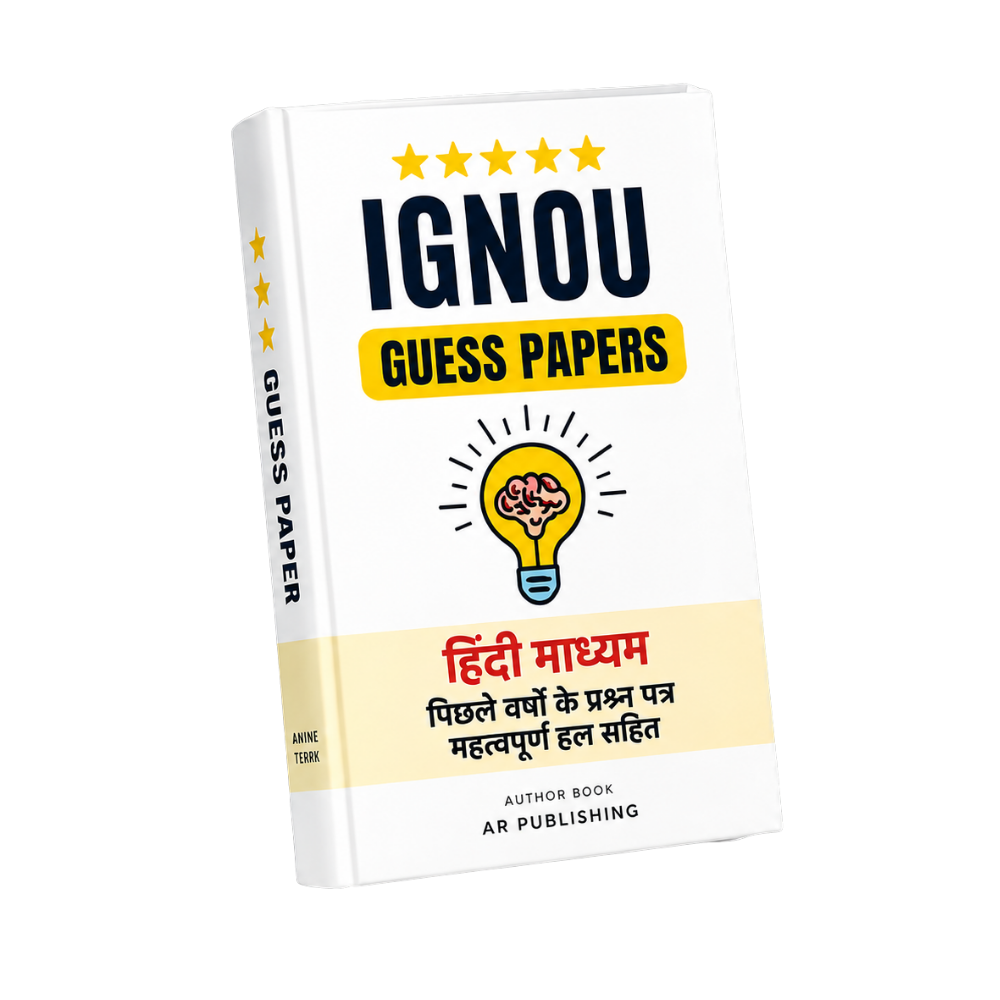
MMPB-003 IGNOU Guess Paper 2026-27
₹49.00
₹100.00
Customer Reviews
2
5.0
Available Offers & Coupons
1 Offer Active
FIRST10
Get 10% OFF Instant Discount
Click to view offer details & terms
Get 10% OFF Instant Discount
Apply this coupon code at checkout to claim your academic discount instantly.
Offer Details & Eligibility:
- Applicable on all university study materials
- Valid for up to 8 item(s) per order
- Valid till Oct 31, 2026
Coupon Code:
FIRST10
Secure Payment
Instant Digital Delivery
🎓
Enrolled in other IGNOU subjects?
Link your Enrollment No. to auto-map all your semester courses & free question papers.
Frequently Bought Together
Popular course materials frequently ordered together
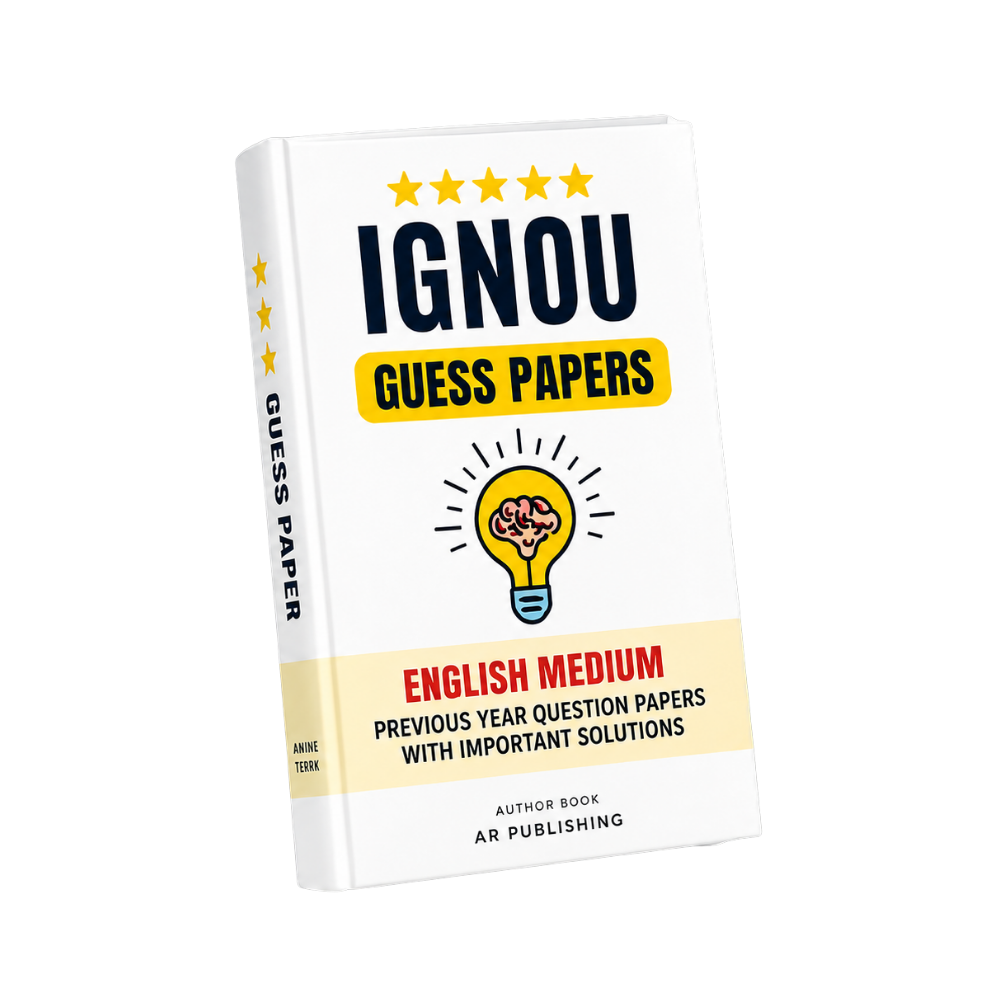

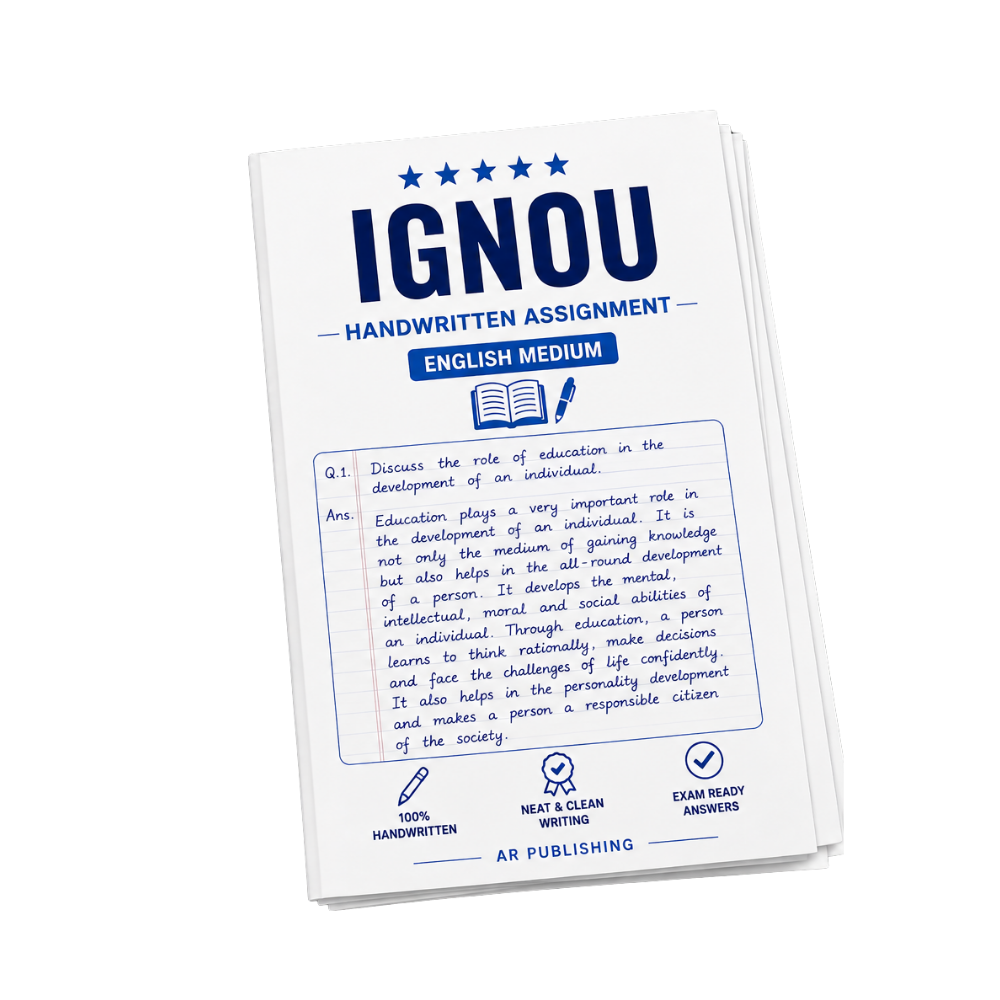
The MMPB-003 IGNOU Guess Paper provides a curated collection of solved previous years’ term-end examination questions aligned with the course’s syllabus, covering key units on Mathematical Methods for Physical Sciences, including differential equations, vector calculus, and statistical mechanics as outlined in IGNOU’s prescribed modules. It helps students identify recurring question patterns, prioritize high-weightage topics like Laplace transforms, Fourier series, and error analysis, and refine answer structuring for the upcoming Term-End Examination in English or Hindi medium.
Syllabus & Overview
MMPB-003 IGNOU Guess Paper: Strategic Exam Preparation for Master’s in Management (Public Administration) Course Scope & Syllabus Overview
MMPB-003, titled Public Policy and Administration, is a core course under IGNOU’s CBCS curriculum designed to analyze the interplay between policy formulation, implementation, and administrative systems in public governance. This course bridges theoretical frameworks—such as rational comprehensive models, incrementalism, and stakeholder theory—with real-world case studies of Indian and global policy challenges. The study material emphasizes critical evaluation of administrative efficiency, accountability mechanisms, and the role of civil society in policy outcomes. The guess paper distills key themes from IGNOU’s prescribed textbooks, including Public Administration by R.S. Khurana and Policy Analysis by Thomas Dye, ensuring students focus on high-weightage topics aligned with past TEE trends. Key Syllabus Units & Topics
Unit 1: Foundations of Public Policy and Administration: Covers the historical evolution of public administration in India, Weberian bureaucracy, and the distinction between policy and administration. Examines the role of constitutional provisions (e.g., Article 312) in shaping administrative structures.
Unit 2: Policy Process and Decision-Making: Explores the stages of policy-making (agenda-setting, formulation, implementation, evaluation) using models like the Garbage Can Model and Multiple Streams Framework. Includes case studies on welfare policies and economic reforms.
Unit 3: Administrative Reforms and Governance: Analyzes the 2nd and 3rd Administrative Reforms Commissions, decentralization trends, and the impact of digital governance (e.g., e-governance initiatives under the National e-Governance Plan).
Unit 4: Public Policy Evaluation and Accountability: Discusses tools for policy impact assessment (e.g., cost-benefit analysis, SWOT frameworks) and mechanisms like the CAG’s audit reports to ensure transparency.
Unit 5: Comparative Public Administration: Compares administrative systems of India with the UK, USA, and Scandinavian models, focusing on decentralization, civil service structures, and citizen participation. Frequently Asked Questions
Q: How are numerical questions weighted in MMPB-003’s TEE, and which units typically include them?
A: Numerical questions (e.g., policy cost-benefit calculations or administrative efficiency metrics) constitute 10–15% of the total marks and appear predominantly in Unit 2 (Policy Process) and Unit 4 (Evaluation), where quantitative analysis of case studies is required. Prioritize solving past-year problems from June/December TEE papers for these units. Q: What is the minimum pass percentage for MMPB-003, and how does assignment submission affect the final grade?
A: The passing criterion is 40% aggregate marks, with assignments contributing 30% to the final grade. Late submissions incur penalties, and assignments must be submitted in soft copy (PDF) via LMS
Why buy from us?
-
Verified by top professors and 99th percentile students.
-
Always updated to the latest university curriculum.
-
High-quality, printable PDF formats with clear diagrams.
License & Terms
By purchasing this item, you agree to our standard academic license terms. You may use this product for personal study, but you may not resell or redistribute the files online.
Customer Reviews
Share Your Experience
Showing page of ( total reviews)