

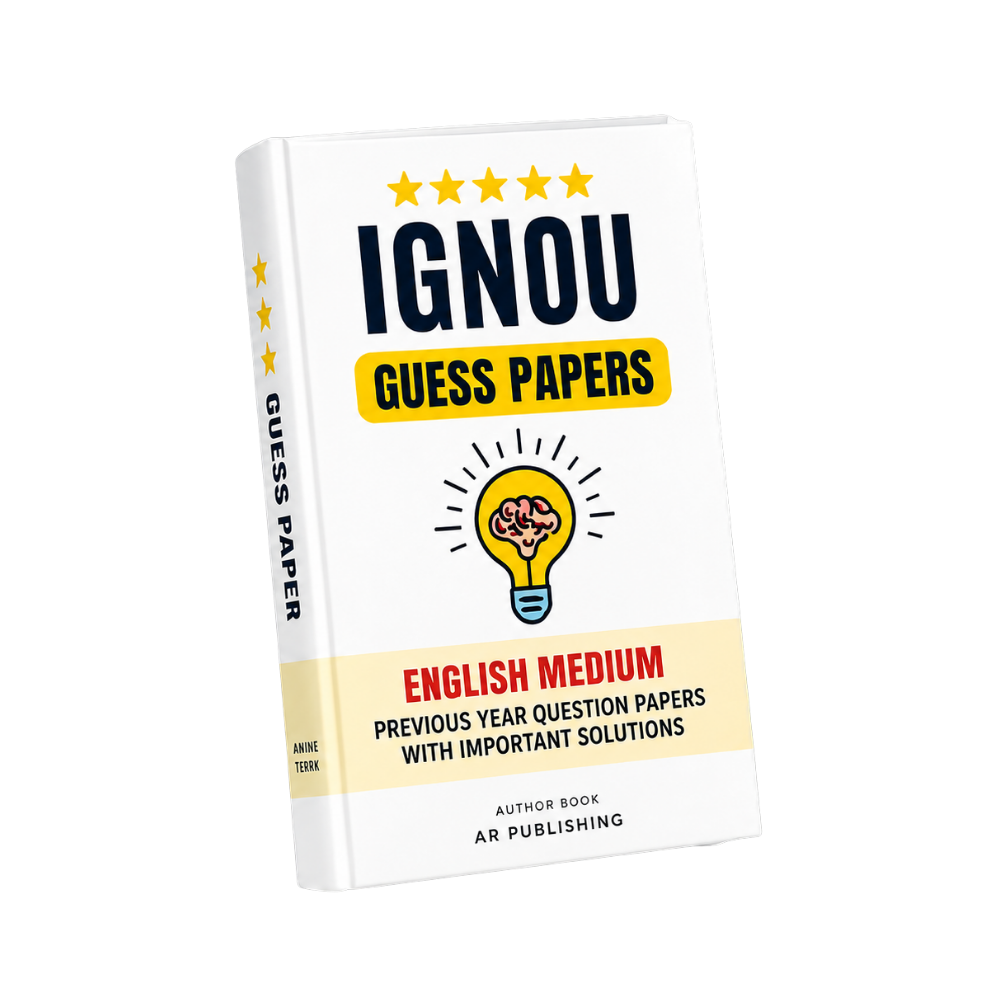
MMPF-007 IGNOU Guess Paper 2026-27
Click to view offer details & terms
Get 10% OFF Instant Discount
Apply this coupon code at checkout to claim your academic discount instantly.
- Applicable on all university study materials
- Valid for up to 8 item(s) per order
- Valid till Oct 31, 2026
Enrolled in other IGNOU subjects?
Link your Enrollment No. to auto-map all your semester courses & free question papers.
Frequently Bought Together
Popular course materials frequently ordered together
Syllabus & Overview
MMPF-007: Mastering Public Finance Theory and Policy A Strategic Exam Preparation Guide
IGNOU’s MMPF-007: Public Finance: Theory and Policy examines the theoretical foundations of government revenue, expenditure, and fiscal management within the CBCS framework. This course bridges macroeconomic principles with real-world fiscal challenges, emphasizing the role of taxation, public spending, and economic stabilization. The syllabus is designed to equip students with analytical tools to evaluate fiscal policies, assess budgetary allocations, and understand the interplay between fiscal discipline and economic growth. This guide distills core concepts from past examinations, highlighting recurring themes in question patterns to streamline revision and enhance exam readiness.Core Syllabus Units & Exam Focus Areas
- Unit 1: Nature and Scope of Public Finance: Covers the definitions, objectives, and limitations of public finance, distinguishing it from private finance and exploring its role in economic development. Key topics include the welfare approach and the fiscal policy framework.
- Unit 2: Theory of Public Expenditure: Analyzes the economic theories behind government spending, including the demand and supply perspectives, with emphasis on public goods, merit goods, and the role of the state in economic stabilization.
- Unit 3: Theory of Taxation: Examines the principles of taxation (ability-to-pay, benefits received), tax incidence, and the structure of direct vs. indirect taxes, alongside case studies of progressive and regressive taxation systems.
- Unit 4: Public Debt and Fiscal Policy: Explores the causes, effects, and management of public debt, including internal and external debt, alongside fiscal policy instruments like deficit financing and stabilization tools.
- Unit 5: Fiscal Federalism and Intergovernmental Fiscal Relations: Discusses the division of fiscal responsibilities between central and state governments, revenue-sharing mechanisms, and the challenges of fiscal decentralization in federal systems.
Frequently Asked Questions
Q: How are numerical questions distributed in MMPF-007 exams, and which chapters are most likely to appear?
A: Numerical problems typically account for 20–25% of the total marks, primarily focusing on Unit 3 (Theory of Taxation) (e.g., tax incidence calculations) and Unit 4 (Public Debt) (e.g., debt-service ratios). Prioritize solving past-year numericals from these units to build confidence.
Q: What is the minimum passing percentage for MMPF-007, and how are internal and external assessments weighted?
A: The passing mark for MMPF-007 is 40%, with external examination carrying 70% weightage and internal assessment (TMA/assignments) contributing 30%. Focus on both theoretical understanding and practical application to balance performance across components.
Why buy from us?
-
Verified by top professors and 99th percentile students.
-
Always updated to the latest university curriculum.
-
High-quality, printable PDF formats with clear diagrams.
License & Terms
By purchasing this item, you agree to our standard academic license terms. You may use this product for personal study, but you may not resell or redistribute the files online.