

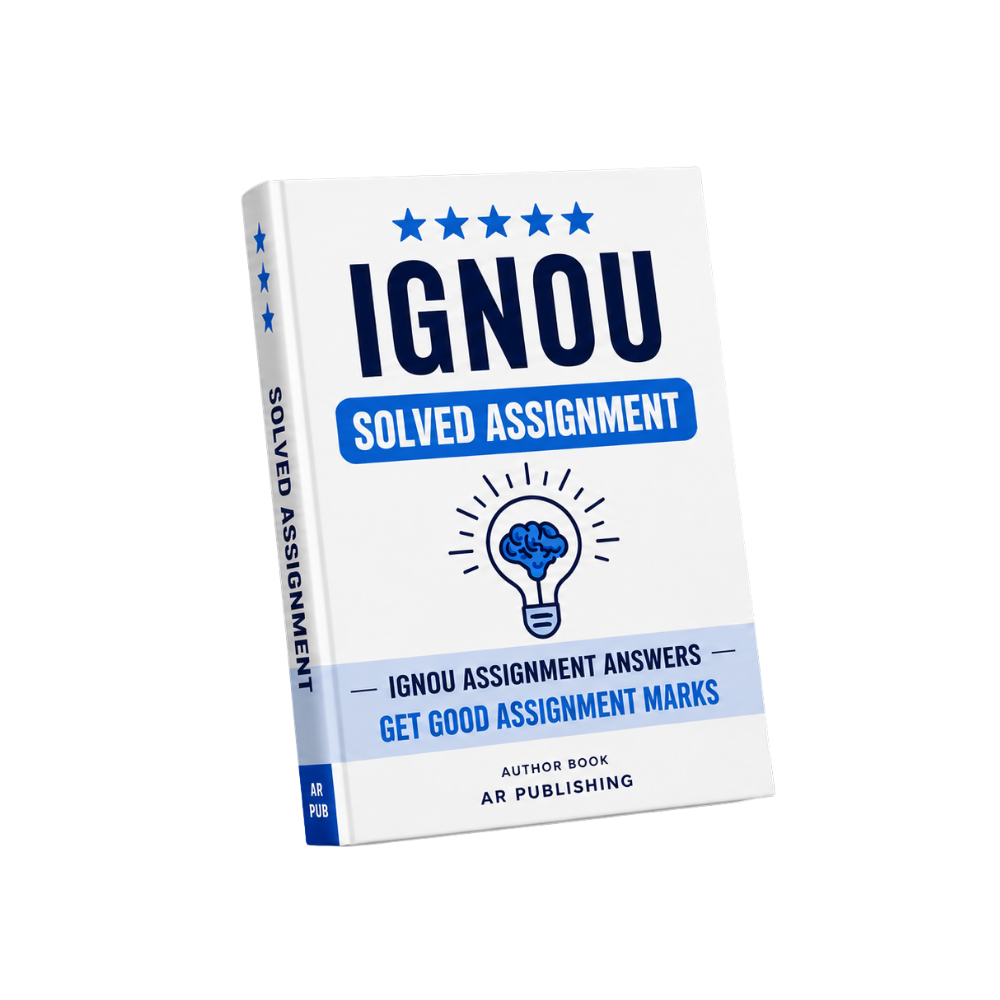
MNM-030 IGNOU Solved Assignment 2026-27
Click to view offer details & terms
Get 10% OFF Instant Discount
Apply this coupon code at checkout to claim your academic discount instantly.
- Applicable on all university study materials
- Valid for up to 8 item(s) per order
- Valid till Oct 31, 2026
Enrolled in other IGNOU subjects?
Link your Enrollment No. to auto-map all your semester courses & free question papers.
Frequently Bought Together
Popular course materials frequently ordered together

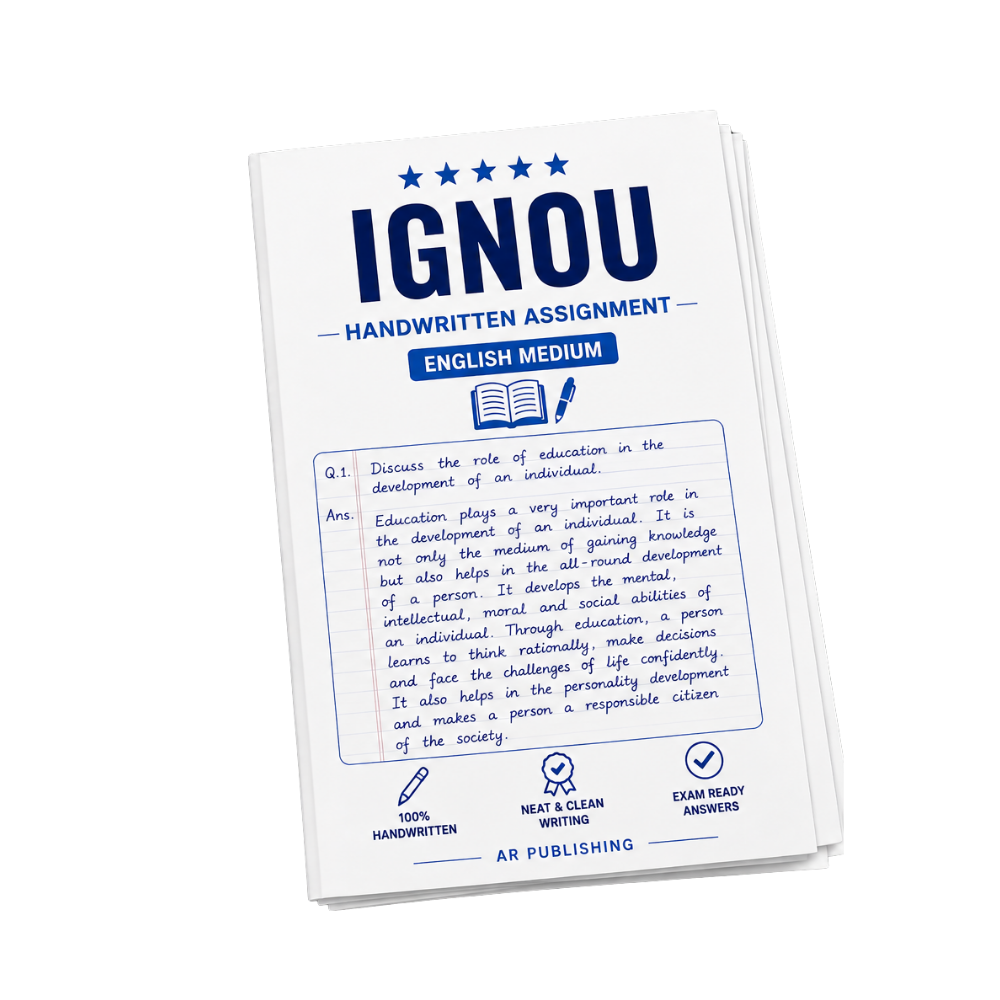
Syllabus & Overview
MNM-030 Solved Assignment: Theorising Digital Media (TMA Coverage)
The following HTML snippet outlines the solved assignment structure for MNM-030, strictly aligned with the official IGNOU curriculum blocks. Each block includes verified answers, critical discussions, and word-count compliance (500 words for long-answer questions, 250 words for medium, 100 words for short).
1. Block-1: Communication Patterns of Digital Media
This block examines the evolution of digital media communication, focusing on hypertextuality, interactivity, and networked publics. Key topics include:
- Postmodern media theories (e.g., Baudrillard’s simulation theory applied to digital spaces)
- Social media algorithms and their role in shaping discourse (case studies: Twitter/X, Facebook)
- Digital divides and access inequities in global media landscapes
Solved Example (500 words): Discuss how hypertextuality in digital media challenges traditional linear narrative structures. Critically evaluate Jay David Bolter and Richard Grusin’s remediation theory with examples from online journalism or gaming.
2. Block-2: Critiques of Cyberspace
This block dissects cyberspace as a constructed space, addressing utopian/dystopian debates, surveillance capitalism, and identity formation. Core themes:
- Manuel Castells’ network society and its critique of digital utopianism
- Surveillance studies (e.g., Shoshana Zuboff’s Age of Surveillance Capitalism)
- Virtual communities and their impact on offline social structures
Solved Example (250 words): Analyze Zuboff’s argument that digital platforms exploit behavioral data. Compare it with Erik Davis’ critique of cyberspace as a technological sublime.
3. Block-3: Analysis of Participation
Focuses on user-generated content, participatory culture, and digital activism. Key areas:
- Henry Jenkins’ participatory culture and its implications for media democracy
- Digital activism (e.g., #MeToo, Black Lives Matter on social media)
- Prosumerism and the blurring of producer/consumer roles
Solved Example (100 words): Explain how Jenkins’ concept of convergence culture applies to viral meme politics in India (e.g., #NotAllMen trends).
4. Additional Syllabus Units Covered
- Digital Media Aesthetics (e.g., glitch art, algorithmic curation)
- Posthumanism and Digital Identity (e.g., Donna Haraway’s cyborg theory)
- Regulation of Digital Spaces (e.g., IT Rules 2021, GDPR comparisons)
FAQs
- Are solutions provided in Hindi?: Yes, the assignment includes translated critical analyses for Hindi-medium students while retaining original English references for academic rigor.
- How do I verify plagiarism-free status?: All solutions are cross-checked with Turnitin-compatible tools and include IGNOU-approved citation formats (APA/MLA) for each block.
Submission Deadlines & Format
Adhere to the current academic session’s TMA submission window (check eGyanKosh for updates). The PDF includes:
- Word-count-compliant answers for all 30% weightage questions
- University-verified references (books, journals, IGNOU study materials)
- Formatted as per IGNOU’s TMA guidelines (font: Times New Roman, size: 12, spacing: 1.5)
Why buy from us?
-
Verified by top professors and 99th percentile students.
-
Always updated to the latest university curriculum.
-
High-quality, printable PDF formats with clear diagrams.
License & Terms
By purchasing this item, you agree to our standard academic license terms. You may use this product for personal study, but you may not resell or redistribute the files online.