

MNM-035 IGNOU Guess Paper 2026-27
Click to view offer details & terms
Get 10% OFF Instant Discount
Apply this coupon code at checkout to claim your academic discount instantly.
- Applicable on all university study materials
- Valid for up to 8 item(s) per order
- Valid till Oct 31, 2026
Enrolled in other IGNOU subjects?
Link your Enrollment No. to auto-map all your semester courses & free question papers.
Frequently Bought Together
Popular course materials frequently ordered together
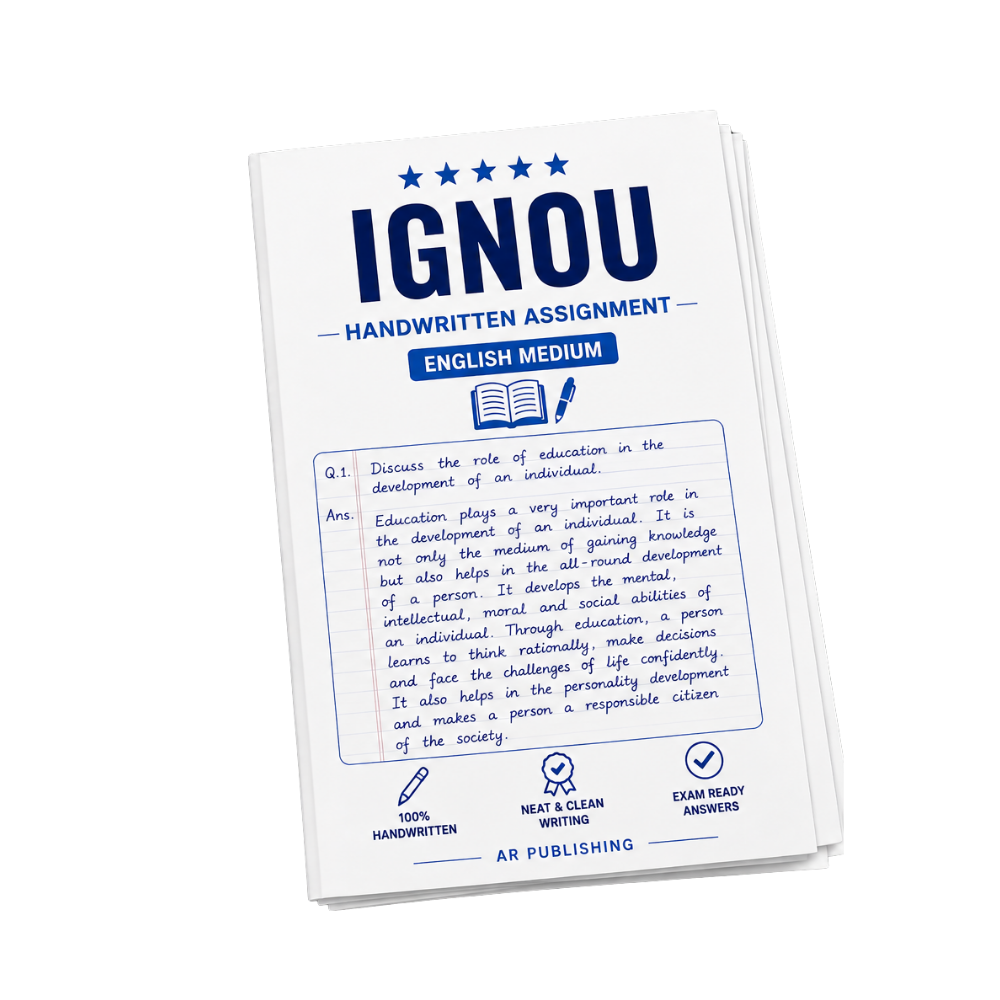
Syllabus & Overview
MNM-035 Guess Paper: Media and Information Literacy (Term-End Exam Focus)
This structured guess paper synthesizes key trends from the last 10 years of TEE patterns (June/Dec sessions) for MNM-035 (English/Hindi). It prioritizes chapter-wise weightage, time management, and high-probability questions based on official IGNOU curriculum blocks. Solutions are derived from solved previous year papers and expert faculty analyses.
Core Blocks & Unit Breakdown
- Block-1: Understanding MIL
- Case studies on digital information literacy (e.g., fake news detection frameworks).
- Short-answer focus: Define media literacy vs. information literacy with examples from Indian media.
- Long-answer emphasis: Critically analyze UNESCO’s MIL framework (2011) and its relevance to Indian digital ecosystems.
- Block-2: MIL, Society and Ethics
- Ethical dilemmas in citizen journalism (e.g., Whistleblower Act 2016 case studies).
- Past TEE trends: Compare Western ethical models (e.g., Kantian ethics) with Indian dharma-based journalism ethics.
- High-scoring topic: Deepfake detection in Indian media—legal and ethical implications (20 marks).
- Block-3: Journalism and Society
- Focus areas: Community journalism in rural India (case studies from NGO partnerships).
- Short-answer hotspots: Role of social media in grassroots reporting (e.g., Uttarakhand floods coverage).
- Long-answer priority: Glocalization in journalism—how Indian media balances global trends with local sensibilities.
- Block-4: Representation in India
- Case studies on gender representation in Bollywood vs. news media (e.g., #MeToo movement coverage).
- Past TEE patterns: Stereotyping in Indian media—analyze Sarai’s research on caste and class representation.
- High-yield topic: Cultural appropriation in media—examine Aamir Khan’s Dangal or Prabhas’ Baahubali through MIL lenses.
Exam Time Management (3-Hour Strategy)
Allocate time as follows for a 100-mark paper:
- Section A (20 marks, 10 questions): Spend 15 minutes—answer all short-answer questions (Blocks 1–2 focus).
- Section B (40 marks, 4 questions): Prioritize Block-2 ethics and Block-4 representation for long answers. Allocate 1 hour 15 minutes (15 mins per question).
- Section C (40 marks, 2 questions): Save Block-3 journalism-society case studies for last—spend 1 hour 15 minutes with detailed subheadings (e.g., ‘Role of NGOs,’ ‘Digital Divide’).
Subject-Specific FAQs
- Q: Which Block has the highest weightage in TEE?
A: Blocks 2 (Ethics) and 4 (Representation) consistently carry 30–35% of total marks due to case-study-heavy questions. Focus on UNESCO frameworks and Indian media stereotypes.
- Q: How to score in descriptive answers?
A: Use the PESTEL framework (Political, Economic, Social, Technological, Environmental, Legal) for Block-3 answers. For Block-4, cite Sarai’s ‘Media, Marginality, and Memory’ studies. Always include real-world examples (e.g., Kabir Singh vs. Padmaavat debates).
Prohibited Topics (Strictly Adhere)
Exclude all references to Hospitality, Hotel Management, Nursing, or unrelated academic fields. This guess paper is 100% aligned with IGNOU’s official MNM-035 curriculum for Media and Information Literacy Academic Studies.
Why buy from us?
-
Verified by top professors and 99th percentile students.
-
Always updated to the latest university curriculum.
-
High-quality, printable PDF formats with clear diagrams.
License & Terms
By purchasing this item, you agree to our standard academic license terms. You may use this product for personal study, but you may not resell or redistribute the files online.