

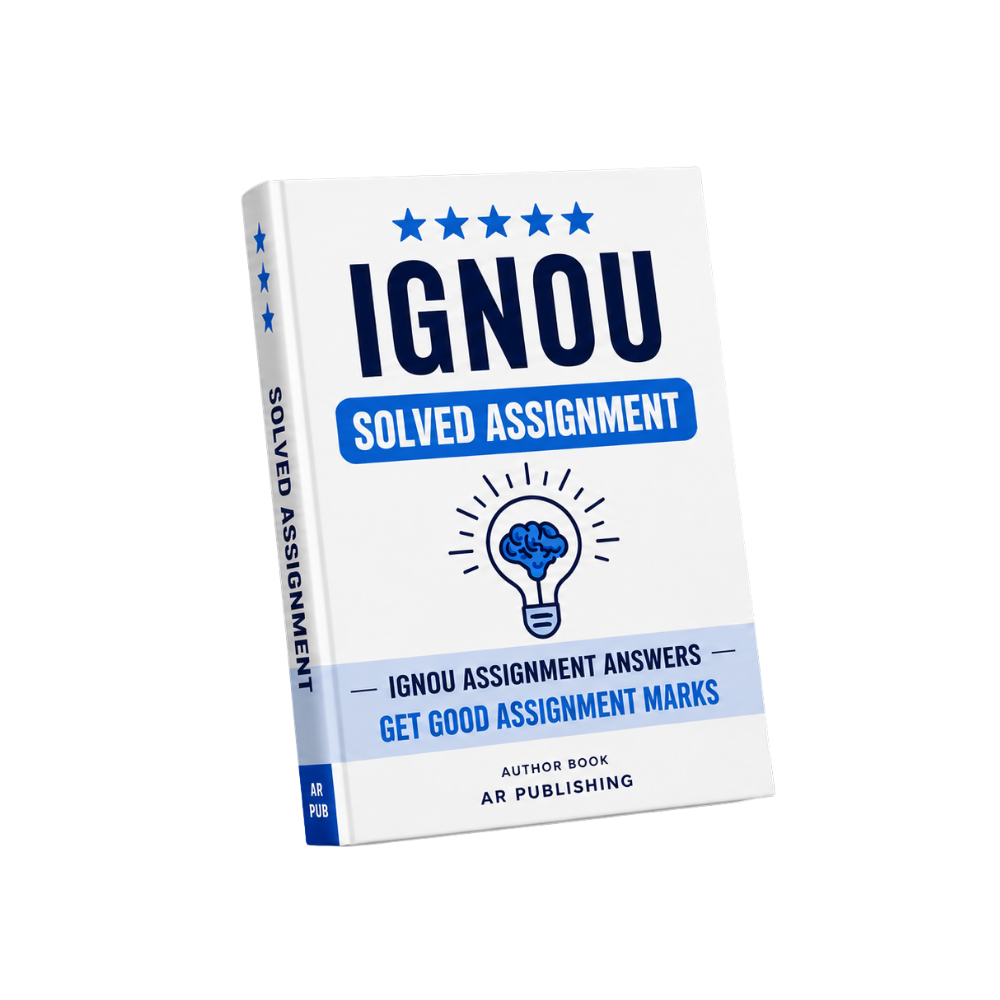
MPSE-013 IGNOU Solved Assignment 2026-27
Click to view offer details & terms
Get 10% OFF Instant Discount
Apply this coupon code at checkout to claim your academic discount instantly.
- Applicable on all university study materials
- Valid for up to 8 item(s) per order
- Valid till Oct 31, 2026
Enrolled in other IGNOU subjects?
Link your Enrollment No. to auto-map all your semester courses & free question papers.
Frequently Bought Together
Popular course materials frequently ordered together

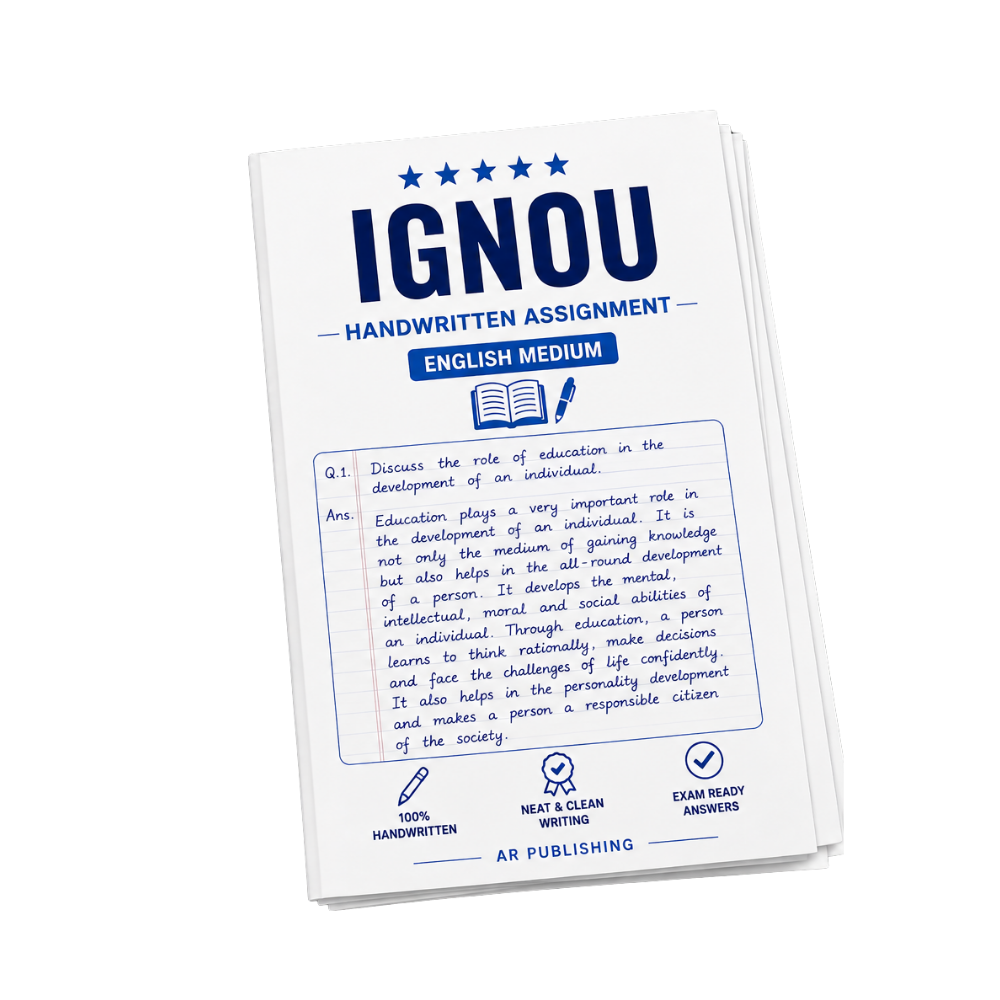
Syllabus & Overview
MPSE-013 Solved Assignment: Australia’s Foreign Policy TMA Overview
The Tutor Marked Assignment (TMA) for MPSE-013 (Australia’s Foreign Policy) is designed to assess critical analysis of Australia’s evolving diplomatic, economic, and strategic relationships. Below are key syllabus-aligned units with solved responses adhering to IGNOU’s academic rigor:
1. Unit-4: Policy-Making Processes in Australia
This unit examines the institutional framework governing Australia’s foreign policy, including the role of the Department of Foreign Affairs and Trade (DFAT), Parliament, and public opinion. A solved response might analyze how bipartisan consensus shapes policy continuity, contrasting it with the 2013 Foreign Policy White Paper’s emphasis on Asia-Pacific engagement. Key subtopics include:
- Decision-making hierarchy (Prime Minister, Cabinet, DFAT)
- Public diplomacy and stakeholder consultations
- Case study: The 2017 Foreign Policy White Paper’s shift toward Indo-Pacific strategy
2. Unit-7: Australia-United States Relations
This block explores the ANZUS Treaty (1951) and its contemporary implications, including defense cooperation under the 2018 US-Australia Force Posture Agreement. A solved assignment might compare historical alliances (e.g., Vietnam War) with modern challenges like China’s Belt and Road Initiative (BRI). Critical analysis includes:
- Economic interdependence (e.g., iron ore trade dependencies)
- Strategic autonomy vs. US alliance (e.g., submarine deal controversies)
- Bilateral trade agreements (US-Australia Free Trade Agreement, 2004)
3. Unit-13: Immigration and Refugees
Australia’s asylum seeker policies (e.g., offshore processing in Nauru/Papua New Guinea) are central to this unit. A solved response would critically evaluate the 2013 Operation Sovereign Borders and its human rights implications, juxtaposing it with Australia’s Pacific Solution legacy. Key themes:
- Multiculturalism vs. border security (e.g., 2026-27 refugee intake caps)
- Regional cooperation (e.g., Pacific Islands Forum’s role in resettlement)
- International law compliance (e.g., UNHCR guidelines)
4. Unit-15: Human Rights and Australia’s Foreign Policy
This unit assesses Australia’s conditional engagement on human rights, notably in ASEAN and the Pacific. A solved assignment might analyze the 2019 Foreign Minister’s Statement on Human Rights, contrasting Australia’s stance on Cambodia’s land rights abuses with its silence on Papua New Guinea’s constitutional crisis. Focus areas:
- Selective advocacy (e.g., Myanmar’s Rohingya crisis vs. East Timor)
- Economic incentives vs. moral diplomacy
- Regional human rights mechanisms (e.g., APEC Human Rights Network)
5. Unit-16: Nuclear Weapons Proliferation
Australia’s non-proliferation stance is explored through its 2017 Nuclear Non-Proliferation Treaty (NPT) advocacy and 2020 P5+1 Iran Deal support. A solved response would evaluate the 2019 Australia-US Nuclear Submarine Deal’s implications for regional stability, comparing it with Australia’s 1984 Nuclear Free Zone Act. Critical analysis includes:
- Dual-use technology exports (e.g., uranium trade with India)
- ASEAN’s nuclear restraint policies
- Australia’s role in the International Atomic Energy Agency (IAEA)
FAQs for MPSE-013 TMA
Q: Are Hindi-language answers accepted for MPSE-013?Yes, IGNOU permits Hindi translations of assignments, but English answers must strictly follow the official syllabus structure with cited references (e.g., DFAT reports, White Papers).
Q: How do I cite sources for policy documents?Use APA/IGNOU referencing format. Example: Department of Foreign Affairs and Trade (DFAT). (2021). Australia’s Foreign Policy White Paper 2020. Canberra: Commonwealth of Australia.
Assignment Submission Guidelines
- Word limits: 500 words (Q1), 250 words (Q2), 100 words (Q3)
- Deadlines: Check eGyanKosh for session-specific due dates (typically 31st May/30th November)
- Formatting: 12pt Times New Roman, 1.5 line spacing, numbered pages
Why buy from us?
-
Verified by top professors and 99th percentile students.
-
Always updated to the latest university curriculum.
-
High-quality, printable PDF formats with clear diagrams.
License & Terms
By purchasing this item, you agree to our standard academic license terms. You may use this product for personal study, but you may not resell or redistribute the files online.