

MPYE-016 IGNOU Guess Paper 2026-27
Click to view offer details & terms
Get 10% OFF Instant Discount
Apply this coupon code at checkout to claim your academic discount instantly.
- Applicable on all university study materials
- Valid for up to 8 item(s) per order
- Valid till Oct 31, 2026
Enrolled in other IGNOU subjects?
Link your Enrollment No. to auto-map all your semester courses & free question papers.
Frequently Bought Together
Popular course materials frequently ordered together
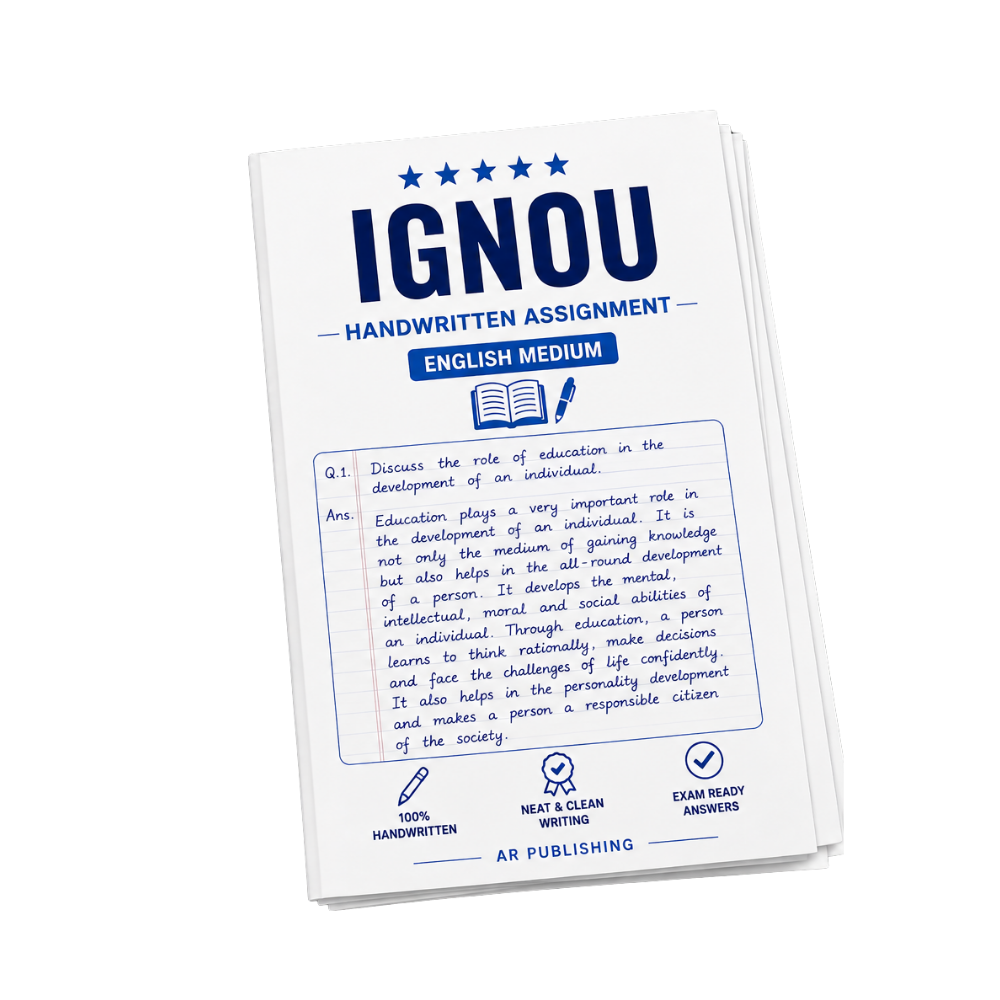
Syllabus & Overview
MPYE-016 Guess Paper: Term-End Exam (TEE) Preparation
This structured guess paper aligns with the IGNOU Degree Programme syllabus for MPYE-016 (Course Code MPYE-016) and emphasizes high-probability questions from past TEE exams (June & December sessions). It includes chapter-wise weightage analysis, time management tips, and subject-specific FAQs.
Key Syllabus Units for MPYE-016
- Unit 1: Nature and Scope of Public Enterprises
- Focus on definitions, characteristics, and objectives of public enterprises.
- Commonly asked: Comparison between public and private enterprises (20-25 marks in past papers).
- Unit 3: Financial Management in Public Sector
- Key topics: Budgetary control, financial planning, and public debt management.
- High-weightage: Case studies on budgetary allocation for infrastructure projects (15-20 marks).
- Unit 5: Economics of Disinvestment
- Critical themes: Reasons for disinvestment, global trends, and Indian experience.
- Frequently tested: Impact of disinvestment on fiscal policy (10-15 marks).
- Unit 7: Performance Evaluation of Public Enterprises
- Focus on KPIs, benchmarking, and efficiency metrics.
- Past exam pattern: Comparison of performance indicators across sectors (10-12 marks).
Exam Strategy and FAQs
- Time Management Tips
- Allocate 10 minutes per question for short-answer sections (20 marks).
- Dedicate 20-25 minutes to case studies (30-40 marks).
- Spend 5-7 minutes reviewing answers before submission.
- FAQs
- Q: Are numerical questions common in MPYE-016?: A: Yes, but only in Unit 3 (Financial Management). Focus on budgetary calculations and debt-to-GDP ratios.
- Q: How should I approach case studies?: A: Use the PESTEL framework (Political, Economic, Social, etc.) to analyze disinvestment scenarios in Unit 5.
Note: Prioritize Unit 3: and Unit 5 for maximum marks, as they appear in every TEE session. Use solved previous year papers for practice.
Why buy from us?
-
Verified by top professors and 99th percentile students.
-
Always updated to the latest university curriculum.
-
High-quality, printable PDF formats with clear diagrams.
License & Terms
By purchasing this item, you agree to our standard academic license terms. You may use this product for personal study, but you may not resell or redistribute the files online.