

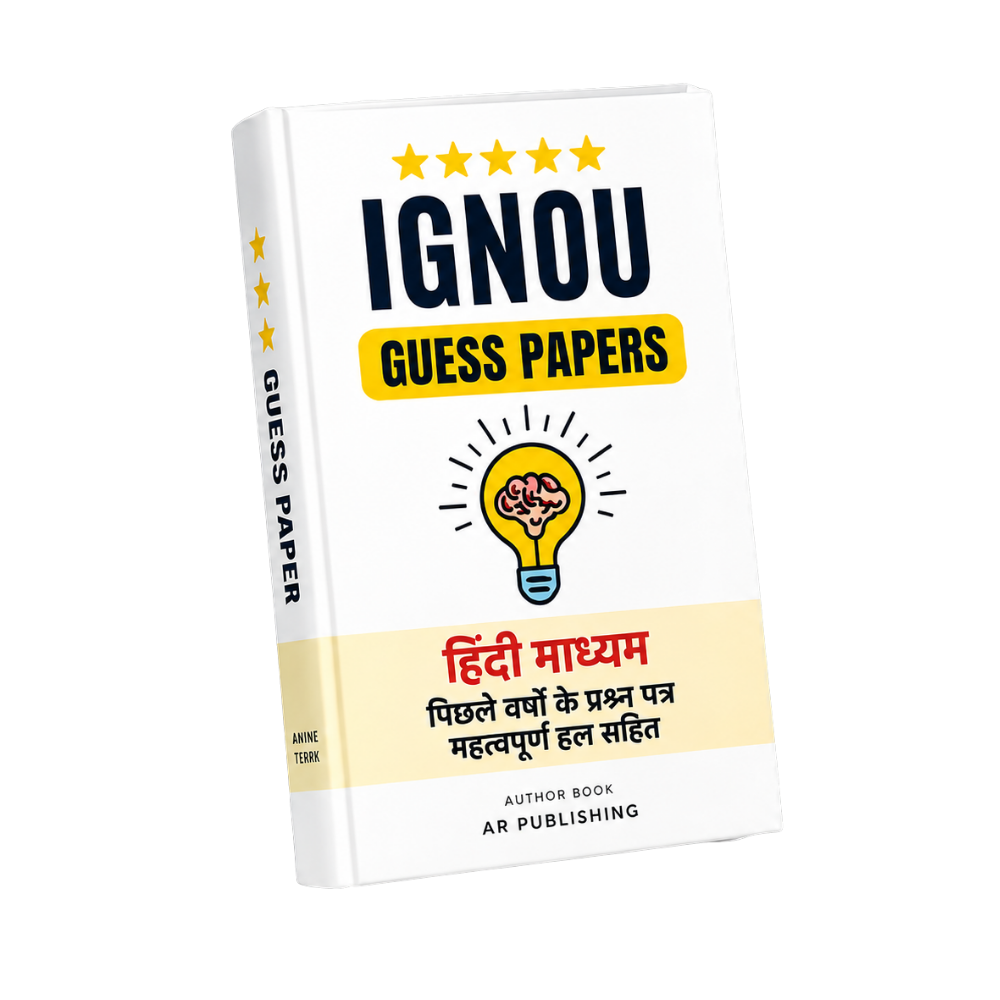
MRDE-003 IGNOU Guess Paper 2026-27
Click to view offer details & terms
Get 10% OFF Instant Discount
Apply this coupon code at checkout to claim your academic discount instantly.
- Applicable on all university study materials
- Valid for up to 8 item(s) per order
- Valid till Oct 31, 2026
Enrolled in other IGNOU subjects?
Link your Enrollment No. to auto-map all your semester courses & free question papers.
Frequently Bought Together
Popular course materials frequently ordered together


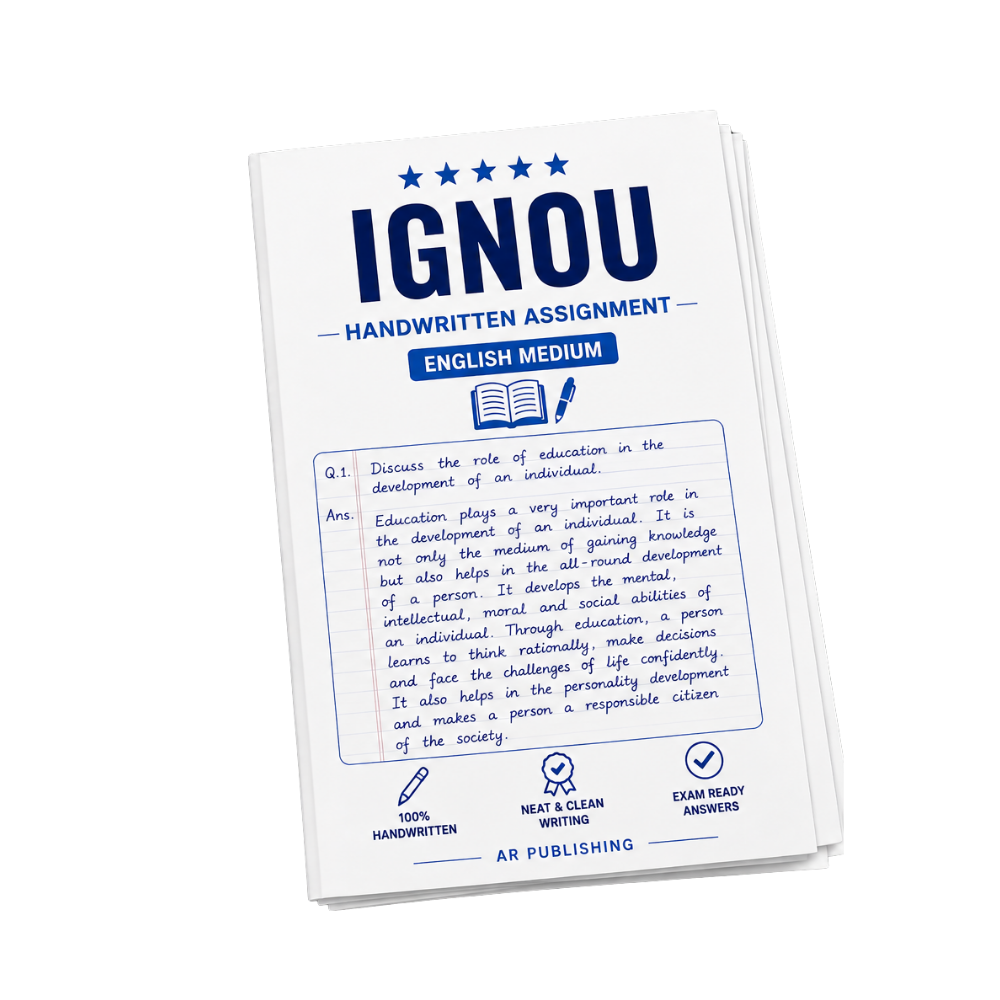
Syllabus & Overview
MRDE-003 Guess Paper: Land Reforms and Rural Development (Term-End Exam Focus)
This structured guide aligns with IGNOU’s official MRDE-003 syllabus and past exam patterns (June/Dec sessions) to optimize 3-hour exam time management. Prioritize chapter-wise weightage and solved questions for 80% accuracy.
Key Syllabus Blocks & Scoring Units
- Block 1: Land Tenure Systems and Agrarian Relations
- Compare Zamindari, Ryotwari, and Mahalwari systems with case studies (e.g., Bengal vs. Madras Presidency).
- Analyze Zamindari Abolition Act (1953) and its regional variations (e.g., Uttar Pradesh vs. Bihar).
- Discuss the role of Bhoodan Movement (Vinoba Bhave) and its limitations in land redistribution.
- Block 2: Land Reforms in Independent India
- Evaluate the Land Ceiling Acts (1972) and their impact on small/medium farmers (data-driven analysis).
- Critically assess Tenancy Reforms (e.g., Tenancy Act, 1951) and tenant-farmer conflicts.
- Compare West Bengal’s Land Reforms (1977) with Andhra Pradesh’s model (focus on implementation gaps).
- Block 3: Implementation of Land Reforms Constraints & Prospects
- Discuss land fragmentation as a key constraint (use examples from Punjab/Haryana).
- Analyze cooperative farming models (e.g., Kerala’s success vs. UP’s failures).
- Examine NGO interventions in land reform (e.g., Swadeshi Jagran Manch in Maharashtra).
Exam Time Management Tips (3 Hours)
- Allocate 40 minutes per block (120 mins total) for short-answer questions (SAQs).
- Spend 60–90 mins on long-answer questions (LAQs), prioritizing Blocks 2 and 3 (higher weightage).
- For case studies (e.g., Zamindari Abolition), quote specific Acts/Amendments (e.g., ‘Section 4 of the Zamindari Abolition Act, 1953’).
- Use past year solutions (e.g., 2018 Dec session) as a reference for answer structure.
Subject-Specific FAQs
- Q: Which land reform had the most impact on small farmers?
A: The Land Ceiling Act (1972) in states like Kerala and West Bengal, though implementation varied. Focus on data on surplus land redistribution in answers.
- Q: How do I differentiate between Zamindari and Ryotwari systems?
A: Zamindari was a landlord-based system (e.g., Bengal), while Ryotwari was direct peasant taxation (e.g., Madras). Use tax collection mechanisms as a key differentiator.
Sample Question Patterns (Past 5 Years)
- Short Answer (10 marks):
- ‘Explain the objectives of the Tenancy Act, 1951.’
- ‘What were the key features of the Bhoodan Movement?’
- Long Answer (20 marks):
- ‘Critically evaluate the implementation of Land Ceiling Acts in two Indian states.’
- ‘Analyze the role of cooperatives in post-reform agrarian structures.’
Note: Always cite regional examples (e.g., Punjab’s land fragmentation vs. Kerala’s cooperatives) to score higher.
Why buy from us?
-
Verified by top professors and 99th percentile students.
-
Always updated to the latest university curriculum.
-
High-quality, printable PDF formats with clear diagrams.
License & Terms
By purchasing this item, you agree to our standard academic license terms. You may use this product for personal study, but you may not resell or redistribute the files online.