

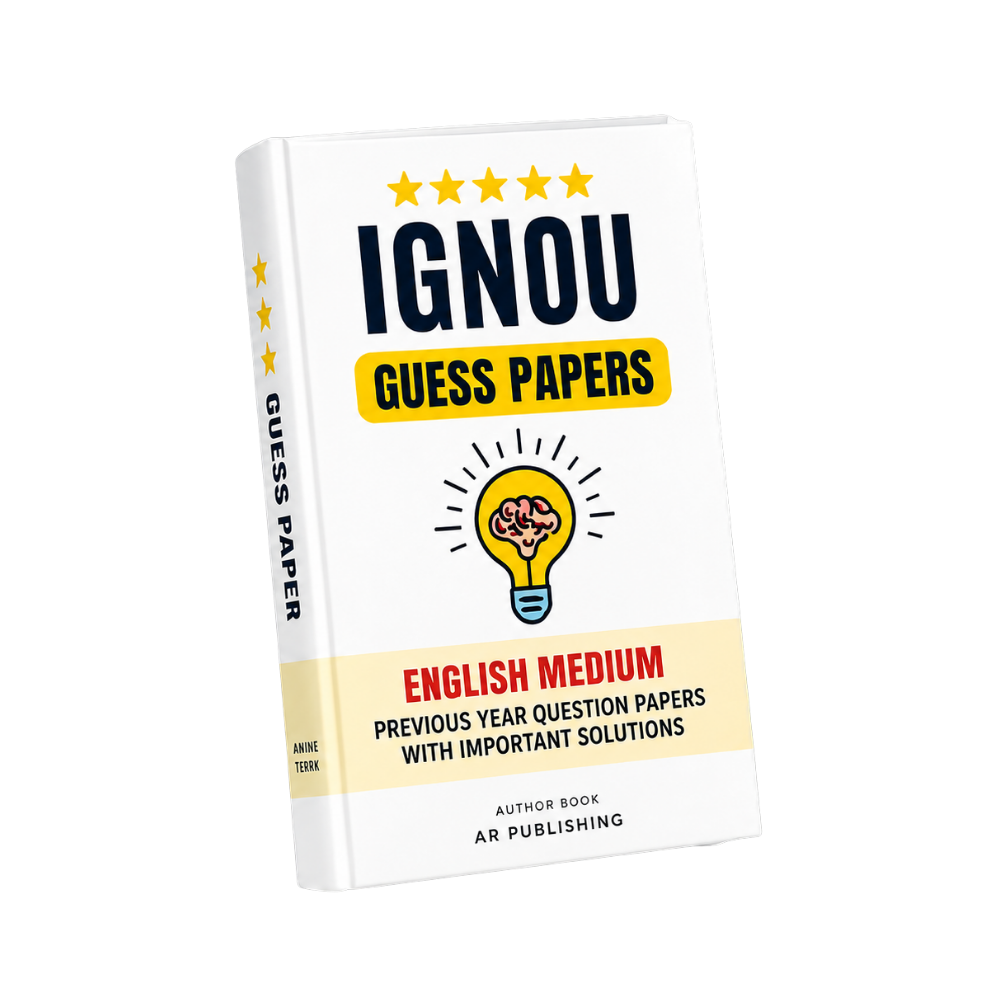
MSD-015 IGNOU Guess Paper 2026-27
Click to view offer details & terms
Get 10% OFF Instant Discount
Apply this coupon code at checkout to claim your academic discount instantly.
- Applicable on all university study materials
- Valid for up to 8 item(s) per order
- Valid till Oct 31, 2026
Enrolled in other IGNOU subjects?
Link your Enrollment No. to auto-map all your semester courses & free question papers.
Frequently Bought Together
Popular course materials frequently ordered together
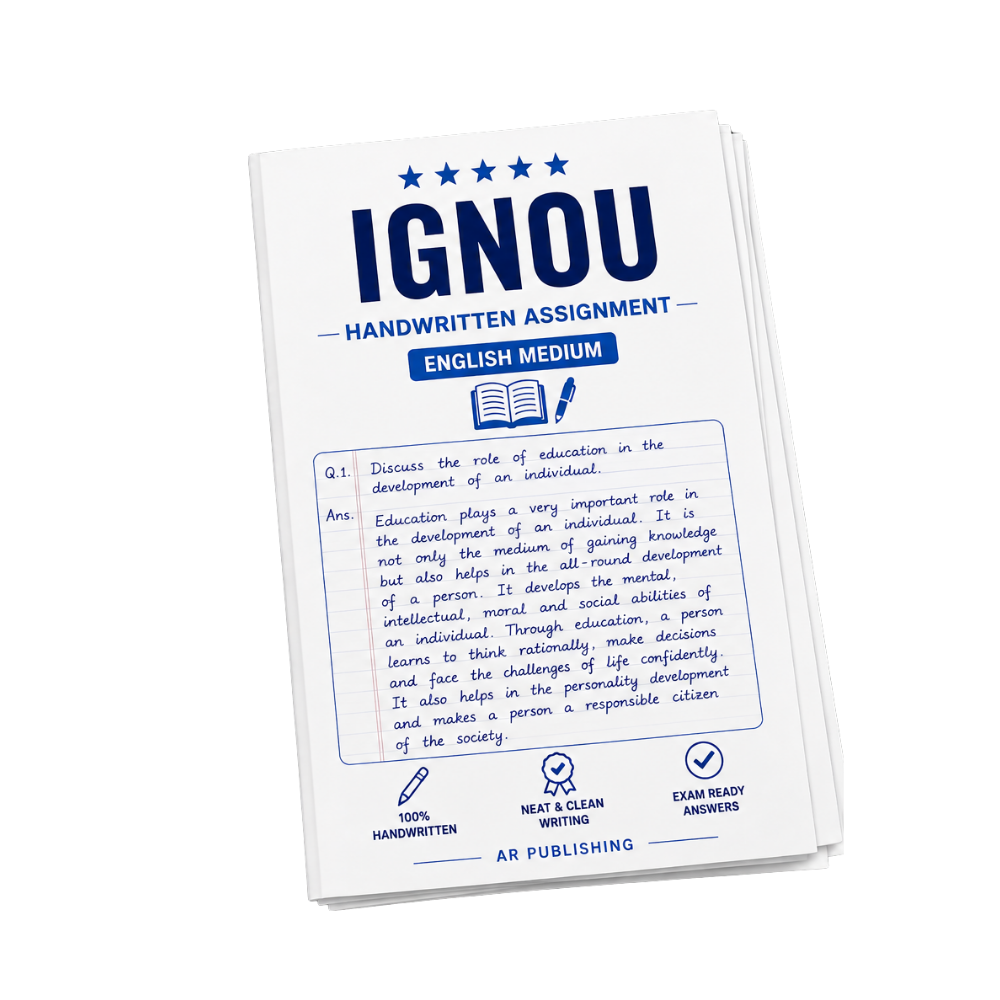
Syllabus & Overview
MSD-015 Guess Paper: Institutions, Governance and Policies (PGDSS)
This structured guess paper aligns with IGNOU’s official curriculum for MSD-015, emphasizing Block-1: Institutional Mechanism, Block-2: Governance, and Block-3: Policy Tools. It distills key themes from previous TEE papers (2018–2023) and provides time-management strategies for the 3-hour exam.
Key Blocks & Topics
- Block-1: Institutional Mechanism
- Comparative analysis of formal vs. informal institutions (e.g., UN conventions vs. local customary laws).
- Role of NGOs and civil society in policy advocacy (case studies: Greenpeace, WWF).
- Public-private partnerships (PPPs) in sustainability projects (weightage: ~25%).
- Block-2: Governance
- Decentralized governance models (e.g., Panchayati Raj Act, 1992).
- Corporate governance and sustainability reporting (GRI standards).
- Governance failures and lessons from disasters (e.g., Bhopal gas tragedy).
- Block-3: Policy Tools
- Economic instruments (e.g., carbon taxes, subsidies for renewables).
- Regulatory vs. voluntary policies (e.g., Paris Agreement vs. corporate sustainability pledges).
- Implementation gaps in environmental policies (focus on India’s NAPCC).
Exam Strategy & Weightage
The TEE typically allocates:
- 30% to institutional frameworks (Block-1), including case-based questions.
- 40% to governance models (Block-2), with emphasis on legal and ethical dimensions.
- 30% to policy tools (Block-3), prioritizing real-world applications.
Allocate 1 hour for reading the question paper, 1 hour for answering 3–4 long-answer questions (20 marks each), and 1 hour for short-answer questions (10 marks each).
Frequently Asked Questions
Q: Are diagrams/flowcharts allowed in the exam?Yes, simple diagrams (e.g., governance structures, policy implementation flows) are permitted if clearly labeled and explained.
Q: How to balance theory and case studies?Allocate 60% of your answer to theoretical frameworks (e.g., Ostrom’s governance principles) and 40% to contextual examples (e.g., India’s Swachh Bharat Abhiyan).
Sample Question Patterns (2023 Trends)
- Long Answer (20 marks): “Evaluate the effectiveness of decentralized governance in implementing climate action policies in India.”
- Short Answer (10 marks): “Compare the role of formal and informal institutions in disaster management.”
- Case Study (15 marks): Analyze the policy tools used by the European Union to achieve its 2030 sustainability targets.”
Why buy from us?
-
Verified by top professors and 99th percentile students.
-
Always updated to the latest university curriculum.
-
High-quality, printable PDF formats with clear diagrams.
License & Terms
By purchasing this item, you agree to our standard academic license terms. You may use this product for personal study, but you may not resell or redistribute the files online.