

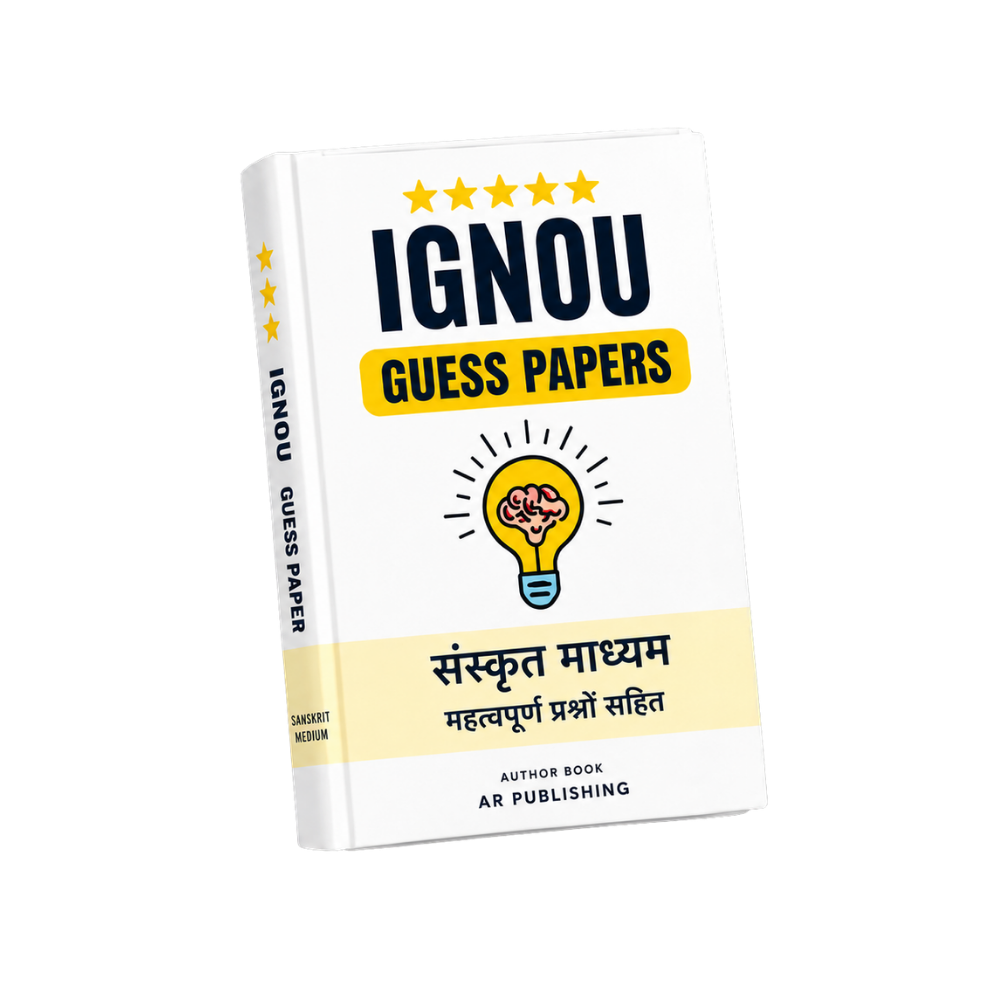
MSK-006 IGNOU Guess Paper 2026-27
Click to view offer details & terms
Get 10% OFF Instant Discount
Apply this coupon code at checkout to claim your academic discount instantly.
- Applicable on all university study materials
- Valid for up to 8 item(s) per order
- Valid till Oct 31, 2026
Enrolled in other IGNOU subjects?
Link your Enrollment No. to auto-map all your semester courses & free question papers.
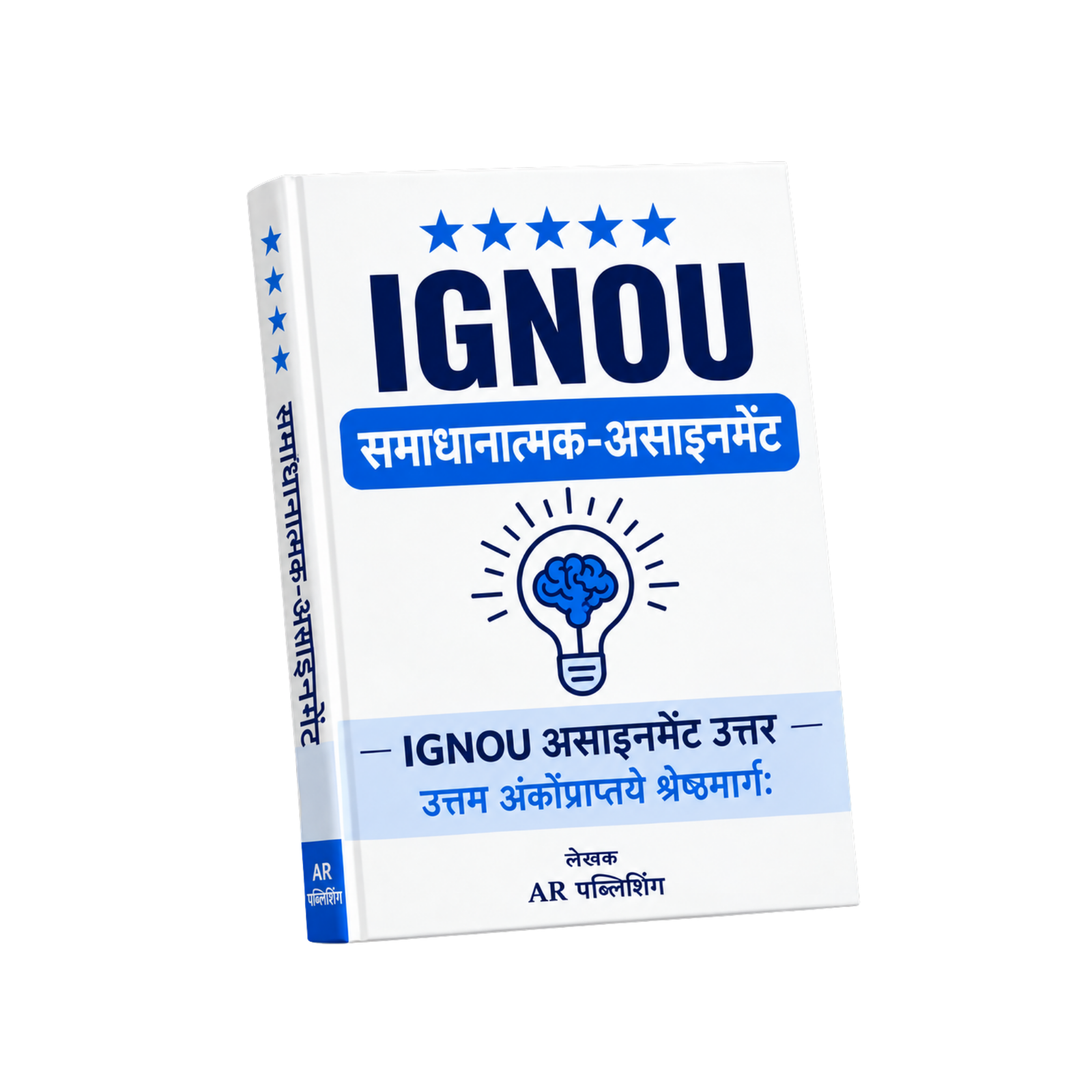
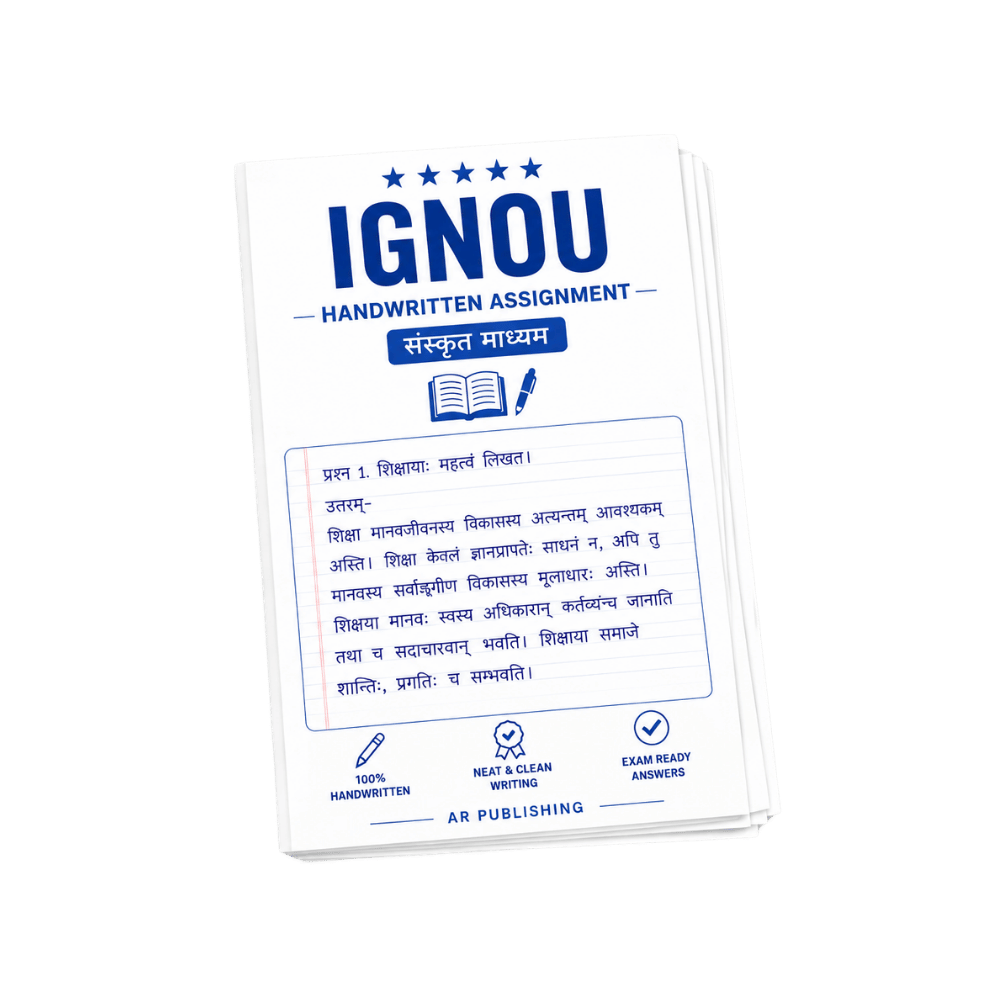
Frequently Bought Together
Popular course materials frequently ordered together
Syllabus & Overview
Course Scope & Syllabus Overview for MSK-006:
MSK-006: is a core course under the Master of Arts (Sanskrit) program, designed to equip students with a rigorous understanding of linguistic theory, translation techniques, and essay composition in Sanskrit Studies. This course bridges foundational linguistic principles with practical applications, emphasizing both theoretical frameworks (such as phonetics, syntax, and semantics) and skill-based modules (translation methodology and essay writing). Aligned with IGNOU’s CBCS curriculum, it prepares students to analyze linguistic structures critically, navigate interlingual communication challenges, and articulate coherent arguments in scholarly writing—essential for advanced research and academic rigor in Sanskrit and allied disciplines.Key Syllabus Units & Topics
- -1 : Introduces core linguistic concepts, including the nature of language, its historical development, and the distinction between natural and artificial languages, with a focus on Sanskrit’s grammatical paradigms and phonetic evolution.
- -2 -: Explores phonetic analysis, sound systems, and phonetic transformations in Sanskrit, covering aspirates, retroflexion, and vowel harmony while linking these to broader Indo-Aryan linguistic trends.
- -4 : Examines linguistic typology, classifying languages into families (e.g., Indo-European, Dravidian) and analyzing Sanskrit’s placement within Indo-Aryan frameworks, including comparative studies with Prakrit and Apabhramsa.
- -5 : Traces the evolution of Sanskrit script (Devanagari, Brahmi), its phonetic adaptations, and the interplay between linguistic theory and epigraphic evidence across historical periods.
- -6 : Focuses on translation methodologies (direct, indirect, and interpretive) for Sanskrit texts, alongside essay construction techniques, including rhetorical structures, stylistic coherence, and adherence to academic conventions.
Frequently Asked Questions
Q: What is the marking scheme for the Term-End Examination (TEE) in MSK-006, and how are internal assignments weighted?
A: The TEE for MSK-006 carries 100 marks, divided into objective (20 marks) and descriptive (80 marks) sections, while assignments account for 30 marks each, contributing 60 marks total to the final grade—students must secure at least 40% in assignments and 50% in the TEE to pass.
Q: Which units in MSK-006 are most frequently tested in past TEE papers, and how can students prioritize revision?
A: Units -2 and -6 appear most recurrently, followed by -1 . Prioritize these by solving past papers, focusing on phonetic rules and translation techniques, while ensuring conceptual clarity in syntax (-3) and linguistic classification (-4).
Why buy from us?
-
Verified by top professors and 99th percentile students.
-
Always updated to the latest university curriculum.
-
High-quality, printable PDF formats with clear diagrams.
License & Terms
By purchasing this item, you agree to our standard academic license terms. You may use this product for personal study, but you may not resell or redistribute the files online.