

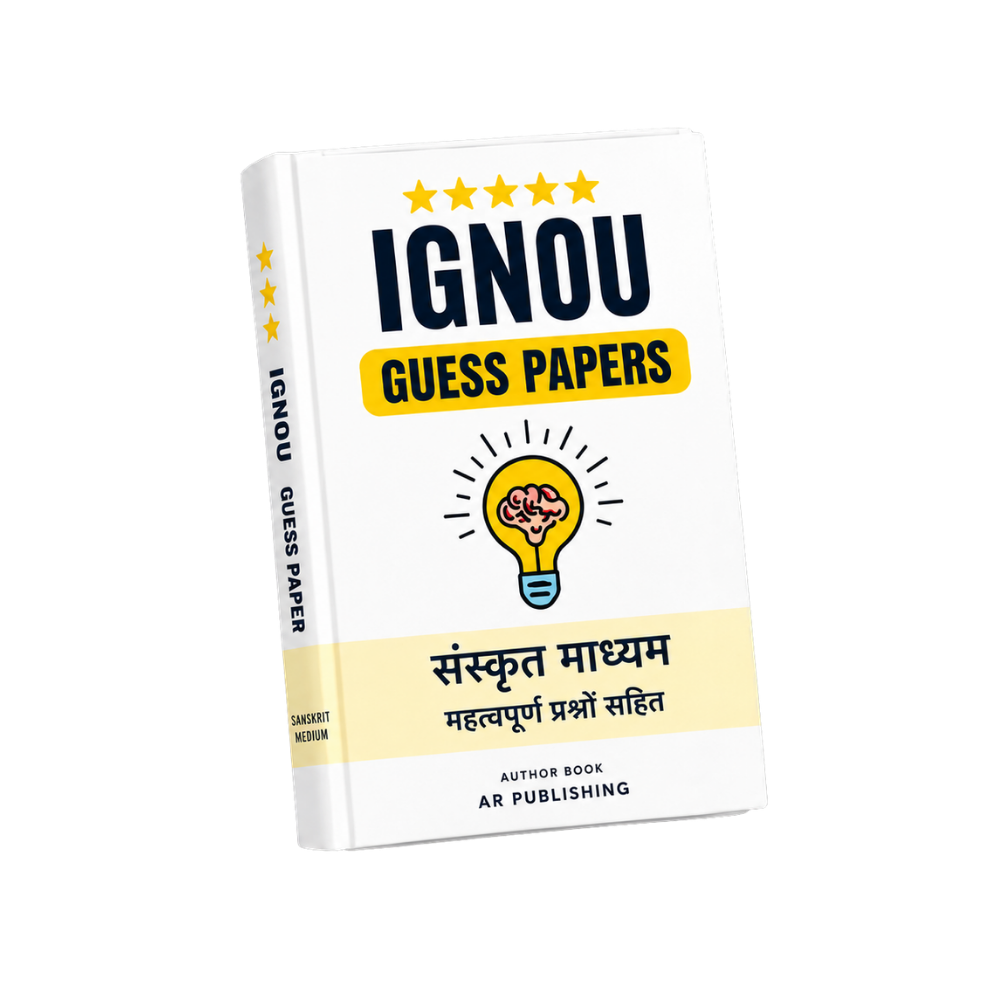
MSK-032 IGNOU Guess Paper 2026-27
Click to view offer details & terms
Get 10% OFF Instant Discount
Apply this coupon code at checkout to claim your academic discount instantly.
- Applicable on all university study materials
- Valid for up to 8 item(s) per order
- Valid till Oct 31, 2026
Enrolled in other IGNOU subjects?
Link your Enrollment No. to auto-map all your semester courses & free question papers.
Frequently Bought Together
Popular course materials frequently ordered together
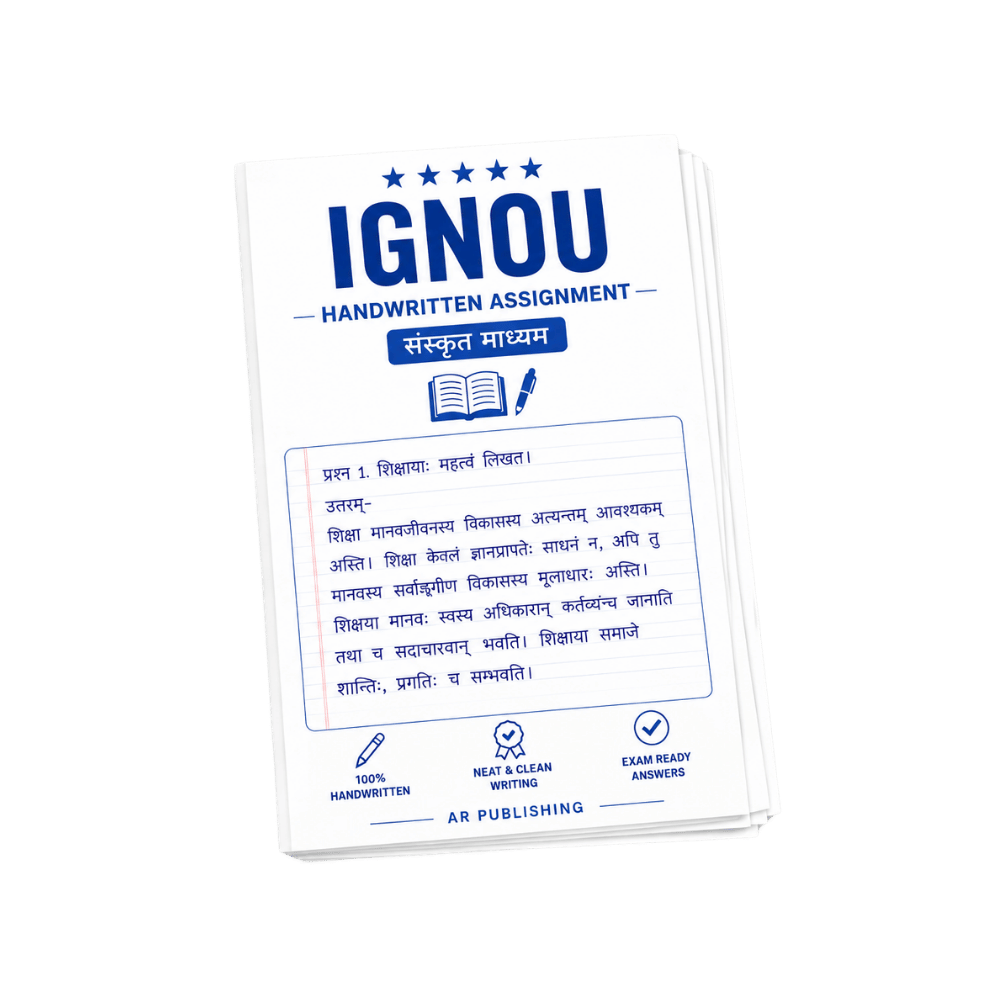
Syllabus & Overview
Course Scope and Syllabus Overview for MSK-032:
MSK-032 is a core course under the PG Diploma in Indian Philosophy (PGDBD) curriculum, designed to introduce students to the foundational structures of Nyaya, Vaisheshika, and Charvaka philosophies. This course explores their metaphysical frameworks, epistemological principles, and logical systems, offering a rigorous examination of their historical evolution, key texts, and scholarly lineages. The syllabus is structured to bridge theoretical understanding with practical application, ensuring students grasp the philosophical nuances essential for critical analysis in Indian thought.Key Syllabus Units and Topics
- -1 : This unit delves into the essence of Nyaya, Vaisheshika, and Charvaka philosophies, tracing their origins to ancient Indian thinkers like Gotama, Kanada, and Charvaka. It examines their foundational texts—such as Nyaya Sutras, Vaisheshika Sutras, and Charvaka’s materialist treatises—while analyzing their distinct methodological approaches and doctrinal distinctions.
- Nyaya Darshan : Focuses on Nyaya’s logical frameworks, including inference (anumana), perception (pratyaksha), and analogy (upamana), while dissecting its epistemological models. The unit also explores its debates on causality, reasoning, and the nature of valid knowledge.
- Vaisheshika Darshan : Investigates Vaisheshika’s atomic theory, categorization of elements (dravya), and the doctrine of compounding (samasa). It highlights its classification of substances, qualities, and actions, emphasizing its systematic approach to ontology.
- : Critically evaluates Charvaka’s materialist and empiricist stance, examining its rejection of supernatural entities and its reliance on sensory experience. The unit contrasts its hedonistic ethics with the metaphysical claims of Nyaya and Vaisheshika.
- : Encourages comparative analysis of the three philosophies, assessing their philosophical coherence, logical rigor, and relevance to contemporary debates. It also explores their intersections with modern scientific and philosophical inquiries.
Frequently Asked Questions
Q: What is the marking scheme for MSK-032’s Term-End Examination (TEE), and how are internal assignments evaluated?
A: The TEE for MSK-032 carries 100 marks, divided into objective and descriptive sections, with internal assignments contributing 30 marks (20% of total evaluation). Assignments are graded on conceptual clarity, critical analysis, and adherence to prescribed word limits.
Q: Are there repeated questions in past TEE papers for MSK-032, and how can students identify high-weightage topics?
A: Yes, certain questions—particularly on Nyaya’s logic, Vaisheshika’s ontology, and Charvaka’s empiricism—recur frequently. Reviewing solved past papers (June/December cycles) and focusing on chapter-wise weightage (e.g., 30% on Unit 1) can significantly enhance preparation efficiency.
Why buy from us?
-
Verified by top professors and 99th percentile students.
-
Always updated to the latest university curriculum.
-
High-quality, printable PDF formats with clear diagrams.
License & Terms
By purchasing this item, you agree to our standard academic license terms. You may use this product for personal study, but you may not resell or redistribute the files online.