

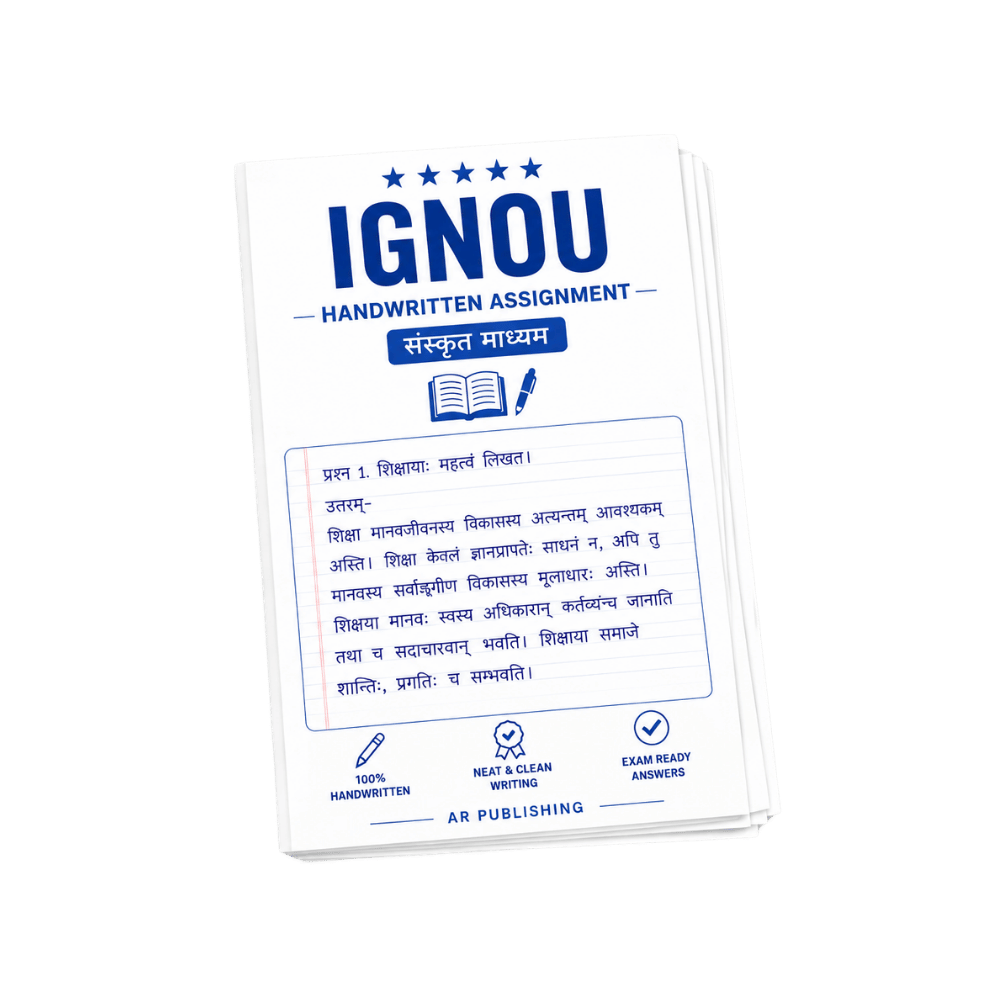
MSK-034 IGNOU Handwritten Assignment 2026-27
Click to view offer details & terms
Get 10% OFF Instant Discount
Apply this coupon code at checkout to claim your academic discount instantly.
- Applicable on all university study materials
- Valid for up to 8 item(s) per order
- Valid till Oct 31, 2026
Enrolled in other IGNOU subjects?
Link your Enrollment No. to auto-map all your semester courses & free question papers.
Frequently Bought Together
Popular course materials frequently ordered together
Syllabus & Overview
Course Scope & Syllabus Overview for IGNOU MSK-034:
IGNOU’s MSK-034 offers an in-depth exploration of three foundational schools of Indian philosophy—Mīmāṃsā, Vedānta, and Jain Dharma—within the PG Diploma in Indian Philosophy (PGDBD) curriculum. This course bridges textual analysis and philosophical inquiry, equipping students with critical tools to examine the ontological, epistemological, and ethical frameworks of these traditions. Through structured study blocks, learners dissect the historical evolution, core tenets, and interpretative methodologies of each system, fostering nuanced understanding of their contributions to Indian thought. The syllabus integrates primary texts, commentarial traditions, and comparative philosophical debates, ensuring alignment with the CBCS framework while emphasizing rigorous academic engagement with Sanskrit Studies.Key Syllabus Units & Topics
- -1 : This unit traces Mīmāṃsā’s textual authority (śāstra) and ritualistic epistemology, analyzing its Pūrva and Uttara Mīmāṃsā subdivisions, the Prabhākara and Bhasya schools, and debates on action (karma), sacrifice (yajña), and the nature of truth (satya).
- -2 : Covering Advaita, Viśiṣṭādvaita, and Dvaita Vedānta, this block examines Brahma-sūtra’s philosophical structure, the teachings of Śaṅkara, Rāmānuja, and Madhva, and their resolutions of duality (dvaita), non-duality (advaita), and qualified non-duality (viśiṣṭādvaita).
- -3 : Focused on Jain Anekāntavāda (non-absolutism) and āsevā/naisevā principles, this unit explores Tīrthaṅkar philosophy, the nature of soul (jīva), karma, and ethical non-violence (ahimsa), alongside comparisons with Vedāntic and Mīmāṃsāic perspectives.
- - : A comparative analysis of epistemological frameworks (pramāṇa), liberation (mokṣa) theories, and metaphysical assumptions across the three philosophies, emphasizing their intertextual dialogues and doctrinal divergences.
- : Critical engagement with Mīmāṃsā Sutras, Brahma-sūtras, Jain Agamas, and commentaries by Śaṅkara, Rāmānuja, and Kundakunda, with emphasis on textual exegesis and philosophical critique.
Frequently Asked Questions
Q: What is the marking scheme for the MSK-034 assignment, and how many questions are typically assigned per session?
A: The MSK-034 assignment carries 30 marks and usually includes two long-answer questions (15 marks each) or one essay-type question (20 marks) plus two short-answer questions (10 marks each), as per IGNOU’s PGDBD assignment guidelines. Always verify the Study Centre’s latest question paper for session-specific variations.
Q: What are the minimum pass marks required for MSK-034, and how does the internal assessment contribute to the final grade?
A: The minimum pass marks for MSK-034 are 50% in both theory examination (70 marks) and assignment (30 marks). The assignment contributes 30% to the final grade, while the term-end exam accounts for the remaining 70%, with no internal assessment component in this course.
Why buy from us?
-
Verified by top professors and 99th percentile students.
-
Always updated to the latest university curriculum.
-
High-quality, printable PDF formats with clear diagrams.
License & Terms
By purchasing this item, you agree to our standard academic license terms. You may use this product for personal study, but you may not resell or redistribute the files online.