

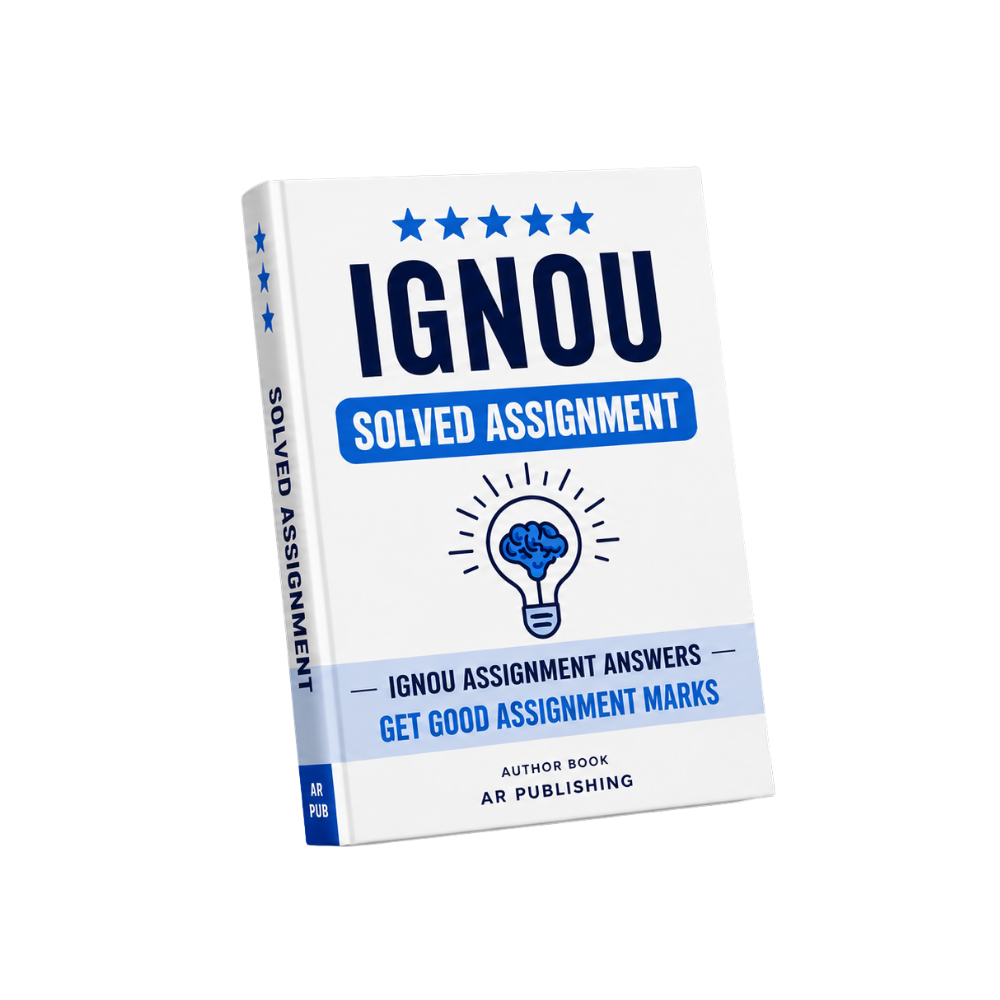
MSWE-002 IGNOU Solved Assignment 2026-27
Click to view offer details & terms
Get 10% OFF Instant Discount
Apply this coupon code at checkout to claim your academic discount instantly.
- Applicable on all university study materials
- Valid for up to 8 item(s) per order
- Valid till Oct 31, 2026
Enrolled in other IGNOU subjects?
Link your Enrollment No. to auto-map all your semester courses & free question papers.
Frequently Bought Together
Popular course materials frequently ordered together
Syllabus & Overview
Course Scope and Syllabus Overview for MSWE-002: Women and Child Development
MSWE-002: Women and Child Development is a core component of IGNOU’s Master’s curriculum within the School of Social Work, designed to critically examine gender dynamics, developmental policies, and socio-economic factors influencing women and children in India. This course bridges interdisciplinary insights from sociology, public health, and policy studies to analyze systemic inequalities, historical trajectories of gender roles, and contemporary interventions. Students explore evidence-based strategies for empowerment, legal frameworks, and community-based safeguards while aligning with the United Nations Sustainable Development Goals. The study material equips learners with analytical tools to evaluate government schemes, non-governmental initiatives, and grassroots programs, ensuring rigorous adherence to IGNOU’s CBCS framework.Key Syllabus Units and Topics
- Block-1: Status of Women in India: This unit dissects historical and contemporary gender disparities, including literacy gaps, labor force participation, and cultural practices like child marriage and dowry. It evaluates constitutional provisions (e.g., Article 15, 19) and their implementation through case studies on legal reforms and societal resistance.
- Block-2: Women and Development Initiatives: Focuses on policy frameworks such as the National Policy for Women (2001) and the Beti Bachao Beti Padhao scheme, analyzing their impact on maternal health, education, and economic autonomy. The unit also critiques participatory approaches in rural development programs.
- Block-3: Status of Children in India: Examines child labor, malnutrition, and access to education under the Right to Education Act (2009), integrating data from National Family Health Surveys (NFHS). Thematic discussions include child protection mechanisms and the role of Anganwadi centers in early childhood nutrition.
- Block-4: Care and Safeguards of Children: Explores institutional safeguards like the Juvenile Justice Act (2015) and the Protection of Children from Sexual Offences (POCSO) Act, alongside community-based interventions. Case studies highlight child trafficking, street children, and the role of NGOs in advocacy.
Frequently Asked Questions
Q: What is the marking scheme for MSWE-002 Tutor-Marked Assignments (TMAs), and how are they weighted in the final grade?
A: TMAs for MSWE-002 carry 30% of the total marks, with each question typically graded on clarity, depth of analysis, and adherence to IGNOU’s prescribed word limits (e.g., 500 words for Section A). The remaining 70% is derived from term-end examinations, which assess conceptual understanding and application across all syllabus blocks.
Q: Are there specific resources or databases recommended by IGNOU for referencing in MSWE-002 assignments?
A: IGNOU mandates the use of official sources such as eGyanKosh, National Family Health Survey (NFHS) reports, and government publications (e.g., Ministry of Women and Child Development annual reports). Citing primary data from these platforms ensures alignment with academic integrity guidelines and avoids plagiarism penalties.
Why buy from us?
-
Verified by top professors and 99th percentile students.
-
Always updated to the latest university curriculum.
-
High-quality, printable PDF formats with clear diagrams.
License & Terms
By purchasing this item, you agree to our standard academic license terms. You may use this product for personal study, but you may not resell or redistribute the files online.