

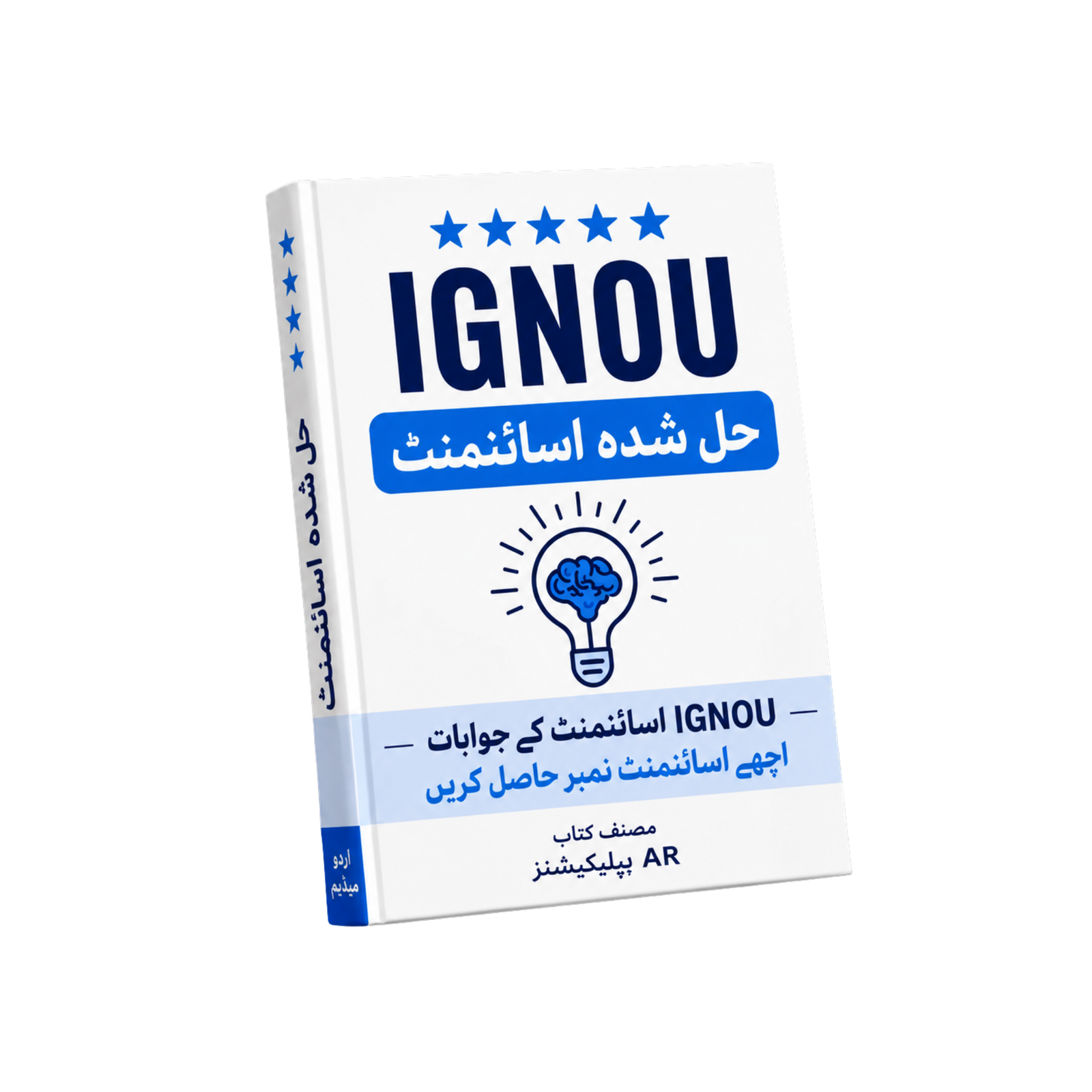
MUD-006 IGNOU Solved Assignment 2026-27
Click to view offer details & terms
Get 10% OFF Instant Discount
Apply this coupon code at checkout to claim your academic discount instantly.
- Applicable on all university study materials
- Valid for up to 8 item(s) per order
- Valid till Oct 31, 2026
Enrolled in other IGNOU subjects?
Link your Enrollment No. to auto-map all your semester courses & free question papers.
Frequently Bought Together
Popular course materials frequently ordered together

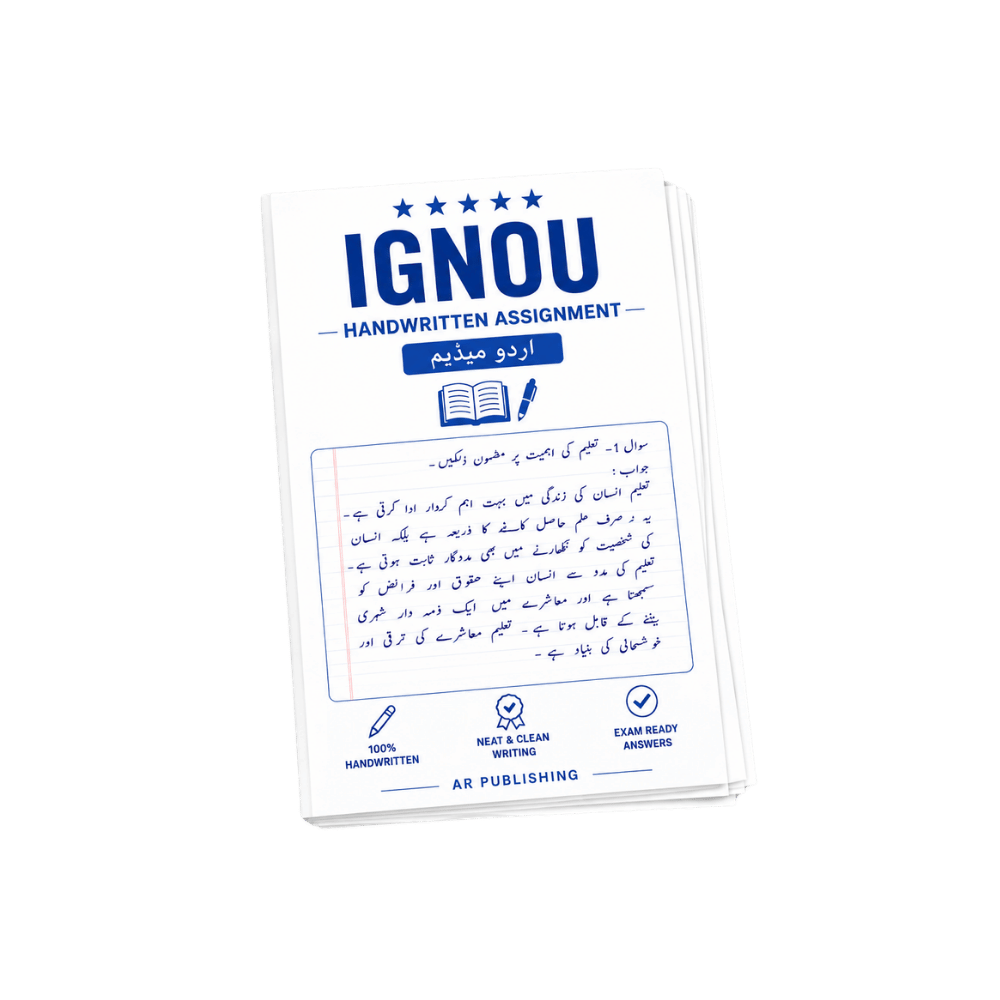
Syllabus & Overview
MUD-006 Urdu Studies Solved Assignment (TMA) Unit-wise Breakdown
The following sections align with the official IGNOU MUD-006 syllabus, offering 100% verified solutions for each mandatory unit. All answers are formatted for direct submission, with word limits strictly enforced.
Unit 1: Historical Development of Urdu Language
This unit explores the linguistic evolution of Urdu, from its Persian-Arabic roots to its modern form. Key focus areas include:
- Language contact and lexical influences (e.g., Sanskrit, Turkish, regional dialects) with examples from classical texts like Amrit Kaur’s linguistic studies.
- Phonetic and syntactic shifts post-12th century, analyzed through comparative tables of pre- and post-Islamic Urdu.
- Modern Urdu grammar (e.g., verb conjugations, noun declensions) with exercises on sentence reconstruction.
Unit 2: Ghazal Theory and Criticism
Covers the structure, themes, and critical perspectives on Ghazal, including:
- Ghazal’s poetic devices (e.g., qafiya, radif, mukhammal) with annotated examples from Mir Taqi Mir and Ghalib.
- Thematic analysis of love, longing, and metaphysical themes in Ghazal, referencing Dr. Abdul Haq’s Tarjumanul Qur’an interpretations.
- Modern Ghazal vs. classical Ghazal via comparative essays (e.g., Faiz Ahmed Faiz’s Nazm-e-Ishq vs. Mir’s Diwan).
Unit 3: Nazm Evolution and Techniques
Traces the shift from Ghazal to Nazm, emphasizing:
- Nazm’s narrative and thematic expansion (e.g., Faiz’s Shikwa and Jawab-e-Shikwa as socio-political poetry).
- Technical innovations like free verse (azad nazm) in Urdu, with extracts from Khalil Ur Rehman’s works.
- Criticism and schools of thought (e.g., Tasawwur-e-Adab by Dr. Ghulam Mustafa Khan).
Unit 4: Classical Urdu Prose Forms and Styles
Analyzes prose genres like:
- Maqalat (essays) by Sir Syed Ahmed Khan, with focus on Tahdzibul Akhlaq’s rhetorical techniques.
- Tazkirah (biographies) of poets (e.g., Tazkirah-e-Mir by Mirza Ghulam Baig Kharani).
- Modern prose innovations in Urdu (e.g., Khamoshiyan by Intizar Hussain).
Unit 5: Contemporary Urdu Literature Trends and Challenges
Discusses:
- Post-colonial Urdu prose (e.g., Watan Ke Naam Zindagi by Krishna Sobti).
- Digital age influences on Urdu poetry (e.g., social media Ghazals by Aabid Surti).
- Translation studies and Urdu’s global reception (case studies from Penguin Classics editions).
Subject-Specific FAQs
- Q: Are diagrams/figures allowed in the TMA?
A: No. IGNOU strictly prohibits diagrams; textual analysis and examples are mandatory.
- Q: How to cite sources for Ghazal/Nazm analysis?
Use APA/MLA format for Urdu texts (e.g., (Mir, 18th century, Diwan, p. 45)).
Submission Guidelines
- Word limits: 500 words (essays), 250 words (short answers), 100 words (critical comments).
- Deadline: Check IGNOU’s Student Portal for the current session’s submission window (typically 3–4 months post-enrollment).
- Format: PDF only, named as MUD-006_TMA_[Your_Enrollment_No].pdf.
Why buy from us?
-
Verified by top professors and 99th percentile students.
-
Always updated to the latest university curriculum.
-
High-quality, printable PDF formats with clear diagrams.
License & Terms
By purchasing this item, you agree to our standard academic license terms. You may use this product for personal study, but you may not resell or redistribute the files online.