

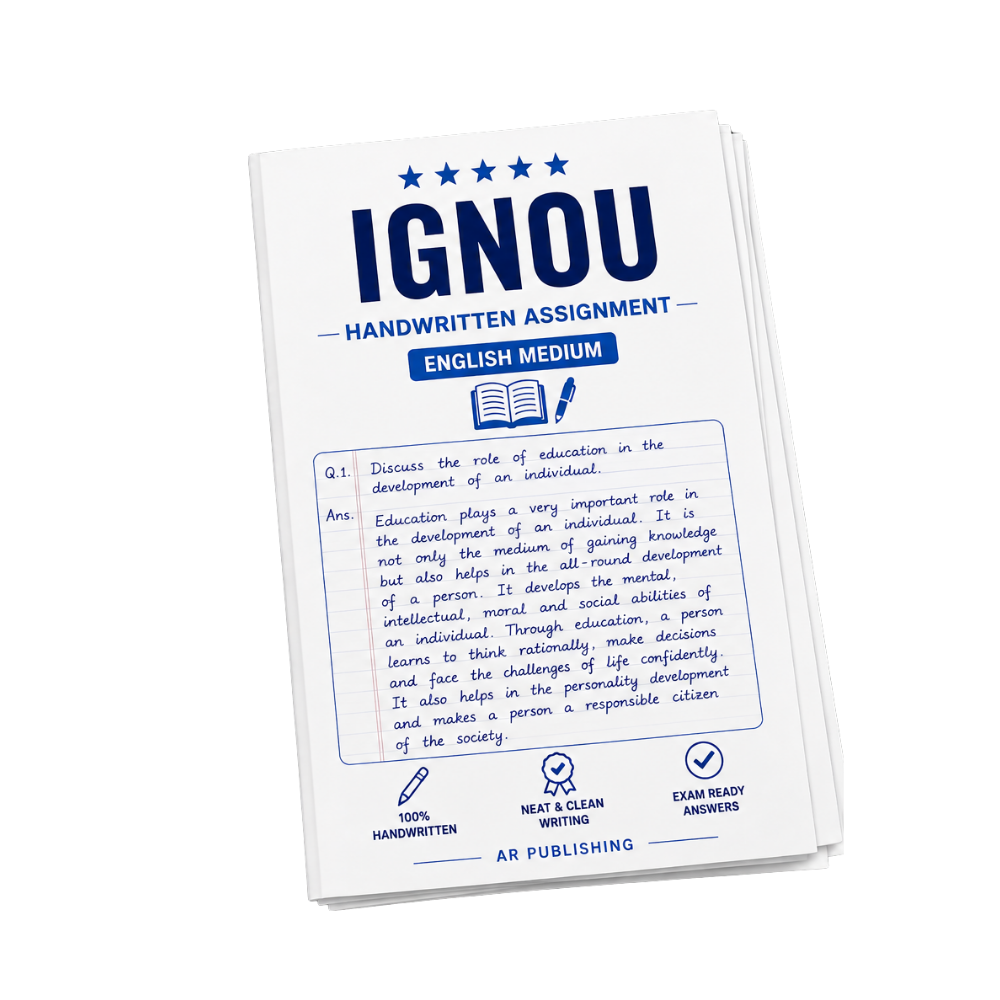
MVP-005 IGNOU Handwritten Assignment 2026-27
Click to view offer details & terms
Get 10% OFF Instant Discount
Apply this coupon code at checkout to claim your academic discount instantly.
- Applicable on all university study materials
- Valid for up to 8 item(s) per order
- Valid till Oct 31, 2026
Frequently Bought Together
Popular course materials frequently ordered together
Syllabus & Overview
Handwritten Assignment for MVP-005: Food Toxicology and Public Health (Physical Hard Copy)
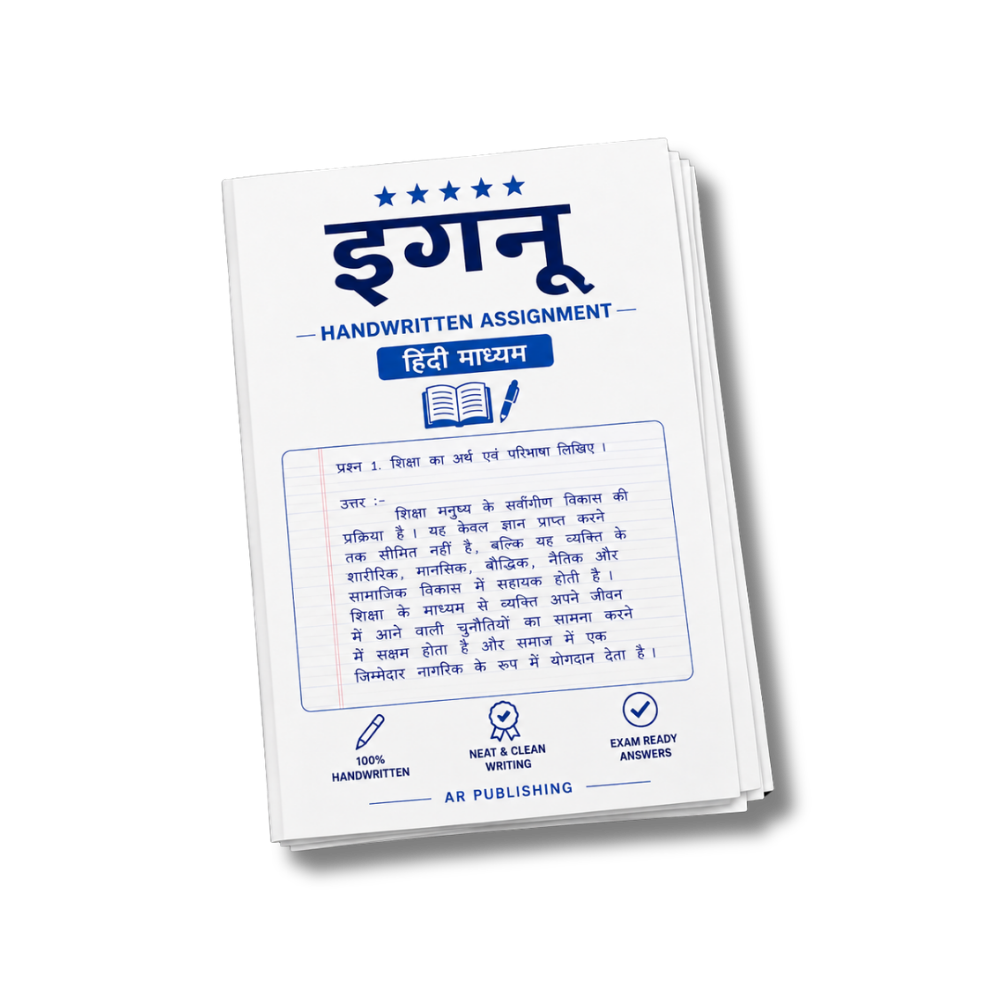
This 100% physical hard copy assignment is designed exclusively for students of the Master of Science in Food Safety and Quality Management (MSCFSQM) under IGNOU’s School of Agriculture. The assignment is handwritten on 80 GSM A4 ruled paper with clear, legible human script, including the official IGNOU front page and printed question paper for seamless submission via Speed Post.
Key Syllabus Coverage (Strictly Aligned with IGNOU MVP-005)
- Block-1: Introduction to Food Toxicology
- Definition, scope, and historical perspectives of food toxicology.
- Key principles of dose-response relationships and threshold concepts.
- Regulatory frameworks (e.g., FAO/WHO, Codex Alimentarius) governing food safety standards.
- Block-2: Toxicants from Natural and Man-Made Sources
- Classification of natural toxicants (e.g., mycotoxins, plant toxins like solanine).
- Industrial contaminants: Pesticide residues, heavy metals (lead, mercury), and persistent organic pollutants (POPs).
- Case studies on outbreaks linked to natural vs. synthetic toxicants (e.g., aflatoxin in groundnuts, cadmium in rice).
- Block-3: Derived Food Toxicants
- Formation of toxicants during processing (e.g., acrylamide in fried foods, heterocyclic amines in grilled meat).
- Acrylamide regulation and mitigation strategies under EU and national guidelines.
- Role of advanced analytical techniques (e.g., HPLC, GC-MS) in detecting derived toxicants.
- Block-4: Food Safety and Public Health
- Risk assessment methodologies (Hazard Analysis Critical Control Points HACCP).
- Global food safety standards (e.g., ISO 22000, GFSI benchmarks).
- Public health interventions: Surveillance systems (e.g., FSSAI’s food safety surveillance portal).
Assignment Features
- Physical Format: Handwritten on 80 GSM A4 ruled paper with neat margins and clear font.
- Includes: Official IGNOU front page, printed question paper, and solution sheets.
- Delivery: Guaranteed via Indian Speed Post to your registered study center address.
- Language Options: Available in English or Hindi as per student preference.
Subject-Specific FAQs
- Q: How are natural and synthetic toxicants differentiated in this assignment?
Natural toxicants (e.g., mycotoxins from fungi, alkaloids from plants) are analyzed based on their biological origin and metabolic pathways, while synthetic toxicants (e.g., pesticide residues, industrial additives) are evaluated for their chemical structure, persistence, and regulatory limits (e.g., MRLs under FSSAI). Case studies compare outbreak causes and mitigation strategies.
- Q: Are derived toxicants (e.g., acrylamide) covered under both processing and public health blocks?
Yes. Block-3 focuses on the formation mechanisms during cooking (e.g., Maillard reactions) and analytical detection, while Block-4 addresses public health responses, such as labeling requirements (e.g., EU’s acrylamide directive) and consumer awareness campaigns.
Why buy from us?
-
Verified by top professors and 99th percentile students.
-
Always updated to the latest university curriculum.
-
High-quality, printable PDF formats with clear diagrams.
License & Terms
By purchasing this item, you agree to our standard academic license terms. You may use this product for personal study, but you may not resell or redistribute the files online.