

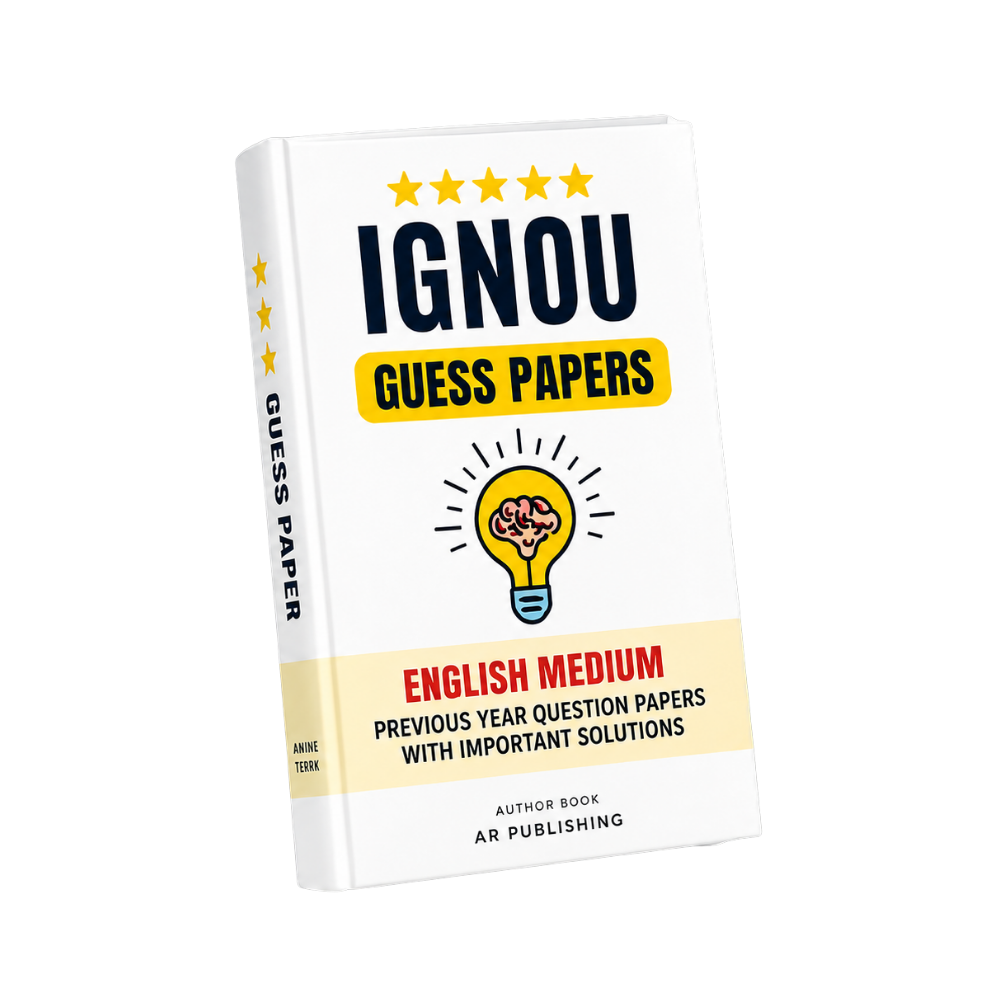
PHE-13 IGNOU Guess Paper 2026-27
Click to view offer details & terms
Get 10% OFF Instant Discount
Apply this coupon code at checkout to claim your academic discount instantly.
- Applicable on all university study materials
- Valid for up to 8 item(s) per order
- Valid till Oct 31, 2026
Enrolled in other IGNOU subjects?
Link your Enrollment No. to auto-map all your semester courses & free question papers.
Frequently Bought Together
Popular course materials frequently ordered together

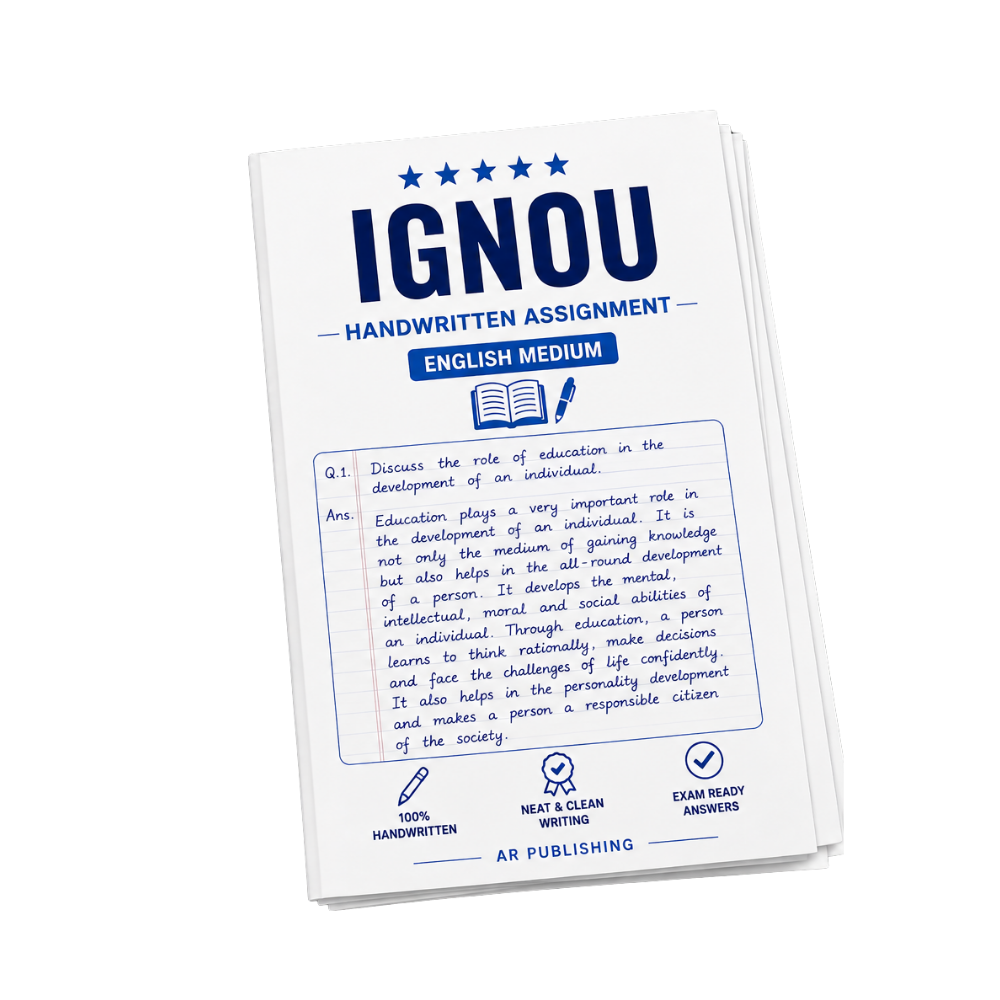
Syllabus & Overview
Course Scope & Syllabus Overview: PHE-13 Physics of Solids
PHE-13: Physics of Solids is a specialized elective under IGNOU’s School of Humanities, designed to explore the fundamental principles governing the structural and functional properties of solid materials. This course bridges theoretical physics and applied science, equipping students with analytical tools to understand crystal lattice configurations, binding forces, elastic deformations, electronic band structures, and material-specific applications. Aligned with the CBCS framework, it emphasizes both conceptual clarity and problem-solving skills, ensuring students can interpret experimental data, evaluate theoretical models, and correlate physical properties with real-world device applications—critical for interdisciplinary research in materials science and advanced physics.Key Syllabus Units & Topics
- Block-1: Crystal Structure: Covers lattice types (Bravais lattices), point groups, reciprocal space, and diffraction techniques (X-ray, neutron) to analyze periodic arrangements in crystalline solids, including symmetry operations and space groups.
- Block-2: Crystal Binding and Elastic Properties: Examines cohesive energy models (ionic, covalent, metallic), phonon dispersion, and elastic constants (Young’s modulus, Poisson’s ratio) to predict mechanical behavior under stress and thermal expansion.
- Block-3: Electronic Properties: Delves into band theory (Bloch theorem), Fermi surfaces, effective mass approximation, and transport phenomena (conductivity, Hall effect) to explain electrical and thermal conductivity in semiconductors and metals.
- Block-4: Material and Devices: Applies theoretical concepts to analyze semiconductor junctions (p-n diodes), superconductivity, and optoelectronic materials, linking macroscopic properties to microscopic quantum mechanics.
Frequently Asked Questions
Q: How are marks distributed in PHE-13’s Term-End Examination (TEE), and what weightage does each unit carry?
A: The TEE for PHE-13 follows a 100-mark pattern: 50% weightage is allocated to theoretical questions (covering all four blocks), while 50% assesses problem-solving (prioritizing Blocks 2 and 3). Past papers reveal ~30% of questions repeat annually, particularly from crystal structure and band theory.
Q: Are there specific study resources recommended for assignments, or should students focus solely on the course material?
A: Assignments in PHE-13 derive directly from the prescribed textbook (Introduction to Solid State Physics by Kittel) and lecture notes. While supplementary resources (e.g., Ashcroft & Mermin) aid deeper understanding, IGNOU’s official assignments test comprehension of the syllabus blocks—prioritize solving numerical problems from Blocks 1 and 4 for full marks.
Why buy from us?
-
Verified by top professors and 99th percentile students.
-
Always updated to the latest university curriculum.
-
High-quality, printable PDF formats with clear diagrams.
License & Terms
By purchasing this item, you agree to our standard academic license terms. You may use this product for personal study, but you may not resell or redistribute the files online.