

Instant PDF
Instant 24/7 Access
CBCS Verified
2026-27 Syllabus
100% Safe Pay
UPI, Cards & NetBanking
Student Support
WhatsApp Helpdesk
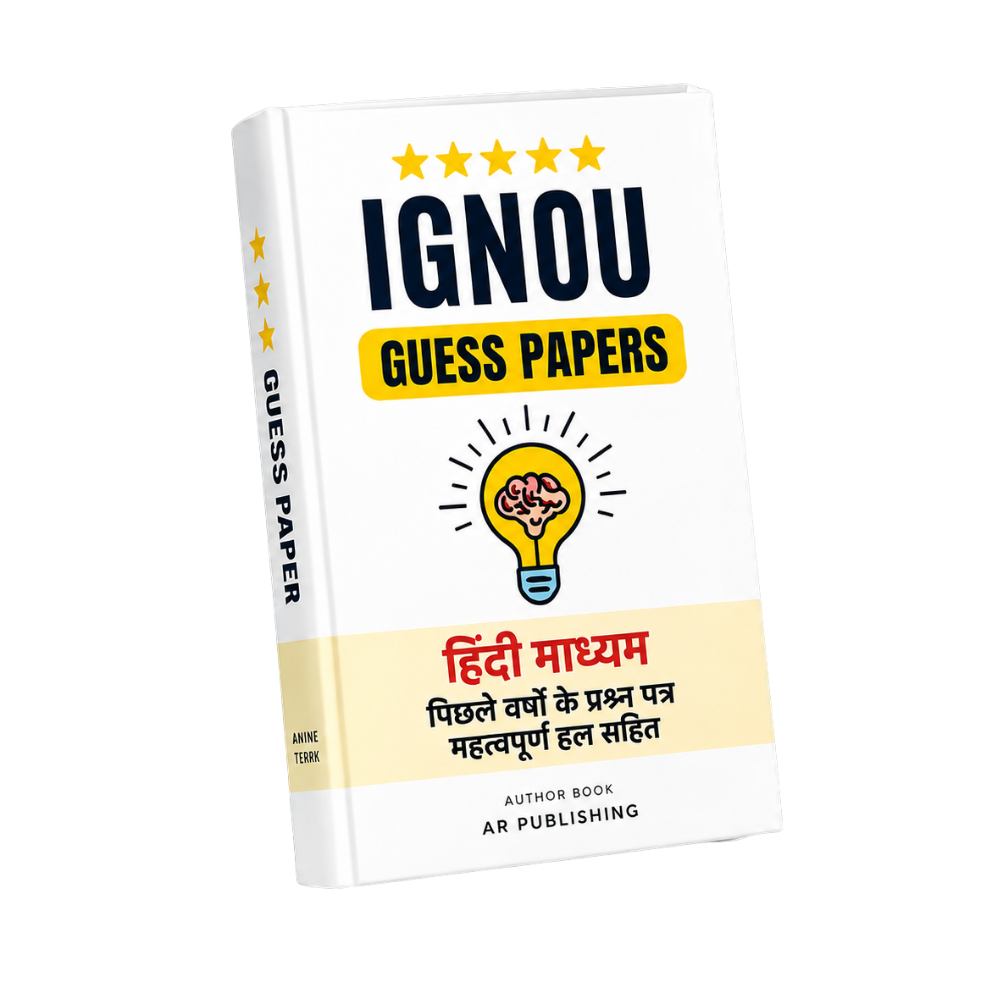
TS-006 IGNOU Guess Paper 2026-27
Enrolled in other IGNOU subjects?
Link your Enrollment No. to auto-map your semester courses & free question papers.
Frequently Bought Together
Popular course materials frequently ordered together

Syllabus & Overview
IGNOU TS-006 (Tourism & Hospitality) Guess Paper 2026–27 TEE Exam Focus
This structured guess paper aligns with the official IGNOU Tourism & Hospitality (TS-006) syllabus, emphasizing high-yield topics from past exams (June/December sessions) and offering a 3-hour time management framework. Below are key blocks with question weightage and FAQs.
Core Syllabus Blocks & Question Weightage
- Unit 1: Introduction to Tourism & Hospitality
- Weightage: 15–20% (20–25 marks in TEE)
- Focus: Definition, evolution, and classification of tourism; roles of public/private sectors; sustainable tourism principles.
- Past Exam Trends: 2–3 short-answer questions on tourism types (domestic/international) and 1 long-answer on sustainability challenges.
- Unit 2: Travel Agency Management
- Weightage: 25–30% (30–35 marks)
- Focus: Functions of travel agencies (booking, itinerary planning), GDS systems, and regulatory frameworks (e.g., IATA, WTTC).
- Past Exam Trends: 3–4 short-answer questions on GDS operations and 1 long-answer on legal compliance in travel agency services.
- Unit 3: Hospitality Operations
- Weightage: 20–25% (25–30 marks)
- Focus: Front-office management, housekeeping standards, F&B service protocols, and customer relationship management (CRM) in hotels.
- Past Exam Trends: 2 short-answer questions on housekeeping checklists and 1 case-study-based question on resolving guest complaints.
- Unit 4: Tourism Marketing
- Weightage: 20–25% (25–30 marks)
- Focus: Destination marketing (DMOs), digital marketing tools (SEO, social media), and promotional strategies (e.g., MICE tourism).
- Past Exam Trends: 3 short-answer questions on digital marketing trends and 1 essay on marketing eco-tourism destinations.
- Unit 5: Eco-Tourism & Cultural Heritage
- Weightage: 10–15% (15–20 marks)
- Focus: Principles of eco-tourism, case studies (e.g., Rajasthan’s heritage villages), and cultural sensitivity in tourism.
- Past Exam Trends: 2 short-answer questions on UNWTO eco-tourism guidelines and 1 descriptive answer on balancing profit and preservation.
Exam Time Management (3 Hours)
Phase 1 (30 mins): Skim the question paper, allocate time per section (e.g., 45 mins for 20 marks, 60 mins for 30 marks).
Phase 2 (120 mins): Answer short-answer questions first (prioritize high-weightage units like Travel Agency Management).
Phase 3 (60 mins): Draft long-answer questions with sub-points (use bullet lists for clarity).
Phase 4 (30 mins): Review for grammar/spelling errors and cross-check calculations.
Subject-Specific FAQs
- Q: Which unit has the highest repeatability in TEE exams?: Answer: Travel Agency Management (Unit 2) appears in every session with 3–4 short-answer questions on GDS systems and regulatory compliance.
- Q: How to score full marks in long-answer questions?: Answer: Use structured templates (e.g., for Unit 4: Introduction Body (3 sub-points) Conclusion with real-world example). Avoid generic answers; cite IGNOU case studies (e.g., Kerala’s homestays).
Sample Question Patterns (2026-27)
- Short Answer (2 marks): Define yield management in hospitality with one example.
Short Answer (5 marks): Explain the role of IATA in travel agency operations.
Long Answer (10 marks): Compare traditional vs. digital marketing strategies for a heritage site like Hampi.
Key Resources for Revision
- IGNOU Study Material (2023 edition), Chapter 5 (Eco-Tourism) and Chapter 7 (Hospitality CRM).
- Past TEE papers (2016–2025) from IGNOU official portal
Why buy from us?
-
Verified by top professors and 99th percentile students.
-
Always updated to the latest university curriculum.
-
High-quality, printable PDF formats with clear diagrams.
License & Terms
By purchasing this item, you agree to our standard academic license terms. You may use this product for personal study, but you may not resell or redistribute the files online.