

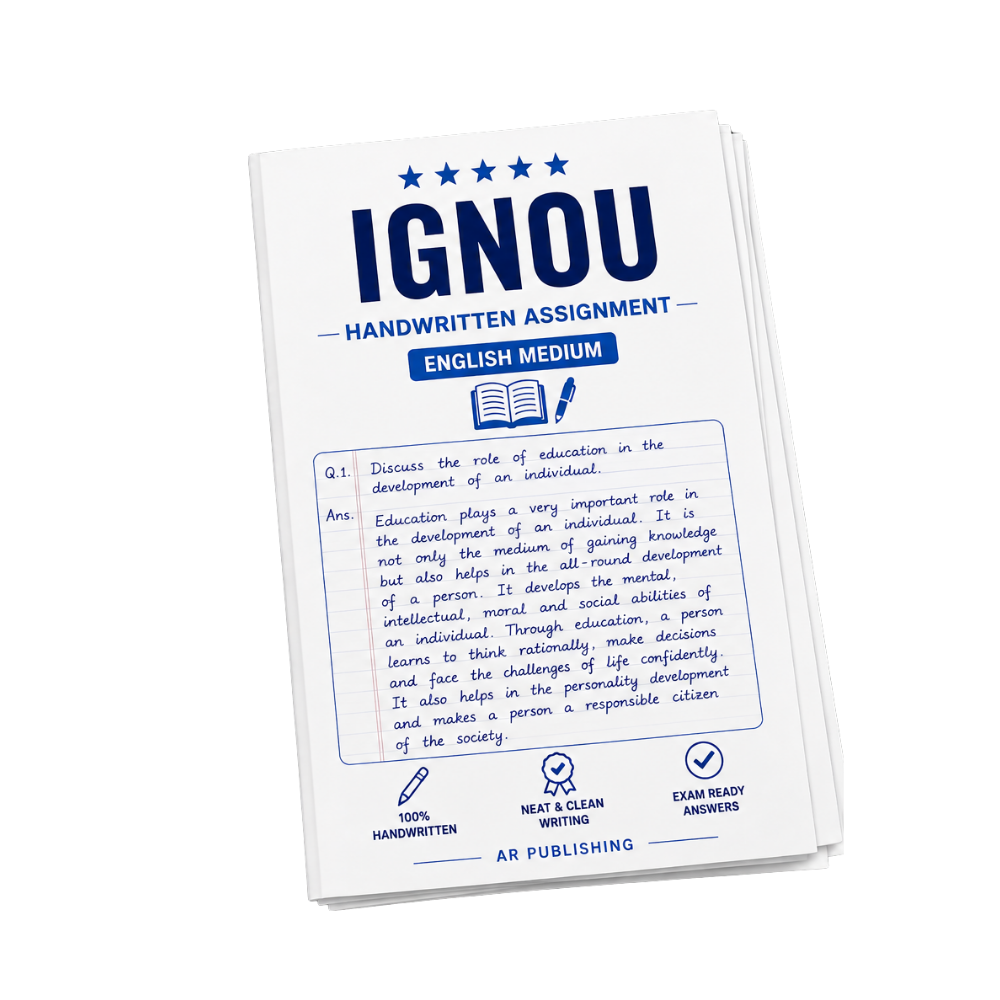
BPYC-131 IGNOU Handwritten Assignment 2026-27
Click to view offer details & terms
Get 10% OFF Instant Discount
Apply this coupon code at checkout to claim your academic discount instantly.
- Applicable on all university study materials
- Valid for up to 8 item(s) per order
- Valid till Oct 31, 2026
Enrolled in other IGNOU subjects?
Link your Enrollment No. to auto-map all your semester courses & free question papers.
Frequently Bought Together
Popular course materials frequently ordered together
Syllabus & Overview
Course Scope and Syllabus Overview for BPYC-131: Indian Philosophy
Indian Philosophy
BPYC-131: Indian Philosophy is a core component of the Bachelor of Arts in Applied Urdu (BAAUD) curriculum under IGNOU’s School of Humanities. This course offers a structured exploration of India’s philosophical traditions, spanning ancient texts, metaphysical inquiries, and ethical frameworks. Through a critical examination of Upanishadic wisdom, heterodox and orthodox systems, students develop analytical skills to interpret foundational texts while contextualizing their relevance in contemporary thought. The syllabus emphasizes comparative analysis, textual interpretation, and philosophical reasoning, ensuring students gain both theoretical depth and practical insights into India’s intellectual heritage.Key Syllabus Units and Topics
- Block-1 Introduction to Indian Philosophy: This block introduces the historical and conceptual foundations of Indian philosophy, examining its evolution from Vedic traditions to early philosophical schools. Students explore key distinctions between orthodox and heterodox systems, along with the role of scriptures and commentaries in philosophical discourse.
- Block-2 Upanishadic Philosophy: Core Themes-I: Focuses on the core teachings of the Upanishads, including the concepts of Brahman, Atman, and the nature of reality. Topics include the doctrine of Maya, the pursuit of Moksha, and the philosophical debates surrounding monism and dualism.
- Block-3 Upanishadic Philosophy: Core Themes-II: Delves deeper into Upanishadic thought, analyzing the Bhagavad Gita as a philosophical text, the concept of Karma, and the ethical dimensions of self-realization. This block also examines the influence of Upanishadic philosophy on later schools like Vedanta.
- Block-4 Heterodox Systems: Covers the philosophical frameworks of Charvaka, Jainism, and Buddhism, emphasizing their critiques of orthodox traditions and their unique contributions to ethics, epistemology, and metaphysics. Students analyze the philosophical underpinnings of non-violence (Ahimsa), Anatta (non-self), and the path to liberation.
- Block-5 Orthodox Systems: Examines the philosophical developments in Nyaya, Vaisheshika, Samkhya, Yoga, and Vedanta, highlighting their systematic approaches to logic, cosmology, and spiritual practice. The block also explores the synthesis of these systems in later philosophical movements.
Frequently Asked Questions
Q: What is the marking scheme for BPYC-131 assignments, and how many assignments are there in total?
A: The BPYC-131 assignment carries 30 marks, and there are typically two assignments released during the semester. Each assignment is designed to test comprehension, critical analysis, and application of philosophical concepts covered in the course blocks.
Q: What are the minimum pass marks required for BPYC-131, and how does the examination pattern work?
A: The minimum pass marks for BPYC-131 are 40% overall, including both theory and assignments. The examination consists of a 100-mark paper, with assignments contributing 30 marks, and the remaining 70 marks allocated to the terminal examination.
Why buy from us?
-
Verified by top professors and 99th percentile students.
-
Always updated to the latest university curriculum.
-
High-quality, printable PDF formats with clear diagrams.
License & Terms
By purchasing this item, you agree to our standard academic license terms. You may use this product for personal study, but you may not resell or redistribute the files online.