

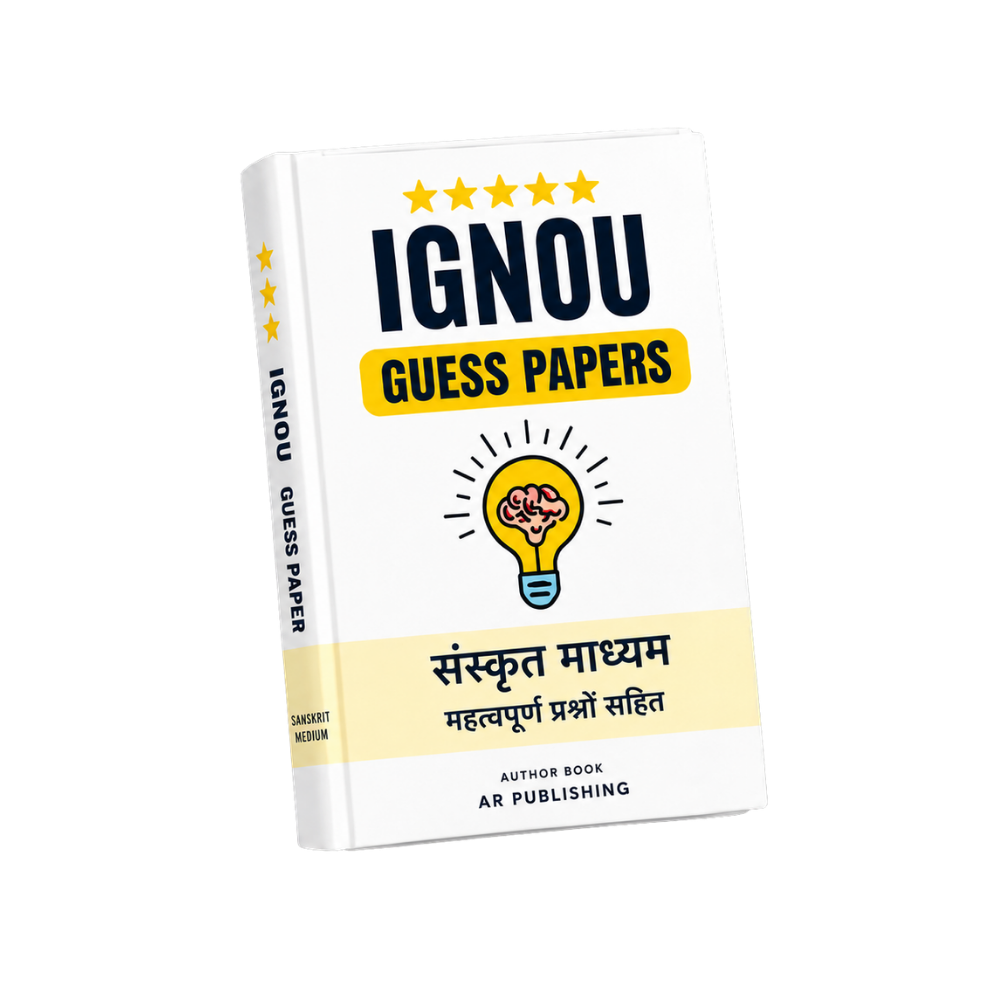
BSKS-185 IGNOU Guess Paper 2026-27
Click to view offer details & terms
Get 10% OFF Instant Discount
Apply this coupon code at checkout to claim your academic discount instantly.
- Applicable on all university study materials
- Valid for up to 8 item(s) per order
- Valid till Oct 31, 2026
Enrolled in other IGNOU subjects?
Link your Enrollment No. to auto-map all your semester courses & free question papers.
Frequently Bought Together
Popular course materials frequently ordered together
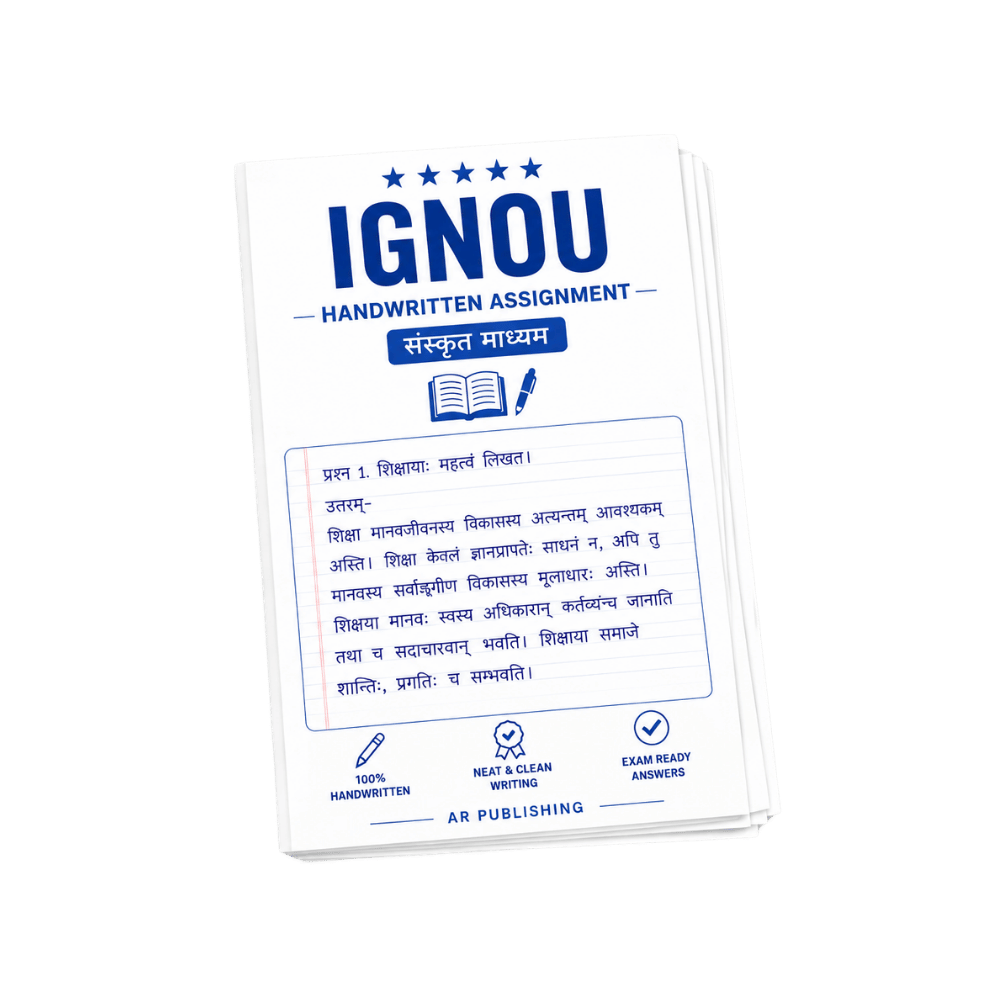
Syllabus & Overview
BSKS-185: Exam Preparation Guide Overview
BSKS-185: is a specialized course under IGNOU’s Bachelor of Arts (Honours) Sanskrit curriculum, designed to explore the intricacies of classical Sanskrit metrics (chandas) and its melodic (sangita) traditions. This course bridges theoretical analysis with practical application, enabling students to decode poetic structures, classify traditional meters, and understand their rhythmic and musical execution. Aligned with the IGNOU CBCS framework, it emphasizes critical engagement with Vedic and secular (loukika) chandas while examining their historical and aesthetic significance.Key Syllabus Units & Topics
- -1 : Introduces foundational principles of chandas (Sanskrit metrics) and its interplay with sangita (music), covering ancient treatises like Pāṇini’s Chandōśekhara and Dattilam’s contributions. Students explore the philosophical underpinnings of meter and its role in poetic composition.
- -2 : Examines the systematic classification of Sanskrit meters, including gāthā, vṛtta, and pāda-based structures. Key terminologies like ārya, vṛtta, and mātrā are analyzed to distinguish between Vedic and secular poetic traditions.
- -3 -: Focuses on prescribed Vedic meters (e.g., trishtubh, anustubh, gāyatrī), dissecting their syllabic patterns and traditional chanting (gāna) techniques as documented in the Samaveda and Atharvaveda.
- -4 -: Studies secular meters (e.g., druva, malinī, upendravṛtta) and their melodic renditions, tracing their evolution in classical literature like Kālidāsa’s works and Abhinavagupta’s aesthetic theories.
Frequently Asked Questions
Q: How are marks distributed in the BSKS-185 Term-End Examination (TEE), and which units carry the highest weightage?
A: The TEE for BSKS-185 typically allocates 20% to each of the four khandas, with an additional 20% for practical application (e.g., meter analysis or chanting). Units -2 and -3 often feature higher question frequency due to their foundational role in both Vedic and secular traditions.
Q: Are there specific question patterns in previous years’ papers that indicate high-probability topics for repetition?
A: Analysis of past TEE papers reveals recurring emphasis on -1’s theoretical definitions (e.g., mātrā-bheda), -2’s meter classification (e.g., distinguishing vṛtta vs. gāthā), and -4’s secular examples (e.g., mālinī in Kumārasambhava). Prioritizing these areas ensures targeted revision efficiency.
Why buy from us?
-
Verified by top professors and 99th percentile students.
-
Always updated to the latest university curriculum.
-
High-quality, printable PDF formats with clear diagrams.
License & Terms
By purchasing this item, you agree to our standard academic license terms. You may use this product for personal study, but you may not resell or redistribute the files online.