

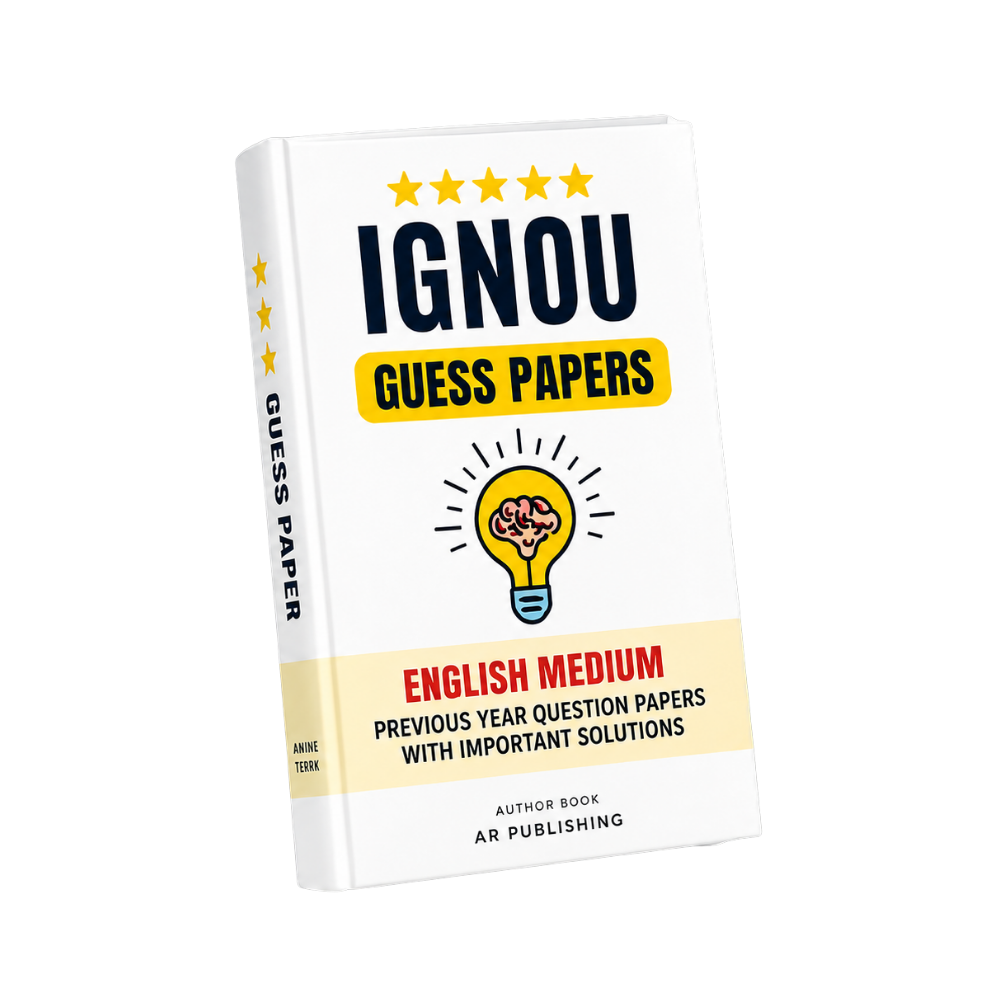
MBP-007 IGNOU Guess Paper 2026-27
Click to view offer details & terms
Get 10% OFF Instant Discount
Apply this coupon code at checkout to claim your academic discount instantly.
- Applicable on all university study materials
- Valid for up to 8 item(s) per order
- Valid till Oct 31, 2026
Enrolled in other IGNOU subjects?
Link your Enrollment No. to auto-map all your semester courses & free question papers.
Frequently Bought Together
Popular course materials frequently ordered together
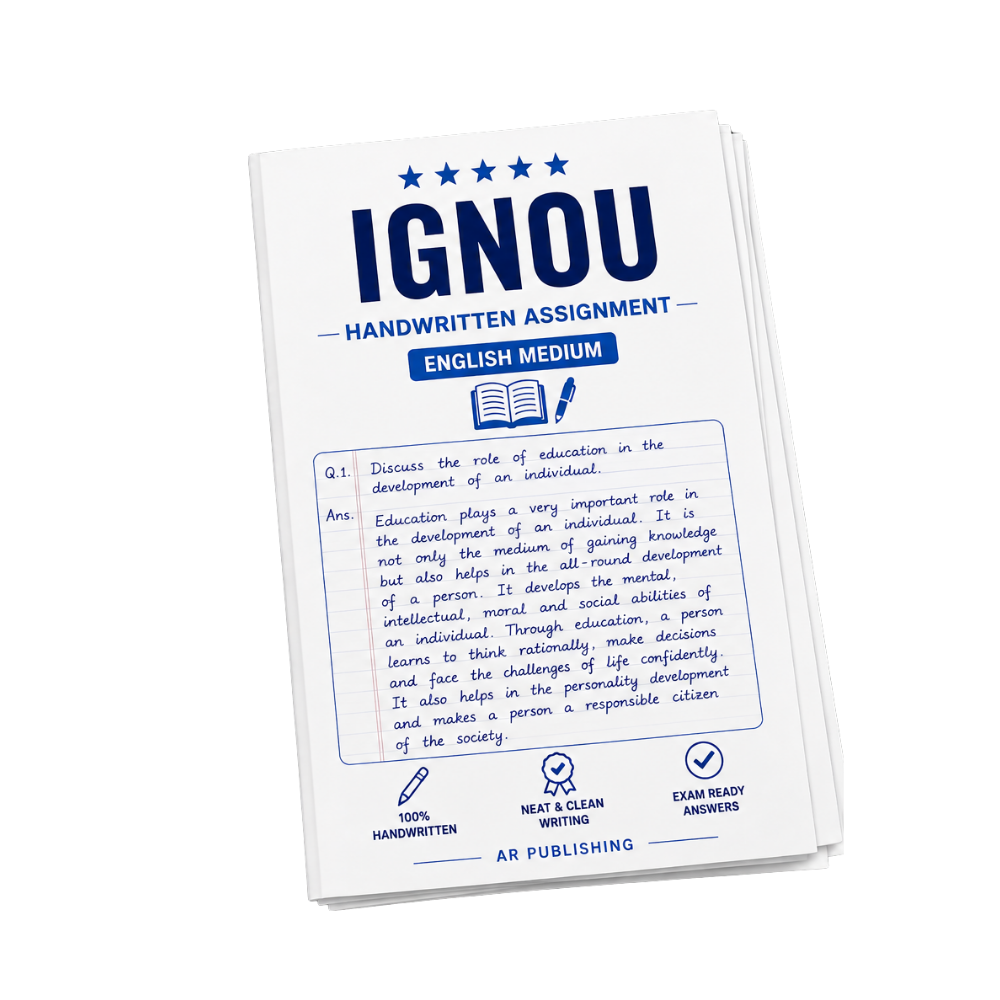
Syllabus & Overview
MBP-007 Guess Paper 2026-27: Course Introduction (Languages & Literature)
This guess paper is designed to mirror the Term-End Exam (TEE) pattern for MBP-007, incorporating trends from the last 5–10 years (June & December sessions). It emphasizes chapter-wise question weightage and 3-hour exam time management while strictly adhering to the official IGNOU curriculum for the PG Diploma in Book Publishing (School of Humanities).
Key Syllabus Units Covered (Official IGNOU Curriculum)
- Block-1: Basic Editorial Competencies
- Understanding editorial workflows in publishing (pre-publication, production, and post-publication stages).
- Role of editors in shaping content, tone, and readability (with case studies from literary and non-fiction genres).
- Block-2: Introduction to Publishing Industry
- Evolution of publishing: Traditional vs. digital formats (focus on ethical dilemmas in adaptation).
- Market segmentation in books (academic, fiction, self-publishing) and their linguistic/literary considerations.
- Block-3: Book Format and Design Principles
- Typography, layout, and cover design in relation to genre-specific expectations (e.g., poetry vs. textbooks).
- Role of language in visual design (e.g., Hindi/English typography for bilingual audiences).
- Block-4: Publishing Ethics and Legal Aspects
- Plagiarism, copyright laws, and ethical dilemmas in translation/publishing.
- Case studies on censorship, freedom of expression, and publisher-responsibility in India.
- Block-5: Introduction to Literary Criticism
- Key schools of literary criticism (e.g., formalism, postcolonial theory) and their application in book publishing.
- How criticism influences editorial decisions (e.g., marketing blurbs, author interviews).
Exam Strategy and Weightage
Question Distribution (Approximate):
- Block-1 & Block-2 (Editorial Competencies + Industry): 30–35% (Short-answer questions on workflows, industry trends, and ethical scenarios).
- Block-3 (Book Format): 20–25% (Descriptive answers on design principles, typography, or case studies).
- Block-4 & Block-5 (Ethics + Criticism): 25–30% (Essay-type questions on legal/political dimensions or critical theory applications).
Time Management Tips for 3-Hour Exam
- Allocate 45 minutes for reading the question paper and planning answers.
- Prioritize Block-1 and Block-2 questions first (higher weightage), then move to descriptive sections.
- For essay-type questions (Blocks 4–5), structure answers with:
- Introduction (1–2 lines defining the topic).
- Body (3–4 points with examples from syllabus/real-world publishing).
- Conclusion (1 line linking back to the question).
- Avoid spending more than 10 minutes per short-answer question (aim for 3–4 concise points).
Frequently Asked Questions (FAQs)
- Are previous year papers sufficient for preparation?
Yes, analyzing 5–10 years of TEE papers (available on eGyanKosh) helps identify recurring themes (e.g., ethical dilemmas in Block-4 or design principles in Block-3). Focus on questions from June 2022–December 2025 for recent trends.
- How should I approach descriptive questions on literary criticism (Block-5)?
Use the syllabus’s case studies (e.g., R.K. Narayan’s editing vs. Salman Rushdie’s controversies) to illustrate answers. Avoid abstract theory—always tie criticism to editorial or publishing decisions (e.g., “How would a postcolonial critic influence a book’s marketing?”).
Why buy from us?
-
Verified by top professors and 99th percentile students.
-
Always updated to the latest university curriculum.
-
High-quality, printable PDF formats with clear diagrams.
License & Terms
By purchasing this item, you agree to our standard academic license terms. You may use this product for personal study, but you may not resell or redistribute the files online.