

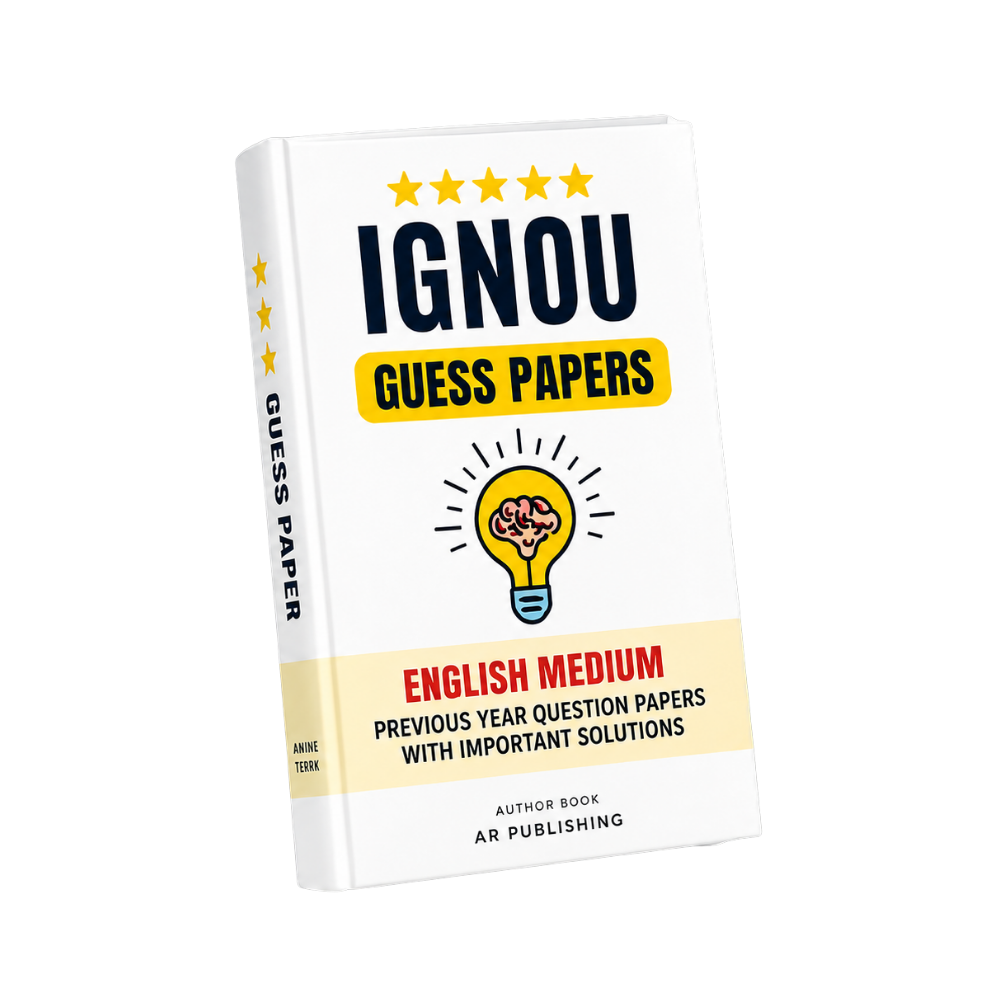
MES-15 IGNOU Guess Paper 2026-27
Click to view offer details & terms
Get 10% OFF Instant Discount
Apply this coupon code at checkout to claim your academic discount instantly.
- Applicable on all university study materials
- Valid for up to 8 item(s) per order
- Valid till Oct 31, 2026
Enrolled in other IGNOU subjects?
Link your Enrollment No. to auto-map all your semester courses & free question papers.
Frequently Bought Together
Popular course materials frequently ordered together
Syllabus & Overview
Course Scope & Syllabus Overview for MES-15: Mastering Environmental Science for Sustainable Development
MES-15, a core component of IGNOU’s Master’s Programme in Environmental Science, is designed to equip students with interdisciplinary knowledge on ecological principles, environmental policies, and sustainable resource management. This course bridges theoretical foundations with practical applications, emphasizing critical analysis of environmental challenges such as climate change, biodiversity loss, and pollution mitigation. The syllabus aligns with IGNOU’s CBCS framework, ensuring a structured progression from fundamental concepts to advanced case studies. By leveraging authentic IGNOU study material and exam-focused resources, students gain targeted preparation to excel in term-end assessments, particularly through pattern recognition and strategic revision techniques.Key Syllabus Units & Topics
- Environmental Science: Concepts and Issues: Covers foundational theories of environmental science, including ecological systems, biogeochemical cycles, and anthropogenic impacts. Emphasizes the interplay between human activities and environmental degradation, with a focus on global case studies.
- Environmental Pollution and Management: Examines sources, effects, and mitigation strategies for air, water, soil, and noise pollution. Integrates policy frameworks like the National Green Tribunal Act and international agreements such as the Paris Agreement.
- Environmental Impact Assessment (EIA) and Sustainable Development: Explores methodologies for assessing environmental impacts of projects and policies, with a focus on EIA reports, public hearings, and alternative planning techniques. Highlights sustainable development principles as outlined in Agenda 21.
- Climate Change and Global Warming: Analyzes scientific evidence, greenhouse gas dynamics, and mitigation/adaptation strategies. Includes discussions on carbon trading, renewable energy transitions, and climate resilience planning.
- Biodiversity and Conservation: Discusses species diversity, ecosystem services, and conservation strategies under the Biological Diversity Act. Covers in-situ and ex-situ conservation techniques, including national parks and gene banks.
Frequently Asked Questions
Q: What is the marking scheme for MES-15’s term-end examination, and how are internal assignments weighted?
A: The MES-15 TEE carries 100 marks, with questions distributed across theory (70%) and practical/application-based sections (30%). Assignments contribute 30% to the final grade, requiring submission of case studies or project reports as per IGNOU’s assignment guidelines.
Q: Are there recurring themes or questions in past MES-15 exams that students should prioritize for revision?
A: Repeated themes include case studies on environmental policies (e.g., NGT rulings), quantitative analysis of pollution data, and critiques of sustainable development models. Focus on chapter-wise weightage—units on climate change and EIA consistently feature in high-weightage questions.
Why buy from us?
-
Verified by top professors and 99th percentile students.
-
Always updated to the latest university curriculum.
-
High-quality, printable PDF formats with clear diagrams.
License & Terms
By purchasing this item, you agree to our standard academic license terms. You may use this product for personal study, but you may not resell or redistribute the files online.