

Instant PDF
Instant 24/7 Access
CBCS Verified
2026-27 Syllabus
100% Safe Pay
UPI, Cards & NetBanking
Student Support
WhatsApp Helpdesk
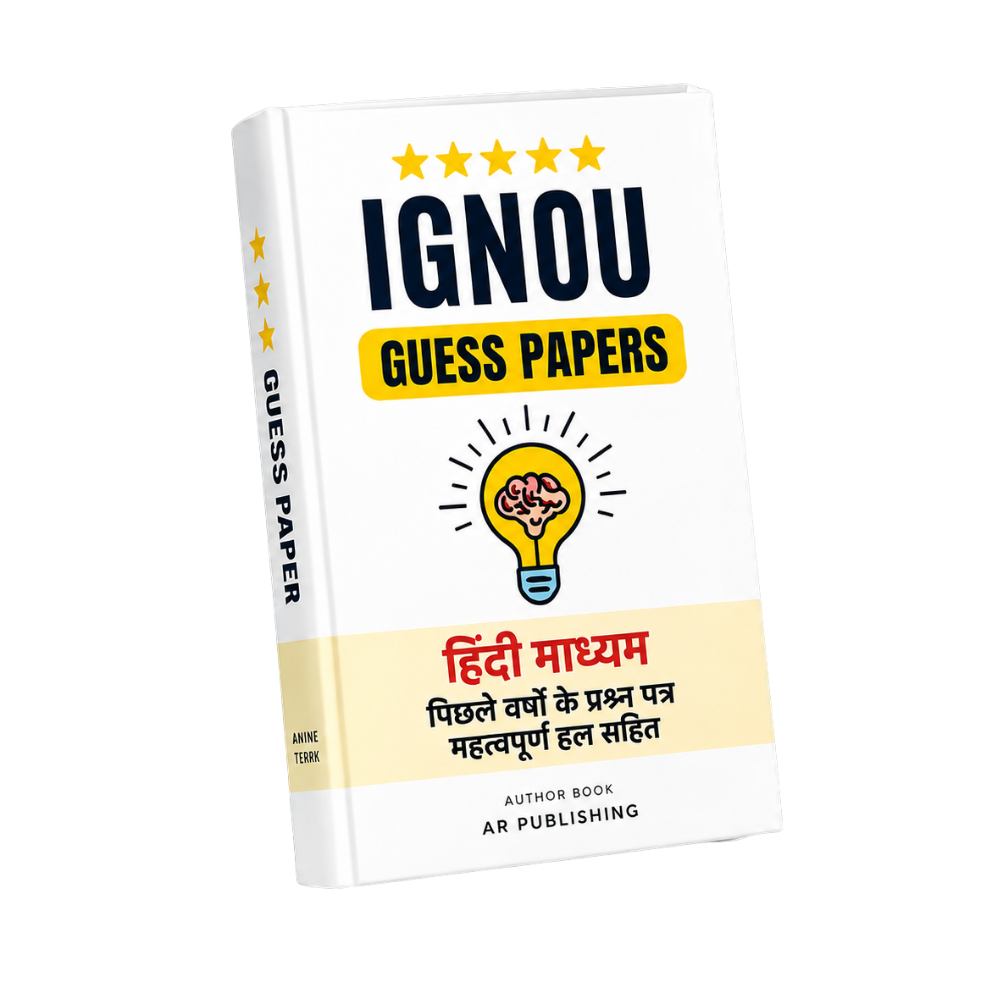
MHI-105 IGNOU Guess Paper 2026-27
Enrolled in other IGNOU subjects?
Link your Enrollment No. to auto-map your semester courses & free question papers.
Frequently Bought Together
Popular course materials frequently ordered together



Syllabus & Overview
MHI-105 Guess Paper: Term-End Exam (TEE) Preparation Guide
This structured guess paper aligns with the official IGNOU curriculum for MHI-105 and leverages solved previous year question patterns (June/Dec sessions) to prioritize high-scoring topics. The exam carries 100 marks, divided into short-answer (20 marks), medium-answer (40 marks), and long-answer (40 marks) sections, with a 3-hour time limit.
Chapter-wise Weightage & Focus Areas
- Unit 1: Prehistoric and Protohistoric Economies
- Focus on Paleolithic/Neolithic subsistence strategies (hunting-gathering vs. agriculture).
- Key questions: Compare Mesolithic tools with early agricultural tools; analyze the role of rivers (Indus, Ganga) in early settlements.
- Previous year trends: 15-20% of questions from this unit (short/medium answers).
- Unit 2: Vedic and Early State Economies
- Emphasis on Vedic trade (gold, horses), barter systems, and early state taxation (e.g., Bali in Rigveda).
- Key questions: Describe the economic role of Srenis (mercantile guilds); explain the impact of Maurya administrative reforms (Chanakya’s Arthashastra).
- Previous year trends: 25-30% of questions (medium/long answers).
- Unit 3: Imperial Economies (Gupta to Early Medieval)
- Analyze Gupta trade routes (Silk Road, maritime links), coinage systems, and agrarian reforms (Varahamihira).
- Key questions: Compare Maurya and Gupta economic policies; discuss the decline of urban centers post-Guptas.
- Previous year trends: 20-25% of questions (long answers).
- Unit 4: Regional Economies (Chola, Vijayanagara, Bahmani)
- Focus on Chola temple economy, Vijayanagara’s agrarian surplus, and Bahmani Sultanate’s revenue systems.
- Key questions: Evaluate the Chola brahadeya land system; analyze Vijayanagara’s trade with Southeast Asia.
- Previous year trends: 15-20% of questions (medium answers).
- Unit 5: Economic Thought and Early Colonial Impact
- Cover pre-colonial economic theories (Kautilya, Madhava) and early Portuguese/Dutch trade disruptions.
- Key questions: Critique Kautilya’s Arthashastra vs. Madhava’s Sangita Shastra; discuss Portuguese trade monopolies in Goa.
- Previous year trends: 10-15% of questions (short/medium answers).
3-Hour Exam Time Management Tips
- Allocate 30 minutes to read the question paper and plan answers (prioritize long-answer questions first).
- For short answers (20 marks): Focus on Unit 1, Unit 5 (high recall value); use bullet points for clarity.
- For medium answers (40 marks): Allocate 15-20 minutes per question; integrate Unit 2/3 case studies (e.g., Maurya taxation, Gupta trade).
- Long answers (40 marks): Spend 25-30 minutes on Unit 4
Why buy from us?
-
Verified by top professors and 99th percentile students.
-
Always updated to the latest university curriculum.
-
High-quality, printable PDF formats with clear diagrams.
License & Terms
By purchasing this item, you agree to our standard academic license terms. You may use this product for personal study, but you may not resell or redistribute the files online.