

Instant PDF
Instant 24/7 Access
CBCS Verified
2026-27 Syllabus
100% Safe Pay
UPI, Cards & NetBanking
Student Support
WhatsApp Helpdesk
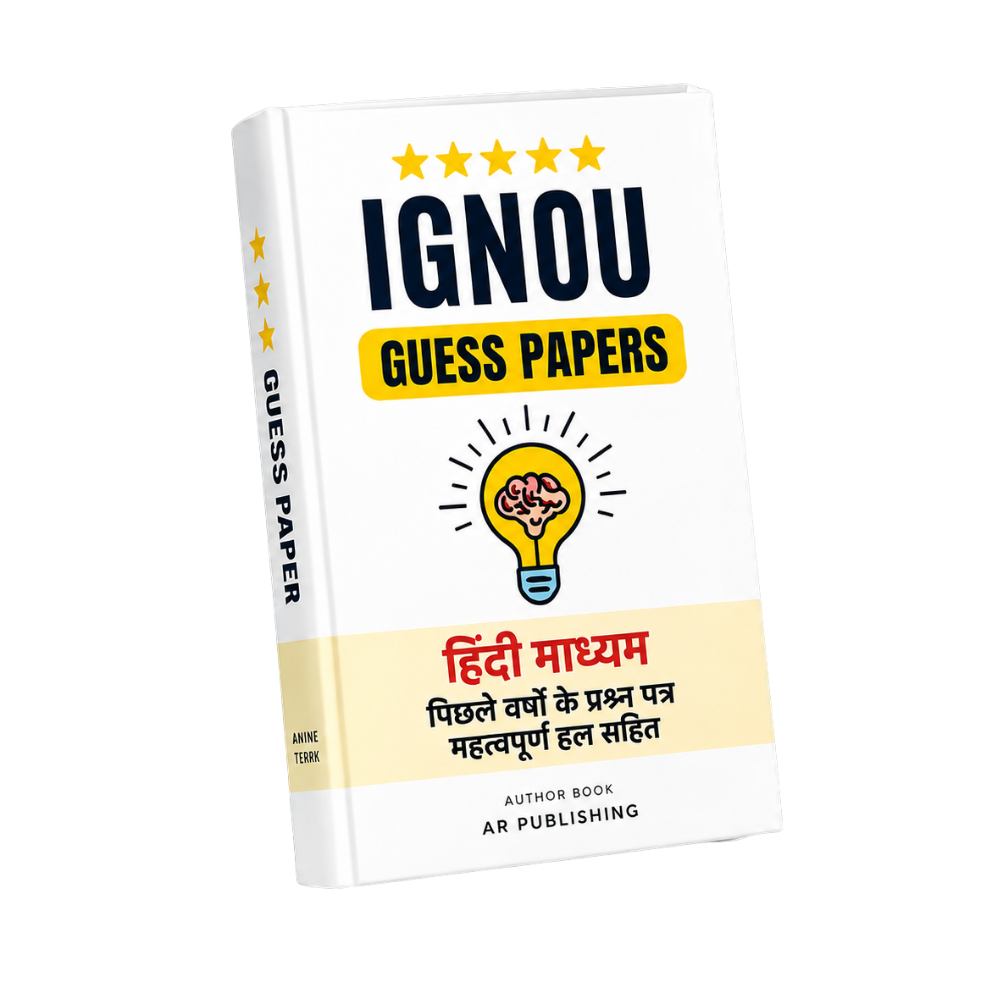
MHI-106 IGNOU Guess Paper 2026-27
Enrolled in other IGNOU subjects?
Link your Enrollment No. to auto-map your semester courses & free question papers.
Frequently Bought Together
Popular course materials frequently ordered together



Syllabus & Overview
MHI-106 Guess Paper: Evolution of Social Structures in India through the Ages
This structured guess paper aligns with IGNOU’s official MHI-106 syllabus, prioritizing high-scoring topics from previous Term-End Exams (June/Dec sessions). It includes chapter-wise question weightage, time management tips, and solved previous year questions for focused preparation.
Key Blocks & Focus Areas
- Block-2: Cultures in Transition
- Comparative analysis of Vedic and post-Vedic social structures (e.g., transition from tribal to agrarian societies).
- Role of epics (Mahabharata, Ramayana) in shaping caste and gender norms.
- Previous year questions: ‘Discuss the impact of Sanskritization on early Indian society.’
- Block-4: Early Medieval Societies
- Social changes under the Chalukyas, Pallavas, and Rashtrakutas (e.g., temple administration, land grants).
- Rise of regional kingdoms and their influence on local governance.
- Common TEE questions: ‘Analyze the social reforms introduced by Al-Biruni during the Delhi Sultanate.’
- Block-6: Medieval Society-2
- Caste system under Mughal rule: Jizya, Zat, and social mobility.
- Urban vs. rural social structures (e.g., role of guilds, markets, and religious institutions).
- Solved previous year question: ‘Examine the impact of Aurangzeb’s policies on Hindu-Muslim relations.’
- Block-8: Social Questions Under Colonialism
- Colonial policies and their disruption of traditional social orders (e.g., land revenue systems, caste-based discrimination).
- Emergence of social reform movements (e.g., Brahmo Samaj, Prarthana Samaj).
- Frequent TEE topics: ‘Critically evaluate the role of British education in reshaping Indian society.’
Exam Time Management Tips (3-Hour Strategy)
- Allocate 45 minutes for reading the question paper and planning answers.
- Prioritize Block-2, Block-4, and Block-6 (highest weightage in TEE: ~60%).
- For descriptive questions, focus on causal analysis (e.g., ‘Why did the caste system evolve?’) rather than rote memorization.
- Use bullet points for sub-questions (e.g., ‘Discuss three social reforms under British rule’).
Subject-Specific FAQs
- Q: Are previous year papers sufficient for TEE preparation?
A: Yes, but supplement with IGNOU study materials (Block-wise summaries) for conceptual clarity. Focus on Block-5 (Rural Society Historiography) and Block-7 (Modern Society) for nuanced answers.
- Q: How to handle essay-type questions in 3 hours?
Break the essay into three parts: Introduction (context), Analysis (evidence from textbooks), and Conclusion (impact). Use 10-12 lines per part for a balanced answer.
Why buy from us?
-
Verified by top professors and 99th percentile students.
-
Always updated to the latest university curriculum.
-
High-quality, printable PDF formats with clear diagrams.
License & Terms
By purchasing this item, you agree to our standard academic license terms. You may use this product for personal study, but you may not resell or redistribute the files online.