

Instant PDF
Instant 24/7 Access
CBCS Verified
2026-27 Syllabus
100% Safe Pay
UPI, Cards & NetBanking
Student Support
WhatsApp Helpdesk
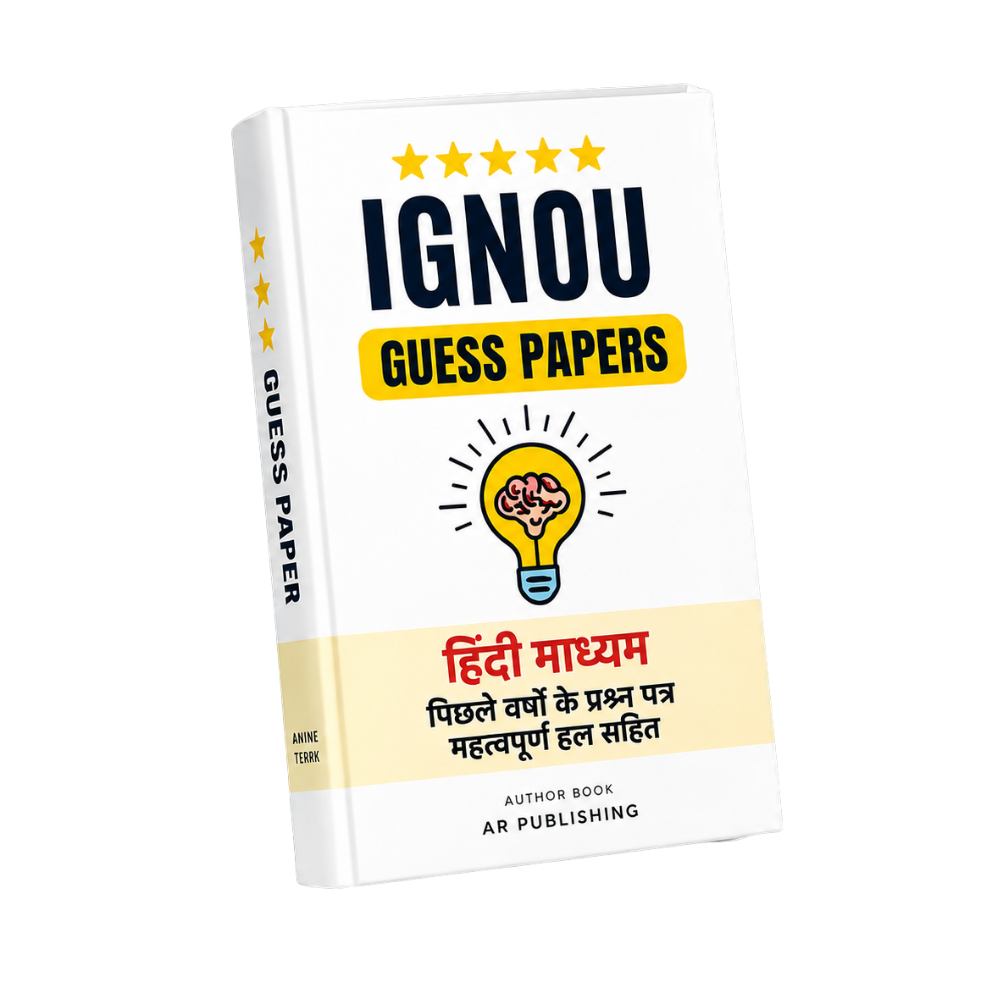
PGDT-001 IGNOU Guess Paper 2026-27
Enrolled in other IGNOU subjects?
Link your Enrollment No. to auto-map your semester courses & free question papers.
Frequently Bought Together
Popular course materials frequently ordered together



Syllabus & Overview
PGDT-001 Guess Paper 2026-27: Term-End Exam (TEE) Focus & Scoring Strategy
This structured guess paper leverages patterns from the last 10 years of IGNOU TEE exams (June & December sessions) for PGDT-001 (Course Code PGDT-001 English/Hindi). It emphasizes chapter-wise question weightage, time management, and high-yield topics to ensure optimal preparation for the upcoming exam.
Key Syllabus Blocks Covered
The following official IGNOU curriculum units are prioritized for this guess paper:
- Unit 1: Theoretical Foundations of Digital Technology Focus on binary logic, Boolean algebra, and digital circuit design. Expect 1-2 short-answer questions and 1 long-answer question on circuit analysis or truth table simplification.
- Unit 3: Programming Concepts in C/C++ High-weightage topics include loops, functions, pointers, and file handling. Prepare for coding questions (20-25 marks) and theoretical explanations (10-15 marks).
- Unit 5: Data Structures and Algorithms Prioritize arrays, linked lists, stacks, queues, and sorting/searching algorithms. Long-answer questions often test implementation and time complexity analysis.
- Unit 7: Database Management Systems Key areas: SQL queries, normalization, and relational algebra. Expect 1-2 practical questions on database design and 1 theoretical question on transaction management.
- Unit 9: Web Technologies and E-Commerce Focus on HTML/CSS basics, PHP fundamentals, and e-commerce workflows. Short-answer questions on web development tools are common.
Exam Time Management Tips
Allocate time as follows for a 3-hour exam:
- First 30 minutes: Quickly scan all questions and prioritize high-mark sections (e.g., coding questions in Unit 3).
- Next 1 hour 45 minutes: Answer short-answer questions (20-25 marks) and attempt 1-2 long-answer questions from high-weightage units (e.g., Unit 5: or Unit 7).
- Final 30 minutes: Review answers, correct minor errors, and ensure clarity in explanations (especially for theoretical questions).
Subject-Specific FAQs
Q: How should I approach coding questions in Unit 3 (Programming Concepts)? A: Practice coding snippets for loops, functions, and file handling from past papers. IGNOU often tests practical implementation, so write clean, commented code and explain logic briefly.
Q: Are there specific topics in Unit 5 (Data Structures) that appear frequently? A: Yes, focus on linked lists, binary trees, and sorting algorithms (e.g., bubble sort, quicksort). Long-answer questions often require both implementation and time complexity analysis.
Previous Year Trends
Based on the last 5 years of TEE exams, the following patterns emerge:
- Short-answer questions (20 marks) typically cover 2-3 units, with Unit 1: and Unit 3 appearing consistently.
- Long-answer questions (40 marks) often test Unit 5 (Data Structures) or Unit 7 (DBMS), requiring detailed explanations.
- Coding questions (20-25 marks) are exclusively from Unit 3 (C/C++), so practice extensively.
For the 2026-27 session, prioritize these units and allocate 60% of your study time to Unit 3, Unit 5, and Unit 7.
Why buy from us?
-
Verified by top professors and 99th percentile students.
-
Always updated to the latest university curriculum.
-
High-quality, printable PDF formats with clear diagrams.
License & Terms
By purchasing this item, you agree to our standard academic license terms. You may use this product for personal study, but you may not resell or redistribute the files online.