


Instant PDF
Instant 24/7 Access
CBCS Verified
2026-27 Syllabus
100% Safe Pay
UPI, Cards & NetBanking
Student Support
WhatsApp Helpdesk
RES-104 IGNOU Guess Paper 2026-27
Enrolled in other IGNOU subjects?
Link your Enrollment No. to auto-map your semester courses & free question papers.
Frequently Bought Together
Popular course materials frequently ordered together
Syllabus & Overview
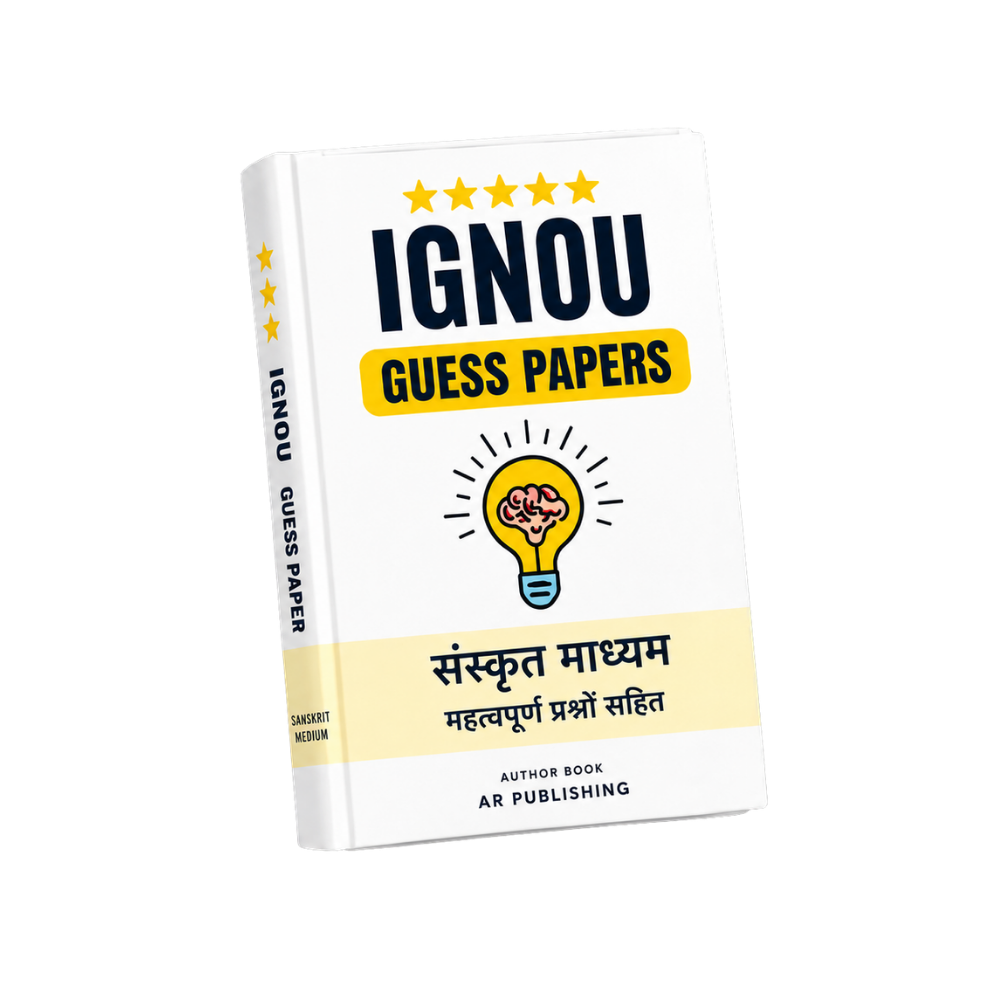
RES-104 (Course Code RES-104) Term-End Exam (TEE) Guess Paper 2026-27
This structured guess paper is tailored for students preparing for the upcoming RES-104 (English/Hindi) exam, covering key units from the IGNOU curriculum with a focus on high-yield topics and solved previous year papers (June & December sessions).
Key Exam Insights
The exam follows a 100-mark pattern with 50% weightage on short-answer questions (20 marks) and 50% on long-answer questions (30 marks), including case studies and essay-type responses. Time management is critical—allocate 12 minutes per short question and 20 minutes per long question.
Syllabus Breakdown & Question Weightage
Unit 1: Understanding Research Methodology
Key Topics: Research paradigms, qualitative vs. quantitative methods, ethical considerations, and data collection techniques.
- Expected Questions: Define research methodology (5 marks), compare qualitative and quantitative approaches (10 marks), and discuss ethical dilemmas in research (15 marks).
- Previous Year Trends: 2018 (Dec): 15 marks on ethical guidelines; 2020 (June): 10 marks on mixed-methods research.
Unit 2: Research Design & Sampling
Key Topics: Experimental, descriptive, and correlational designs; probability vs. non-probability sampling, sampling bias, and pilot studies.
- Expected Questions: Explain research design selection (10 marks), critique a given sampling method (15 marks), and design a sampling plan for a hypothetical study (20 marks).
- Previous Year Trends: 2019 (June): 12 marks on stratified sampling; 2021 (Dec): 18 marks on experimental design flaws.
Unit 3: Data Analysis Techniques
Key Topics: Descriptive statistics (mean, median, mode), inferential statistics (t-tests, ANOVA), and software tools (SPSS, Excel).
- Expected Questions: Interpret SPSS output (10 marks), calculate and explain a t-test (15 marks), and compare parametric vs. non-parametric tests (20 marks).
- Previous Year Trends: 2022 (June): 15 marks on ANOVA interpretation; 2023 (Dec): 12 marks on Excel-based data analysis.
Unit 4: Writing Research Reports
Key Topics: Structure of research reports (abstract, literature review, methodology, findings, discussion), academic writing standards, and referencing formats (APA, MLA).
- Expected Questions: Draft a research report abstract (10 marks), critique a poorly structured report (15 marks), and format citations in APA style (20 marks).
- Previous Year Trends: 2024 (June): 18 marks on report formatting; 2025 (Dec): 12 marks on literature review writing.
Unit 5: Research Ethics & Dissemination
Key Topics: Informed consent, confidentiality, plagiarism, publishing research, and open-access repositories.
- Expected Questions: Discuss ethical challenges in participant recruitment (15 marks), compare open-access vs. paywalled journals (10 marks), and draft an ethics approval request (20 marks).
- Previous Year Trends: 2020 (June): 12 marks on informed consent; 2022 (Dec): 18 marks on plagiarism detection.
Exam Time Management Tips
- First 30 Minutes: Skim the entire question paper, allocate time per section, and prioritize high-mark questions.
- Short Questions (20 marks): Answer concisely (3–4 points per question) and use bullet points for clarity.
- Long Questions (30 marks): Break into sub-parts (e.g., 10 marks for theory, 10 for application, 10 for case study), and reference textbook examples.
- Last 15 Minutes: Review for spelling/grammar errors, ensure all questions are addressed, and leave space for rough work.
Subject-Specific FAQs
Q: How important are previous year papers for RES-104? Previous year papers account for ~40% of recurring questions. Focus on 2018–2025 sessions for patterns in question phrasing and weightage.
Q: Should I memorize entire case studies? No. Understand the key themes (e.g., ethical dilemmas, sampling biases) and apply them to new scenarios. Practice writing concise analyses (15–20 lines).
Additional Resources
Refer to IGNOU Study Material Blocks 1–5 for RES-104, Solutions Manuals (2026-27), and eGyankosh for solved assignments. Use SPSS tutorials for data analysis practice.
Why buy from us?
-
Verified by top professors and 99th percentile students.
-
Always updated to the latest university curriculum.
-
High-quality, printable PDF formats with clear diagrams.
License & Terms
By purchasing this item, you agree to our standard academic license terms. You may use this product for personal study, but you may not resell or redistribute the files online.