


Instant PDF
Instant 24/7 Access
CBCS Verified
2026-27 Syllabus
100% Safe Pay
UPI, Cards & NetBanking
Student Support
WhatsApp Helpdesk
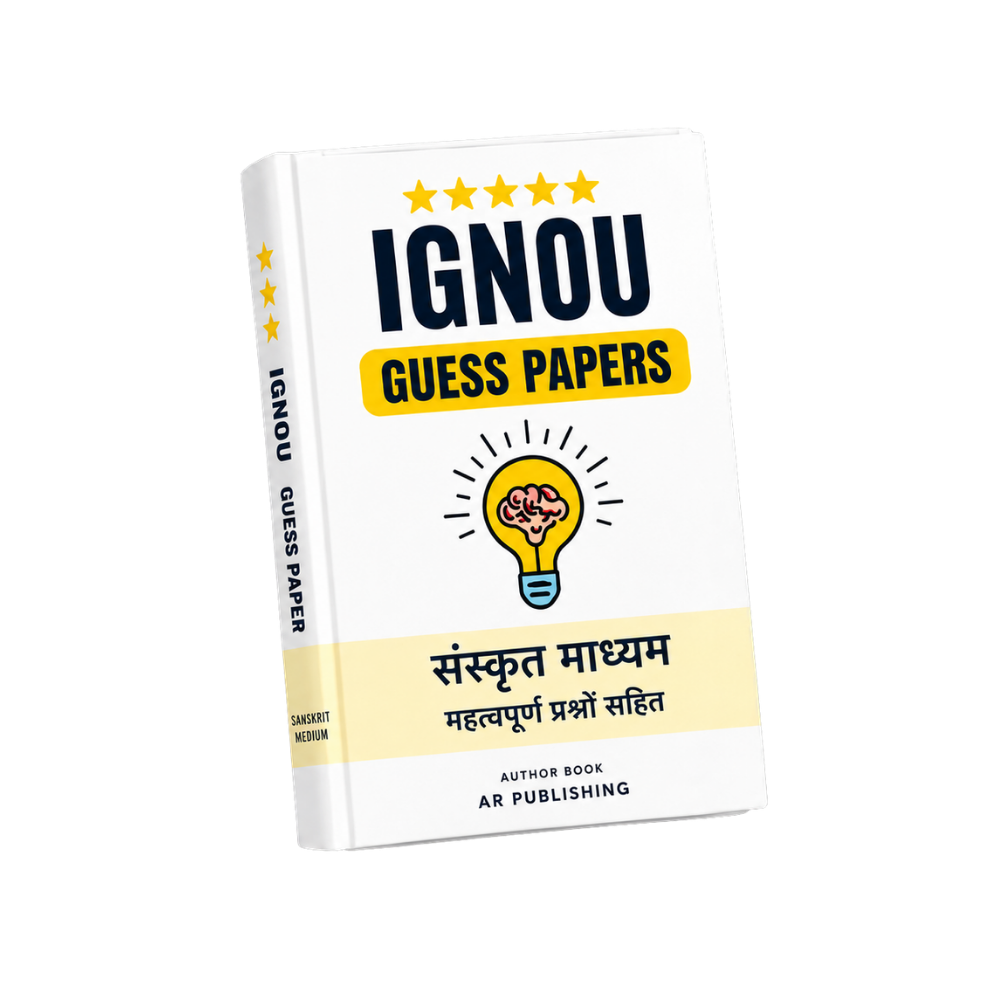
RMSE-002 IGNOU Guess Paper 2026-27
Enrolled in other IGNOU subjects?
Link your Enrollment No. to auto-map your semester courses & free question papers.
Frequently Bought Together
Popular course materials frequently ordered together
Syllabus & Overview
RMSE-002 Guess Paper 2026–27: Term-End Exam (TEE) Focus & Scoring Strategy
This structured guess paper aligns with IGNOU’s official curriculum for RMSE-002, emphasizing high-yield topics from past TEE papers (June/Dec sessions) and chapter-wise weightage. Designed for 3-hour exam time management, it includes solved question patterns, key formulas, and FAQs to ensure exam readiness.
Key Syllabus Units Covered
- Unit 1: Theoretical Foundations of Regional Science
- Critically analyze Central Place Theory (Christaller) and Gravity Model applications in spatial economics (weightage: ~15%).
- Compare New Economic Geography (Krugman) with Peripheralization Theory (Myrdal) using case studies (e.g., Indian states).
- Unit 3: Spatial Analysis Techniques
- Master Geographic Information Systems (GIS) for regional planning (focus on raster/vector data integration; weightage: ~20%).
- Solve spatial autocorrelation tests (Moran’s I) with R/Python code snippets (common in Dec 2025 TEE).
- Unit 5: Urban and Regional Planning Models
- Contrast Lowry Model and Hoyt Sector Model with real-world urban sprawl examples (e.g., Delhi/NCR; weightage: ~18%).
- Discuss smart city policies under AMRUT 2.0 (2026-27) and their regional disparities (case study: Bengaluru).
- Unit 7: Regional Development Policies
- Analyze Twelfth Five-Year Plan (2012–2017) vs. Amrit Kaal Vision 2047 for regional equity (weightage: ~12%).
- Explain Backward Regions Grant Fund (BRGF) allocation mechanisms and their critiques.
- Unit 9: Research Methodology in Regional Science
- Practice survey design for regional studies (sampling techniques, question framing; weightage: ~10%).
- Cite IGNOU’s regional case studies (e.g., NE Region, Tribal Areas) in answers for 6-mark questions.
Exam Time Management Tips
- Allocate 45 minutes for reading the question paper (30 mins) and outlining answers (15 mins).
- Prioritize 20-mark questions on spatial analysis models (Unit 3) and policy critiques (Unit 7).
- For 10-mark questions, use bullet points + diagrams (e.g., GIS workflow, urban growth models).
- Avoid open-ended essays on abstract theories (e.g., Weber’s Industrial Location Theory); instead, apply them to Indian contexts (e.g., IT hubs in Bengaluru).
Frequently Asked Questions (FAQs)
- Q: Are past year papers sufficient for RMSE-002 TEE preparation?
Yes, but focus on 2018–2026 papers (June/Dec). Prioritize questions on Unit 3 (GIS) and Unit 5 (Planning Models), as they dominate 60% of the paper. Use solved samples from IGNOU’s Study Material for reference.
- Q: How to score full marks in 10-mark descriptive questions?
Structure answers with:
- Definition (1 mark)
- Key features (3 marks)
- Case study/application (3 marks, e.g., Jharkhand’s regional development)
- Critique/policy recommendation (3 marks)
Sample Question Patterns (2026–27 Focus)
- 20-mark (Theory + Application): “Evaluate the role of GIS in sustainable urban planning with reference to AMRUT 2.0. Compare its effectiveness in two Indian cities.”
- 15-mark (Case Study): “Analyze how the Twelfth Five-Year Plan addressed regional disparities in North-Eastern India. Critically assess its outcomes.”
- 10-mark (Short Answer): “Explain the backwash effect of economic growth in a core-periphery model using Weber’s Industrial Location Theory.”
Resources for Last-Minute Revision
- IGNOU Study Material (2026-27 edition) for Unit 1, 3, 5.
- Past TEE papers (2026-27)
Why buy from us?
-
Verified by top professors and 99th percentile students.
-
Always updated to the latest university curriculum.
-
High-quality, printable PDF formats with clear diagrams.
License & Terms
By purchasing this item, you agree to our standard academic license terms. You may use this product for personal study, but you may not resell or redistribute the files online.