

Express Courier
7-10 Days Delivery
CBCS Verified
2026-27 Syllabus
100% Safe Pay
UPI, Cards & NetBanking
Student Support
WhatsApp Helpdesk
BPOI-004-004-BPOI-104 IGNOU Handwritten Assignment 2026-27
Enrolled in other IGNOU subjects?
Link your Enrollment No. to auto-map your semester courses & free question papers.
Frequently Bought Together
Popular course materials frequently ordered together
Syllabus & Overview
BPOI-004 (Order to Cash (O2C)- Accounts Receivable) Physical Handwritten Assignment (2026–27)
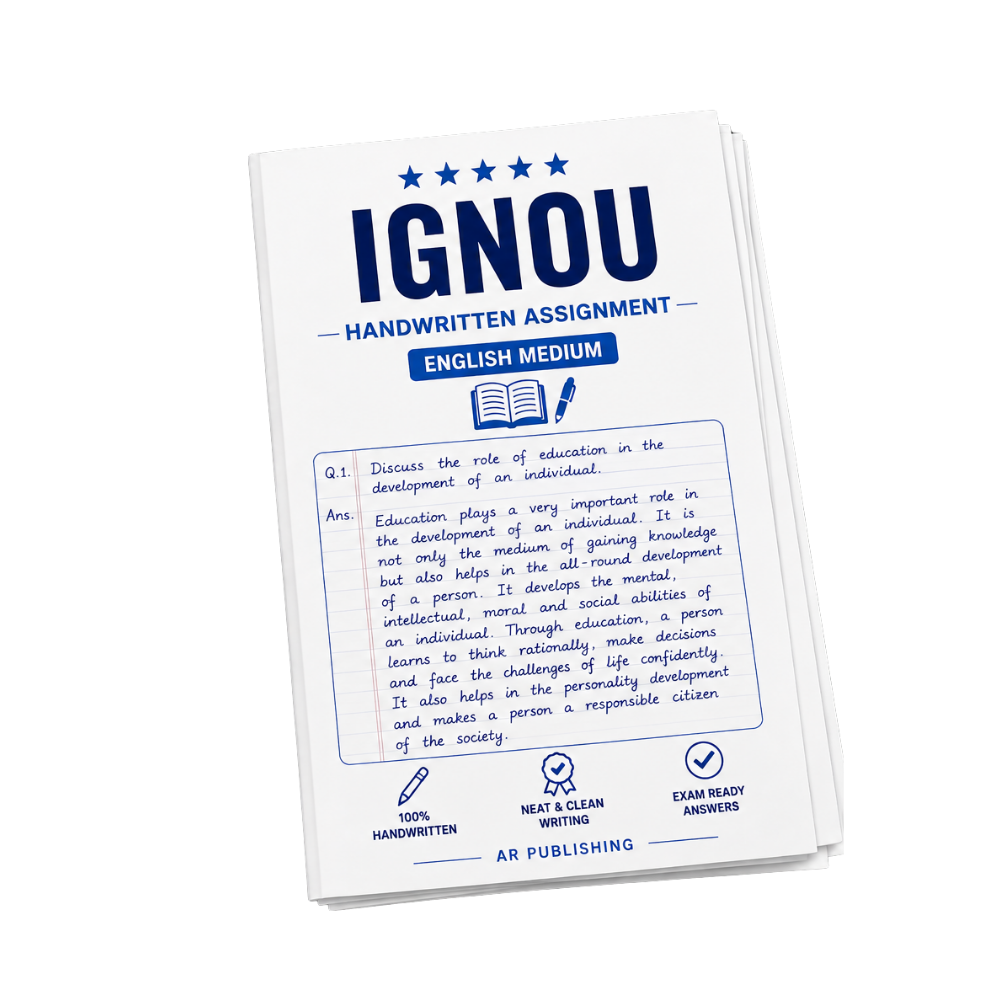
This is a 100% physical hard copy assignment for IGNOU’s BPOI-004: Order to Cash (O2C) Accounts Receivable, meticulously written by hand on 80 GSM A4 ruled paper with neat, legible script. The assignment includes the official IGNOU front page, printed question paper, and step-by-step solutions to ensure seamless submission to your study center.
Key Syllabus Units Covered:
- Unit 1: Introduction to Order to Cash (O2C) and Accounts Receivable
- Definition, objectives, and significance of O2C processes in business operations.
- Role of Accounts Receivable (AR) in revenue recognition and cash flow management.
- Integration of AR with sales, shipping, and billing departments.
- Unit 2: Credit Management and Customer Invoicing
- Credit approval workflows and risk assessment techniques.
- Invoicing best practices, including line-item accuracy and tax compliance.
- Handling discounts, allowances, and credit memos in AR.
- Unit 3: Collections and Aging Analysis
- Methods for managing overdue accounts and collections strategies.
- Aging reports and their role in identifying cash flow bottlenecks.
- Legal considerations in debt recovery and dispute resolution.
- Unit 4: Reconciliation and Financial Reporting
- Bank reconciliation for AR discrepancies and adjustments.
- Preparing AR-related financial statements (balance sheets, income statements).
- Use of ERP systems for automated reconciliation and reporting.
- Unit 5: Technology and Automation in AR
- Role of AR software (e.g., SAP, Oracle) in streamlining processes.
- Automated reminders, e-invoicing, and digital payment integrations.
- Cybersecurity measures for protecting AR data and transactions.
Assignment Features:
- Handwritten on 80 GSM A4 ruled paper for clarity and professionalism.
- Includes printed question paper and official IGNOU front page for submission.
- Solutions adhere to IGNOU’s 2026–27 curriculum guidelines with no plagiarism.
- Delivered via Indian Speed Post to your registered address.
Subject-Specific FAQs:
Q: How does aging analysis impact cash flow?Aging analysis categorizes overdue invoices by days past due, helping identify slow-paying customers and prioritize collections. For example, accounts aged 30–60 days may require automated reminders, while those over 90 days may need legal intervention, directly affecting working capital.
Q: What is the difference between a credit memo and a debit memo in AR?A credit memo reduces a customer’s account balance (e.g., for returns or discounts), while a debit memo increases it (e.g., for additional charges or penalties). Both require proper documentation to maintain AR accuracy and compliance with accounting standards.
Why buy from us?
-
Verified by top professors and 99th percentile students.
-
Always updated to the latest university curriculum.
-
High-quality, printable PDF formats with clear diagrams.
License & Terms
By purchasing this item, you agree to our standard academic license terms. You may use this product for personal study, but you may not resell or redistribute the files online.